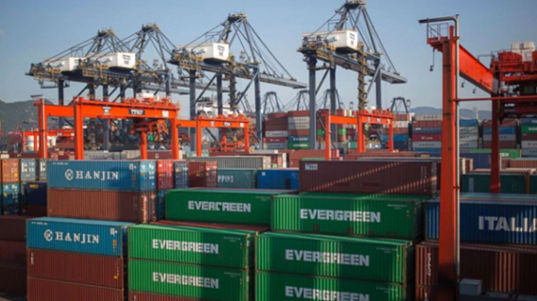
In response to US President Donald Trump’s tariff threats, China has imposed tariffs on $14 billion worth of US goods, escalating the trade conflict between the two nations. This move follows Trump’s decision to target Chinese imports.
China Responds to US Tariffs
On February 4, China swiftly announced its retaliation after the US imposed a 10% tariff on all Chinese products. Trump described the tariffs as an “opening salvo” in a renewed trade war against China.
Targeted Tariffs
Unlike the US’s broad approach, China’s tariffs are more specific. They target key US exports such as liquefied natural gas, coal, crude oil, agricultural machinery, and automotive products, with tariffs ranging from 10% to 15%. This more targeted strategy allows for potential negotiations to de-escalate the situation.
Tariffs Take Effect at Midnight
The retaliatory tariffs officially took effect at 12:01 a.m. Beijing time on Monday. As of February 10, China has imposed a 15% tariff on US coal and liquefied natural gas, alongside a 10% levy on crude oil, agricultural machinery, and large-engine vehicles.
Google Under Investigation
In a separate move, China’s State Administration for Market Regulation launched an investigation into Google for potential violations of its Anti-Monopoly Law. This investigation comes as Google’s services, including its search engine, remain blocked in mainland China due to the country’s “Great Firewall.”
Trump’s Global Trade Plans
Meanwhile, Trump has expressed plans to introduce “reciprocal tariffs” on other nations. While he hasn’t specified which countries will be targeted, this new approach aims to reshape global trade and address the US’s budget concerns.
Experts Warn of Escalation
However, experts caution that this may just be the beginning of a broader
trade war. Zhang Yanshen, a trade expert, warned that the situation could escalate further if tensions continue to rise.
Fentanyl and Sensitive Issues
Furthermore, Trump’s administration has continued to pressure China to curb the flow of fentanyl into the US. Chinese experts, however, believe that China has already taken action on this issue and suggest that Trump may be seeking to discuss other sensitive topics, such as the ongoing war in Ukraine.
Challenges for China in Negotiations
Finally, experts note that it may be difficult for China to reach a quick deal with the US, especially given the complex issues at hand, including the US’s accusations that China has supported Russia in the Ukraine war. As negotiations continue, these obstacles could slow down any potential agreement.