
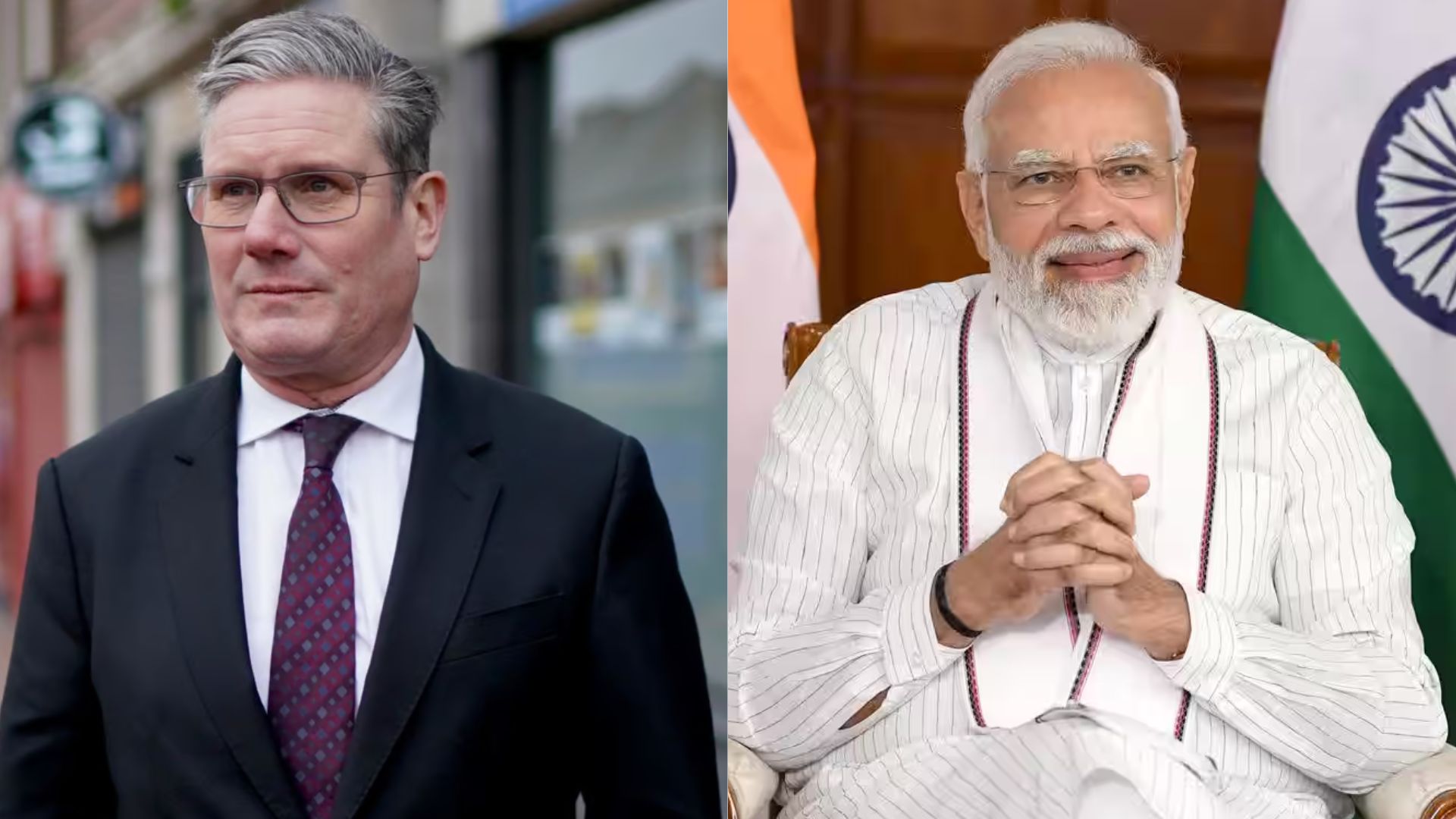

India and the United Kingdom have officially signed a landmark free trade agreement (FTA) that is set to boost trade, jobs, and investment in both countries.
Leaders Confirm the Deal
Prime Minister Narendra Modi announced the finalisation of the deal on May 6 through social media. He stated that the agreement would “deepen our Comprehensive Strategic Partnership” and “catalyse trade, investment, growth, job creation, and innovation.”
Delighted to speak with my friend PM @Keir_Starmer. In a historic milestone, India and the UK have successfully concluded an ambitious and mutually beneficial Free Trade Agreement, along with a Double Contribution Convention. These landmark agreements will further deepen our…
— Narendra Modi (@narendramodi) May 6, 2025
Likewise, UK Prime Minister Keir Starmer shared the news on X and welcomed the development.
Today Britain has agreed a landmark trade deal with India.
— Keir Starmer (@Keir_Starmer) May 6, 2025
Fantastic news for British business, British workers, and British shoppers, delivering on our Plan for Change.
Good to speak to Prime Minister @NarendraModi as we mark this historic moment. pic.twitter.com/mr0wfatBcH
What Gets Cheaper
As part of the FTA, both countries agreed to reduce tariffs on a wide range of goods. For instance, products like whisky, chocolates, biscuits, lamb, and salmon from the UK will now become more affordable in India.
Moreover, the deal lowers duties on cosmetics, advanced manufacturing parts, and medical devices.
In addition, both sides have included specific quotas to allow auto imports under controlled limits.
Services and Investments to Benefit
Furthermore, the agreement supports easier movement of services and encourages mutual investments. It simplifies trade rules, making it easier for companies and professionals to operate across both markets.
Workers Keep Social Security Benefits
Importantly, the FTA includes a Double Contribution Convention (DCC), which safeguards social security rights for Indian and British professionals who move between the two nations.
Previously, workers could be taxed in both countries. Now, thanks to the DCC, their contributions in one country will count toward benefits in the other.
This ensures, as per the agreement, that workers do not lose pensions or other retirement benefits when relocating.
Negotiations Faced Delays
Notably, India and the UK began negotiations for the FTA in January 2022. The UK pursued this deal to build its own trade network after leaving the European Union.
However, the talks were delayed several times. The UK saw four different prime ministers during this period. Additionally, both India and the UK held national elections, which interrupted progress.
Even so, after three years of back-and-forth discussions, both nations succeeded in finalising the deal.
Trade Goals Set for 2040
Looking ahead, the FTA aims to increase bilateral trade by £25.5 billion (about $34 billion) by the year 2040. This agreement marks a significant step in strengthening the economic partnership between the two countries.