
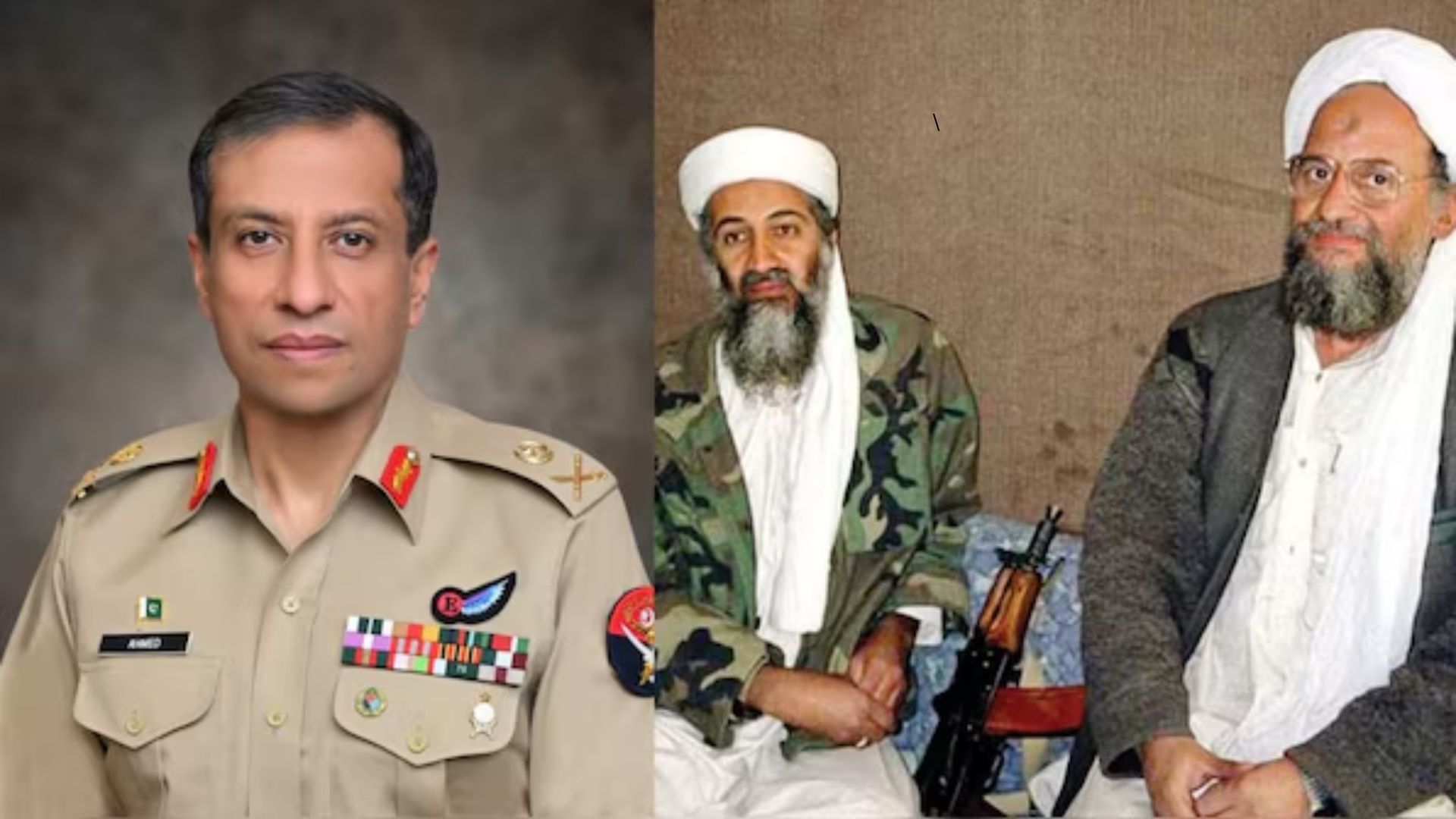

Ahmed Shareef Chaudhry, the current spokesperson for the Pakistan Army, has a controversial family background. He is the son of Sultan Bashiruddin Mahmood, a man Pakistan celebrates as a nuclear scientist. However, global agencies view Mahmood quite differently — he has been officially declared a terrorist by the United Nations.
Chaudhry, who holds the rank of three-star General, serves as the 22nd Director General of Inter-Services Public Relations (ISPR), which handles public communications for the Pakistan military. In recent years, he has become the key voice defending the military's actions, often supporting not just its policies but also its links to terrorism and acts of aggression.
Father Founded Extremist Group
Sultan Bashiruddin Mahmood, Chaudhry's father, founded an extremist Islamic group called Ummah Tameer-e-Nau (UTN) in 1999. The United States banned and sanctioned this organisation in 2001. Although Mahmood contributed to Pakistan’s nuclear programme, intelligence agencies around the world have long been concerned about his extremist views and connections.
UN and US Designated Terrorist
In December 2001, the United Nations Al-Qaida Sanctions Committee listed Mahmood as a sanctioned individual. The U.S. also declared him a Specially Designated Global Terrorist. His Kabul address was even identified as an Al-Qaeda safe house located in Wazir Akbar Khan — a sign of how deeply involved he was with terror networks.
Despite this, General Chaudhry continues to publicly justify Pakistan’s radical policies, while his personal background reveals disturbing links to global terrorism. His father, now believed to be living quietly in Islamabad, has written books claiming strange theories — including the bizarre idea that djinns can be captured to produce electricity.
Mahmood’s Connection to Osama bin Laden
Reports have also shown that Mahmood had close ties to Osama bin Laden, the mastermind of the 9/11 attacks. Due to these links, he came under intense scrutiny from the U.S.
Meanwhile, Pakistan continues to struggle economically, producing little of global value. Its regular nuclear threats have only increased concerns about its role as an unstable and dangerous state. The country’s repeated involvement in major terrorist attacks — including the 9/11 attacks in the U.S., the London bombings, and the 26/11 attacks in Mumbai — has further harmed its international image.
India Blames Pakistan for Pahalgam Attack
India has directly blamed Pakistan for the deadly terror attack in Pahalgam on April 22. In that incident, 26 people — most of them tourists — were killed by militants from Pakistan. This tragic event highlighted once again how Pakistan continues to use terrorism as a tool of state policy.
India Launches Counter-Terror Operation 'Sindoor'
In response, India carried out Operation Sindoor on May 7. The Indian military targeted several terror camps and support structures across Pakistan and Pakistan-occupied Kashmir (PoK).
Indian Military Conducts Precision Strikes
During the operation, Indian forces precisely hit nine terror camps. The targets included important bases in Bahawalpur and Muridke, which have long been associated with terrorist groups Jaish-e-Mohammed (JeM) and Lashkar-e-Taiba (LeT).
India used advanced weapons systems for the strike. These included Rafale fighter jets with SCALP missiles, AASM Hammer bombs, BrahMos cruise missiles, and loitering munitions.
India Issues Calm Yet Strong Warning
At a press briefing on Saturday, Indian officials made it clear that they do not wish to escalate the situation. However, they warned that India would not hesitate to respond if provoked again.
At the joint press briefing, Foreign Secretary Vikram Misri joined Ministry of Defence officials, Wing Commander Vyomika Singh and Colonel Sofiya Qureshi. They stated, “India has responded to all Pakistani military actions and the armed forces are in a high state of operational readiness.”