

India has launched a global mission to promote its firm stand against terrorism. Three of the seven all-party delegations will begin their visits on Wednesday. They will also inform foreign leaders about Operation Sindoor.
Leaders Briefed Before Departure
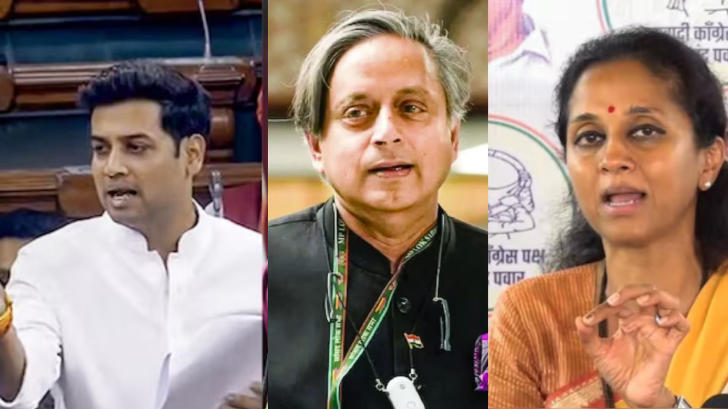
On Tuesday, Foreign Secretary Vikram Misri briefed the first set of delegation leaders. These included Sanjay Jha from JDU, Kanimozhi Karunanidhi from DMK, and Shrikant Shinde from Shiv Sena.
Meanwhile, the remaining teams will receive their briefing today.
Earlier, during the weekend, Union Minister Kiren Rijiju announced the names of seven Members of Parliament selected to lead these outreach missions. Their main aim is to promote India’s zero-tolerance policy against terrorism worldwide.
UAE-Bound Delegation Leaves Today
Today, the delegation led by Shrikant Shinde will head to the United Arab Emirates. Later, this team will also travel to Congo, Sierra Leone, and Liberia.
The group includes BJP MPs Bansuri Swaraj, Manan Kumar Mishra, and SS Ahluwalia, as well as Sasmit Patra from BJD, ET Mohammed Basheer from IUML, and Ambassador Sujan Chinoy.
Ministry Highlights Pakistan’s Role in Terrorism
During the briefing, foreign ministry officials stressed India’s long-held belief that terrorism, in all forms, has links to Pakistan. They told the delegates, “All forms of terrorism — direct or indirect — can be traced back to Pakistan.”
Moreover, officials reminded them that India has suffered cross-border terrorism for over four decades.
India Shared Proof in 2008 But Got No Support
For example, in 2008, India gave strong evidence to Pakistan after the Mumbai terror attacks. This included DNA reports and call details of the attackers.
However, according to the officials, Pakistan did not cooperate enough in response.
India Adopts a Firm New Approach
Additionally, the delegates were informed about a policy shift. Officials explained that India now follows a “new normal” in its dealings with Pakistan.
This means India will respond strongly to any acts of terror, without waiting for global approval.
Treaty with Pakistan Under Review
Furthermore, the Indus Waters Treaty (IWT) also came up during the meeting. Officials explained that the agreement, signed in the 1960s, no longer fits present-day realities.
They pointed out new concerns like climate change and declining river levels.
In fact, India has already tried to revise the treaty for two years. Officials told the team, “The trust and friendship, which was largely the basis of the pact, do not exist between the two countries now.”