
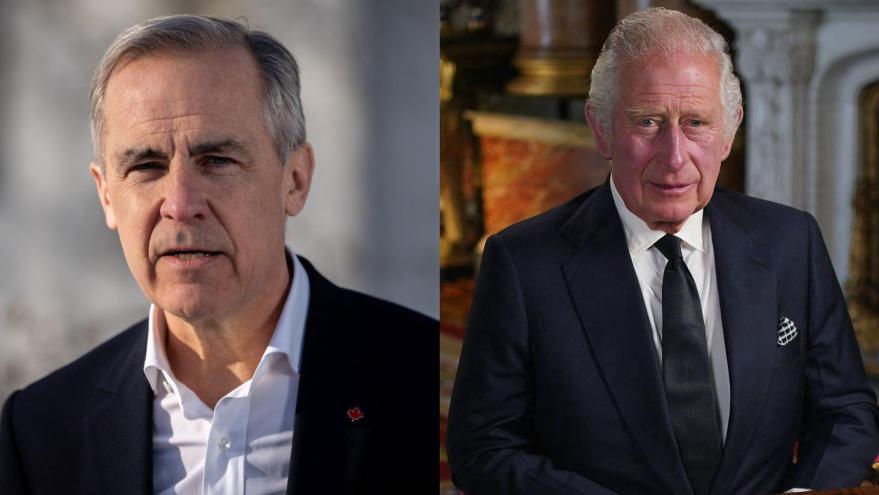

Ten years ago, a royal portrait sparked political debate in Canada. Today, the country is preparing to welcome King Charles III to deliver the Speech from the Throne. So, what has changed?
From Controversy to Ceremony
In 2011, then-Prime Minister Stephen Harper formed a majority Conservative government. Soon after, he took steps to highlight Canada’s ties to the British monarchy. For instance, he replaced two Quebec artworks in a government building with a portrait of Queen Elizabeth II.
This move triggered backlash. Many Canadians saw it as outdated. Over the years, Canada has worked to gain more independence from Britain while staying in the Commonwealth.
When Justin Trudeau became Prime Minister in 2015, he reversed Harper’s decision. He took down the Queen’s portrait and brought back the Quebec paintings.
A New Approach in 2025
Now in 2025, Canada’s connection to the monarchy looks very different. Liberal Prime Minister Mark Carney has invited King Charles III to open the 45th session of Parliament. This marks a dramatic shift from past Liberal leaders.
Carney made this move to assert Canada’s sovereignty—especially in response to US President Donald Trump’s comments. Trump often calls Canada the “51st state.” In contrast, Carney wants to show the world that Canada is a unique and independent country.
"This is a huge affirmation and statement about the uniqueness of Canada and its traditions," said Justin Vovk, a royal historian. He added that the event serves as "a theatrical display that is meant to show what makes Canadians separate from Americans."
A Gradual Break from the Crown
Unlike the United States, which cut all ties with the monarchy nearly 250 years ago, Canada took a slower path. Canada kept many of its ties to Britain. It still has a parliamentary system modeled on Westminster. Also, the monarch remains the official head of state. However, most duties are handled by Canada’s governor general.
In the 1800s, loyalty to the Crown helped Canadian leaders keep distance from the US. But this started changing in the 1960s. Quebec began pushing for its own identity and even considered separation. Politicians like Lester B. Pearson and Pierre Trudeau then focused on reducing British influence.
The biggest change came in 1982. Prime Minister Pierre Trudeau brought home the Canadian constitution. This gave full legal power to Canada’s federal and provincial governments and cut legislative ties with the UK.
Still, Canada remained a constitutional monarchy. The level of connection with the Crown has often depended on the prime minister’s personal stance.
A Rare Royal Role
King Charles III’s upcoming visit marks a historic moment. A British monarch has not delivered the throne speech in Canada since 1977. The last time a monarch opened a new parliamentary session was in 1957.
This event also comes at a time when Canada faces major challenges.
Carney campaigned on defending Canada’s independence, especially against Trump’s influence. Trump recently imposed tariffs that hurt Canada’s economy. The US remains Canada’s top trading partner, making the impact even greater.
During the visit announcement, Carney said it is "a historic honour that matches the weight of our times." He added that it "clearly underscores the sovereignty of our country."
Mixed Views on the Monarchy
Despite the event’s significance, many Canadians feel indifferent or even critical toward the monarchy. Some remember the monarchy’s negative history with Indigenous people. Others question its place in modern Canada.
In Quebec, calls to cut ties with the Crown remain strong. Just last week, the Bloc Québécois party pushed to remove the rule requiring lawmakers to swear loyalty to the King.
Yet some Canadians may still enjoy the ceremony. For others, the King’s visit carries a strong political message. It shows Canada standing firm as a sovereign nation.
At the same time, it may help improve Carney’s relations with Trump. The US president is known to admire British royal traditions.
A Broader Strategy
According to Vovk, "Strengthening the relationship with the monarchy puts a stamp on legitimacy that transcends individual parties and the current political climate." He noted, "Politicians come and go, but the monarchy has always remained."
The visit also supports another of Carney’s goals—strengthening Canada’s ties with Europe. As a former Bank of England governor, Carney has stressed the need for Canada to seek new partners, especially as its relationship with the US evolves.
A First for the King
This will be King Charles III’s first visit to Canada as monarch. He and Queen Camilla had planned to visit earlier, but canceled due to his cancer diagnosis in 2024.
The palace promised that the throne speech will "mark a significant moment between the Head of State and the Canadian people."
Though brief—their trip will last from Monday morning to Tuesday evening—the palace hopes "the trip will be an impactful one."