
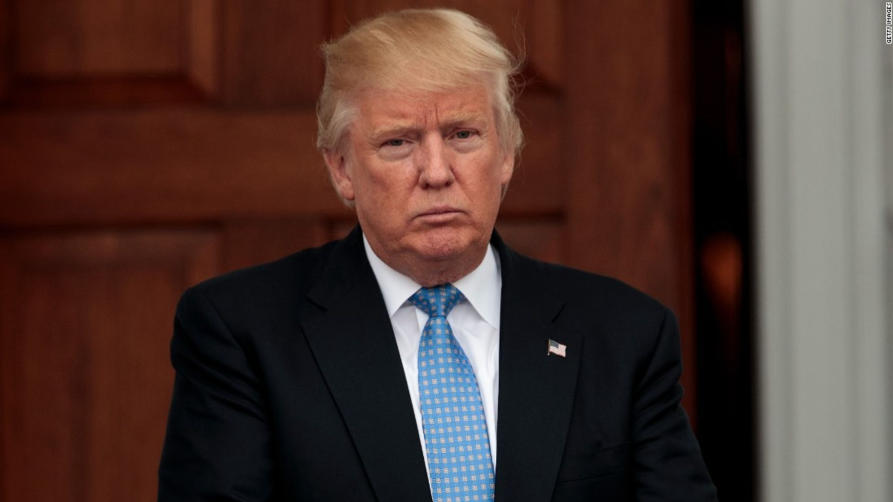

US President Donald Trump has admitted it's "extremely hard" to strike a trade deal with Chinese President Xi Jinping. He made the comment while intensifying his global trade war by doubling tariffs on steel and aluminum from 25% to 50%. His statement came just as ministers from the Organisation for Economic Cooperation and Development (OECD) gathered in Paris. They met to discuss the global economy and the effects of Trump’s aggressive trade policies.
Frustration with China
Trump posted on Truth Social, "I like President XI of China, always have, and always will, but he is VERY TOUGH, AND EXTREMELY HARD TO MAKE A DEAL WITH!!!" His words cast doubt on hopes of a quick resolution. Just days earlier, the White House had suggested that Trump might speak with Xi. That had raised optimism about progress in US-China trade talks.
China Retaliates with Heavy Tariffs
On April 2, Trump announced steep tariffs—145%—on Chinese goods. China responded with 125% duties on US imports. Both nations agreed to ease the tension in May, with Trump delaying wider tariffs on other countries until July 9.
Global Impact and OECD Warning
The recent tariff hike on steel and aluminum came as world leaders discussed trade challenges in Paris. The OECD reduced its global growth forecast due to the rising trade tensions. OECD chief economist Alvaro Pereira told AFP, "Trade, consumption and investment have been affected by the tariffs." He also warned the US economy will suffer the most from this strategy.
Legal Pushback and EU Concerns
Although some of Trump’s tariffs face court challenges, they remain in place during the appeals process. Meanwhile, the European Union expressed deep concern. It said it "strongly regrets" the decision to double the tariffs. The EU warned the move "undermines ongoing efforts to reach a negotiated solution" and hinted at possible retaliation.
French trade minister Laurent Saint-Martin urged calm, "We have to keep our cool and always show that the introduction of these tariffs is in no one's interest."
Canada and the UK Respond
Canada, the top supplier of these metals to the US, criticized the move. Canadian officials called the tariffs "illegal and unjustified." In contrast, the UK secured a partial win. After talks with US Trade Representative Jamieson Greer, the UK said its steel would still face only a 25% tariff. A British government spokesperson said, "We're pleased that as a result of our agreement with the US, UK steel will not be subject to these additional tariffs."
Mexico Seeks Exemption
Mexico plans to request relief from the new tariff. Economy Minister Marcelo Ebrard argued that it's unfair since the US exports more steel to Mexico than it imports. "It makes no sense to put a tariff on a product in which you have a surplus," he stated. Mexico is especially vulnerable in this trade war. About 80% of its exports go to the US.
G7 Nations and Last-Minute Push
On Wednesday, the Group of Seven nations—Britain, Canada, France, Germany, Italy, Japan, and the US—held separate talks to find common ground on trade. German economy minister Katherina Reiche warned, "We need to come up with negotiated solutions as quickly as possible, because time is running out." Finally, White House Press Secretary Karoline Leavitt confirmed that the Trump administration had sent letters urging countries to submit trade offers by Wednesday, ahead of the July 9 deadline.