
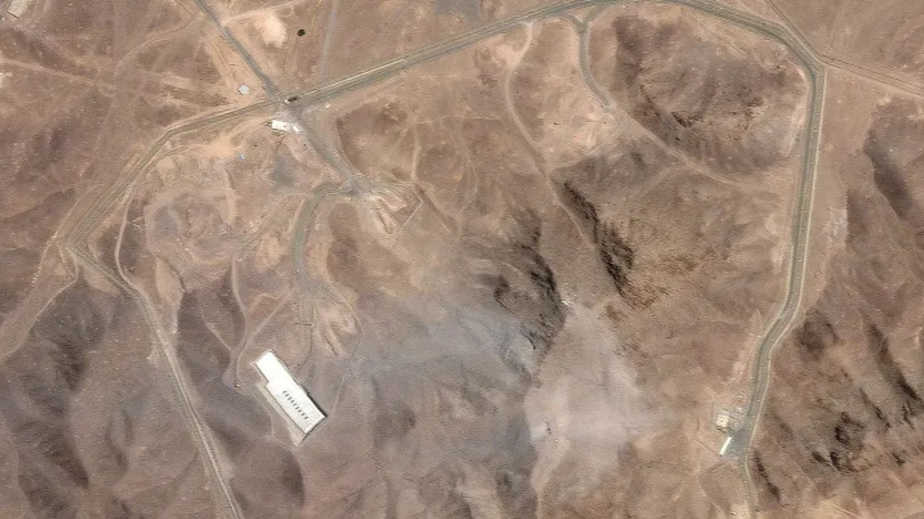

US President Donald Trump confirmed that American forces had bombed three key nuclear sites in Iran Natanz, Fordow, and Isfahan. He made this announcement shortly after the military operation. Of the three, Fordow was the most important target. It is hidden deep inside a mountain and is used to enrich uranium close to weapons-grade levels. Because of its depth, Israeli weapons could not reach it.
Although Trump didn’t mention the aircraft used in the mission, The New York Times and other sources reported that B-2 stealth bombers carried out the strikes.
Why Fordow Needed US Military Power
Experts say that Fordow could only be destroyed by extremely powerful bunker-busting bombs, which only the US possesses, along with the aircraft needed to launch them.
There are two bombs capable of reaching that depth:
-
GBU-43/B Massive Ordnance Air Blast (MOAB)
-
GBU-57A/B Massive Ordnance Penetrator (MOP)
The MOAB can only be launched from a modified C-130 aircraft, while the MOP is dropped from a B-2 bomber. Since B-2s were used, experts believe that GBU-57A/B MOP boms were likely used to strike the underground Fordow facility.
Why Israel Needed the US for This Strike
The airstrikes were part of Israel’s “Operation Rising Lion”, a military campaign launched the previous week by Prime Minister Benjamin Netanyahu. Although Israeli forces had succeeded in destroying military sites and targeting top Iranian officers, they couldn’t strike nuclear sites buried deep underground, like Fordow.
Therefore, Netanyahu needed US support to complete the most challenging part of the mission. By striking Fordow, Trump helped Israel achieve this goal.
What Are GBU-57A/B MOP Bombs?
The GBU-57A/B MOP is a precision-guided bomb. It weighs about 30,000 pounds (13,600 kg) and is nearly 6 meters long. It is the largest conventional (non-nuclear) bomb in the US arsenal. The bomb is built to destroy fortified underground bunkers, weapons storage sites, and nuclear facilities.
It can penetrate up to 60 meters underground, making it ideal for this kind of attack.
How These Bombs Damaged Fordow
Daphne Richemond Barak, an expert in underground warfare from Israel, explained how the bombs worked. She said that Fordow lies between 60 and 100 meters below the ground, which is too deep for Israeli weapons, but within reach for the US-made MOP bombs.
Barak explained, “These bombs have hardened metal tips and are heavy by themselves even without explosives. With their weight and speed that they are launched from, these bombs penetrate their target whether it’s soil or concrete. They do not explode immediately on impact.”
She added, “Instead, they explode after they have penetrated the target. The delayed explosion after penetration means the damage is concentrated inside the target structure and not on top of it. This also increases the radius of the area these bombs damage.”