
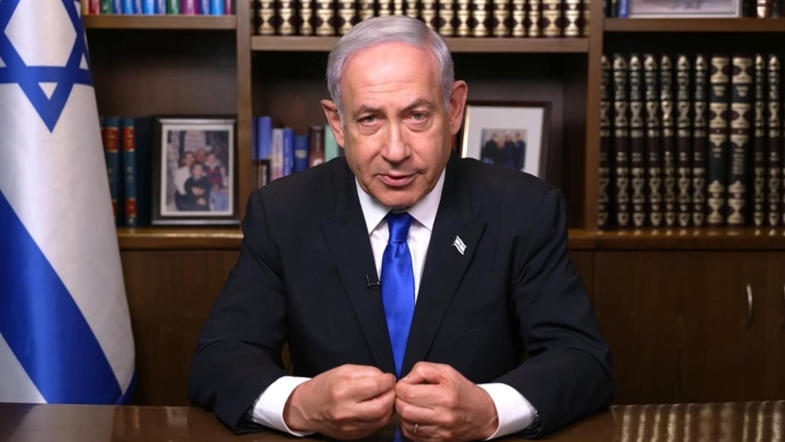

Peace talks between Israel and Syria have run into trouble due to a major disagreement. According to a report, Israeli Prime Minister Benjamin Netanyahu has made a demand that Syrian President Ahmed al-Sharaa strongly rejects.
Netanyahu’s Condition Creates Tension
Israel wants to keep its right to carry out military operations, including airstrikes inside Syria, even after signing a peace agreement. In return, Israel has offered to withdraw from the buffer zone between the two countries.
However, President al-Sharaa has refused this demand. He insists that Israel will not be allowed to operate militarily inside Syria if any deal is reached.
Past and Present: From Conflict to Negotiation
President al-Sharaa came to power after he led opposition forces that overthrew dictator Bashar al-Assad. Israeli officials have criticized him, calling him a terrorist because of his past ties to jihadist groups. Despite this, both countries have continued to hold talks. These discussions could eventually lead to a formal peace agreement.
There is also a possibility that al-Sharaa may join the Abraham Accords in the future. This would mark a major step toward normalizing Syria's relationship with Israel.
Buffer Zone at the Heart of the Dispute
Since the fall of the Assad regime, Israel has occupied a buffer zone that was established in 1974 to separate the two nations. Israel says it needs to stay in the zone for security reasons. But now, it is offering to pull out if it can still carry out military operations inside Syria. Syria, however, refuses to allow such actions post-agreement.
The Road to Normalisation Remains Uncertain
Even though both sides are still in talks, the path to peace is far from clear. Israeli Foreign Minister Gideon Sa’ar recently said that Syria and Lebanon might be the next countries to normalize ties with Israel. He noted that Assad is gone in Syria, and Hezbollah’s power has weakened in Lebanon.
However, such peace deals may take time. The Jerusalem Post quoted sources familiar with the negotiations who said, “Even if an agreement is reached, it will be a cold peace, at least in the initial stage.”
No Discussion on Golan Heights
The same sources also said that any current agreement would only cover the buffer zone, not the Golan Heights. Israel has ruled out negotiations on that territory.
One source added, “At this stage, it will be less a peace agreement and more a security arrangement aimed at cooperating against civilian threats. Eating hummus in Damascus or sailing in Latakia is not expected anytime soon.”