
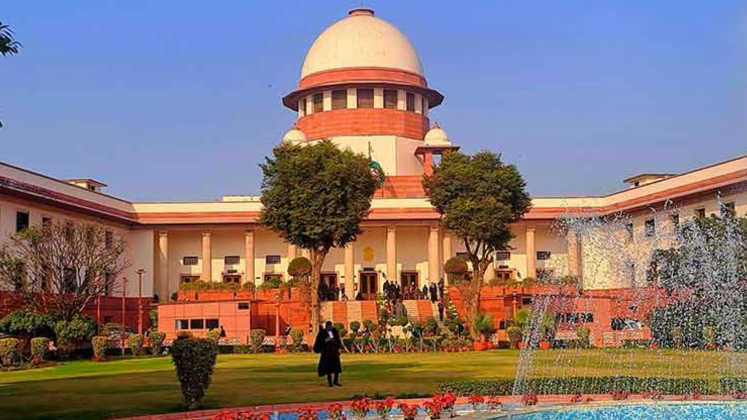

The Supreme Court on Thursday stressed that the security situation in Jammu and Kashmir must be considered while deciding on the restoration of its statehood. The court pointed to the recent Pahalgam terror attack as a reminder of the ground realities in the region.
“You also have to take into consideration the ground realities; you cannot ignore what has happened in Pahalgam,” Chief Justice of India (CJI) BR Gavai said during the hearing.
Centre Seeks Time to Respond
Solicitor General Tushar Mehta, representing the Central government, told the bench that the Centre had already assured statehood after elections. He described Jammu and Kashmir as a “peculiar position” in the country and questioned the urgency of the current debate.
“This particular State is not the correct State to muddy the water. I will still seek instructions. Eight weeks may be given,” Mehta requested.
Petitioners Challenge Timing of Elections
The plea, filed by college teacher Zahoor Ahmed Bhat and activist Khurshid Ahmad Malik, argued that holding Assembly elections before restoring statehood violates the principle of federalism — a core part of the Constitution’s basic structure.
The petitioners claimed that the delay in restoring statehood is harming the rights of the people. They filed the application during the Assembly elections held in the union territory last year.
Background of the Issue
On August 5, 2019, the Union government revoked Article 370, which granted special status to Jammu and Kashmir, and divided the state into two Union Territories — Jammu and Kashmir (with a legislative assembly) and Ladakh (without one).
The Supreme Court had earlier upheld the abrogation of Article 370 but urged the government to restore J&K’s statehood at the earliest.
Political Response
Statehood restoration remains a sensitive political demand in the Valley. Last year, in J&K’s first election in ten years, the National Conference-Congress alliance formed the government. Chief Minister Omar Abdullah has been vocal in calling for the early restoration of statehood.
Pahalgam Attack Raises Tensions
The court’s remarks came against the backdrop of the April 22 Pahalgam attack. Terrorists killed 25 Hindu tourists after verifying their identities. A local pony operator who tried to stop them was also killed. The Resistance Front (TRF), linked to Lashkar-e-Taiba, claimed responsibility.
Next Steps in Court
The bench, comprising CJI BR Gavai and Justice K Vinod Chandran, adjourned the matter for eight weeks to allow the Solicitor General to seek instructions from the government.