
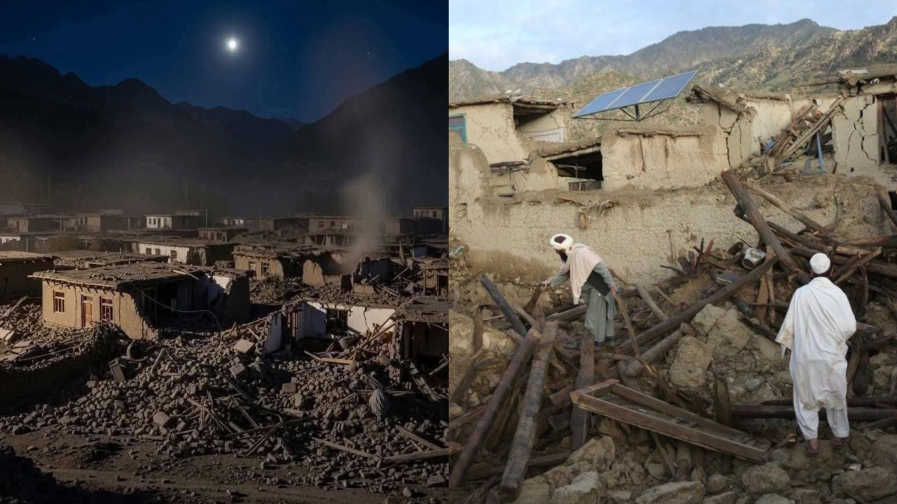

Afghanistan was hit by a devastating earthquake in the mountainous eastern province of Kunar on Sunday night. The tremor, measuring 6.3 on the Richter scale, struck at 11:47 pm local time and was followed by several aftershocks. At least five aftershocks have been reported so far, one of them as strong as 5.2.
The United States Geological Survey (USGS) confirmed that the epicentre was about 27 km from Jalalabad, Afghanistan’s fifth-largest city, and around 140 km from Kabul. With a shallow depth of only 8 km, the quake caused severe destruction.
Toll Expected to Rise
So far, more than 800 people have lost their lives, and at least 2,500 others have been injured. Officials warn that the toll may climb higher as many areas remain inaccessible. A local resident from Nurgal district told the Associated Press, “Children are under the rubble. The elderly are under the rubble. Young people are under the rubble. We need help here.”
This is incredibly sad and I’m so sorry to share it but I think everyone needs to see how deadly the earthquake in #Afghanistan has been.
— Aima Khan (@aima_kh) September 1, 2025
Authorities say over 500 people have died in Koner and many people are still under the rubble. pic.twitter.com/3U5Uvrop4n
Taliban Government Responds
Taliban spokesman Zabihullah Mujahid said, “Sadly, tonight’s earthquake has caused loss of life and property damage in some of our eastern provinces. Local officials and residents are currently engaged in rescue efforts for the affected people. Support teams from the centre and nearby provinces are also on their way.”
Helicopters carrying soldiers have been deployed, while videos on social media show people digging through rubble to rescue survivors. In Jalalabad, footage captured injured people being brought on stretchers for treatment at military bases and hospitals.
Hospitals Overwhelmed
Doctors in Asadabad, the capital of Kunar, said they were overwhelmed by the number of patients. One doctor told the BBC, “We are admitting one patient every five minutes,” adding that every ward was filled with injured people.
Rescue Efforts Face Major Obstacles
Rescue operations are being slowed by Afghanistan’s difficult terrain and weak infrastructure. Many affected villages are located in remote, mountainous regions. Health ministry spokesperson Sharafat Zaman said, “The number of casualties and injuries is high, but since the area is difficult to access, our teams are still on site.”
Landslides have blocked key roads to the epicentre, forcing authorities to rely on helicopters for evacuations. Al Jazeera’s Mohsin Momand reported from Kabul that most roads in the affected areas were “not paved” and “covered with rocks because of the earthquake,” making access extremely difficult.
Aid workers warn that fragile mud houses in these regions collapsed easily during the quake, burying many residents. Thamindri de Silva of World Vision Afghanistan said, “This is one of the most remote and also one of the poorest parts of Afghanistan. Time truly is of the essence when it comes to this situation.”
Economic Crisis Worsens the Disaster
Afghanistan’s economic crisis has further complicated relief efforts. Since the Taliban takeover, international aid has sharply declined, leaving shortages of food, medicine, and resources. The Taliban has issued an urgent appeal for foreign assistance.
India has already promised help, with External Affairs Minister S. Jaishankar saying India would “extend assistance in this hour of need” and expressed “solidarity to Afghan people.”
A Country Prone to Quakes
Afghanistan sits on multiple fault lines and is highly vulnerable to earthquakes. Just two years ago, in October 2023, a 6.3 quake killed at least 1,500 people, while Taliban officials estimated as many as 4,000 deaths. In June 2022, another tremor measuring 5.9 killed more than 1,000 people.
Sunday’s disaster has once again highlighted the fragile infrastructure and vulnerability of Afghanistan’s mountainous regions, making it one of the deadliest quakes in recent years.