
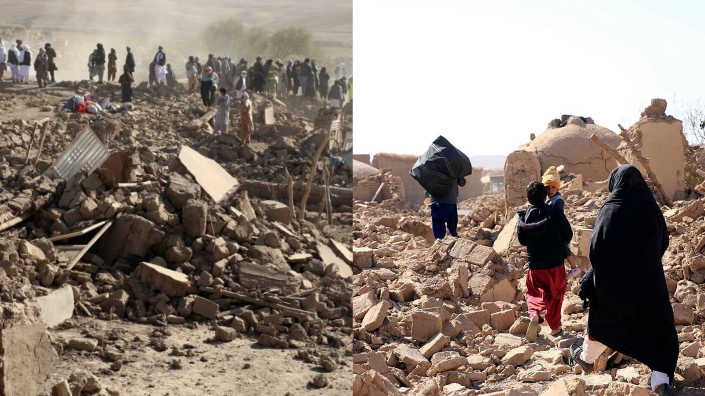

Centuries-old customs in Afghanistan are now putting women at the greatest risk during disaster responses. After the deadly earthquake and subsequent aftershocks that destroyed buildings and killed at least 2,200 people, women have often been the last to be rescued—or not rescued at all.
The lack of female rescuers has worsened the situation. Male rescue workers hesitate to touch women due to strict cultural rules, leaving many trapped under rubble. In some cases, bodies of deceased women are pulled out only by their clothes to avoid skin contact.
Cultural Barriers Hamper Rescue Work
Rescue efforts have been hindered not just by collapsed buildings, but also by gender restrictions enforced under Taliban rule, which returned to power four years ago and continues to impose severe limits on women.
“They gathered us in one corner and forgot about us,” said Bibi Aysha, a resident of Andarluckak village in Kunar province, recounting her experience after waiting more than 36 hours for rescue teams. According to a New York Times report, no one approached her or other women to offer help.
While men and children were quickly pulled from debris, women and adolescent girls were often sidelined. Some were left bleeding without aid.
Women Invisible to Rescuers
Male volunteer Tahzeebullah Muhazeb, working in Mazar Dara, observed the same trend. “It felt like women were invisible… the men and children were treated first, but the women were sitting apart, waiting for care,” he said. In the absence of male relatives, rescue workers dragged dead women by their clothes to avoid physical contact.
Although the gender breakdown of casualties is unclear, the Afghan government reports over 2,200 deaths and 3,600 injuries.
Restrictions on Women Worsen the Crisis
The Taliban’s strict control over women has contributed to the disaster’s unequal impact. Women are banned from schooling beyond the sixth grade, prohibited from most jobs—including in humanitarian organizations—and cannot travel without a male guardian. Female staff at UN-linked agencies have previously faced harassment, forcing many to work from home temporarily.
Aftershocks Compound the Danger
Rescue efforts continue amid ongoing aftershocks. On Thursday, Afghanistan experienced another earthquake of magnitude 5.6, adding urgency to the already difficult relief operations.
In sum, centuries-old gender rules, combined with Taliban restrictions, have left Afghan women more vulnerable during this natural disaster, highlighting the urgent need for gender-sensitive emergency response measures.