
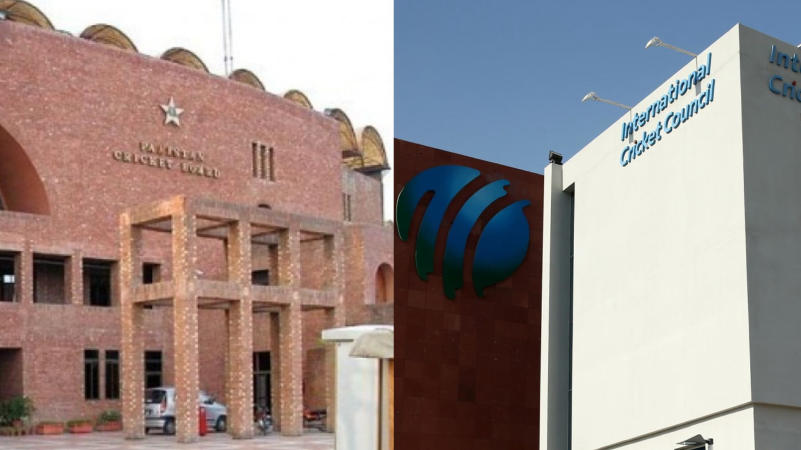

The International Cricket Council (ICC) accused the Pakistan Cricket Board (PCB) of “violating multiple tournament rules” before Pakistan’s final Group A Asia Cup 2025 match against the UAE. The clash at the Dubai International Stadium on Wednesday began nearly an hour late due to Pakistan’s protest.
Protest Over Handshake Incident
The controversy started after the India-Pakistan match in Dubai on Sunday. The PCB blamed match referee Andy Pycroft for the “handshake fiasco” and demanded his removal.
Consequently, the PCB threatened to pull out of the Asia Cup if the ICC did not suspend Pycroft. When the ICC rejected this demand, Pakistan sent another letter on Tuesday night, repeating its request and warning of “serious consequences.”
Players Told to Stay Back at Hotel
As tensions escalated on match day, PCB officials instructed the players to stay in their hotel rooms instead of heading to the stadium.
Meanwhile, current PCB chairman Mohsin Naqvi, who also leads the Asian Cricket Council (ACC), held a high-level meeting with former chairmen Najam Sethi and Ramiz Raja. This meeting delayed the match by almost an hour. Eventually, after long discussions, the PCB allowed the players to participate in the game.
ICC Issues Warning Email
Just minutes before the game began, the ICC sent an urgent email to the PCB. It accused the board of “misconduct” and repeated violations of Players and Match Officials Area (PMOA) protocols.
“The ICC CEO Sanjog Gupta has written to the PCB stating that the board has been guilty of repeated PMOA violations on match day,” a tournament source told PTI.
The email specifically mentioned that PCB’s media manager, Naeem Gillani, filmed a sensitive meeting despite ICC warnings that media staff were strictly banned from entering the PMOA.
ICC Concedes to Avoid Boycott
In order to prevent a match boycott, the ICC agreed to one of PCB’s final demands. Therefore, Pycroft met Pakistan captain Salman Ali Agha and team manager Naved Akram Cheema before the toss.
However, the PCB insisted that Gillani also attend the meeting. The ICC refused because, as one source explained, “he wanted to take his mobile phone into the PMOA.”
As a result, the PCB again threatened to withdraw from the match. Under pressure, the ICC reluctantly allowed Gillani to record the meeting, but strictly without audio. According to the ICC, this was a “serious violation” of tournament rules.
PCB Releases Video, ICC Responds
Shortly before the match began, the PCB posted on social media that Pycroft had “apologised” to the Pakistan team.
Subsequently, a muted video clip appeared on X, showing Pycroft speaking with Salman Ali Agha, Cheema, and head coach Mike Hesson inside the match referee’s room.
However, ICC officials rejected the PCB’s version of events. They clarified that Pycroft merely expressed “regret over a miscommunication,” and did not issue an apology.
Moreover, the ICC said it was unaware that the video would be released publicly. The footage sparked widespread speculation and criticism of the PCB’s behavior.
ICC Criticises PCB’s Actions
A tournament source strongly condemned the PCB’s conduct. “The ICC, in order to preserve the interest of the sport, the tournament and the stakeholders involved, accepted PCB's asks although this demonstrated a complete disregard for the sanctity of the PMOA.”
Furthermore, the ICC said that allowing the meeting to be filmed violated the privacy of match officials and compromised the integrity of tournament operations.
The ICC also warned the PCB that similar violations in the future would invite strict action.
Growing Rift Between PCB and ICC
Ultimately, Pakistan played the match against the UAE. However, the controversy overshadowed the game and raised serious concerns about PCB’s handling of the situation.
As a result, tensions between the PCB and ICC continue to grow, casting a shadow over the Asia Cup 2025 and raising questions about discipline and governance in world cricket.