
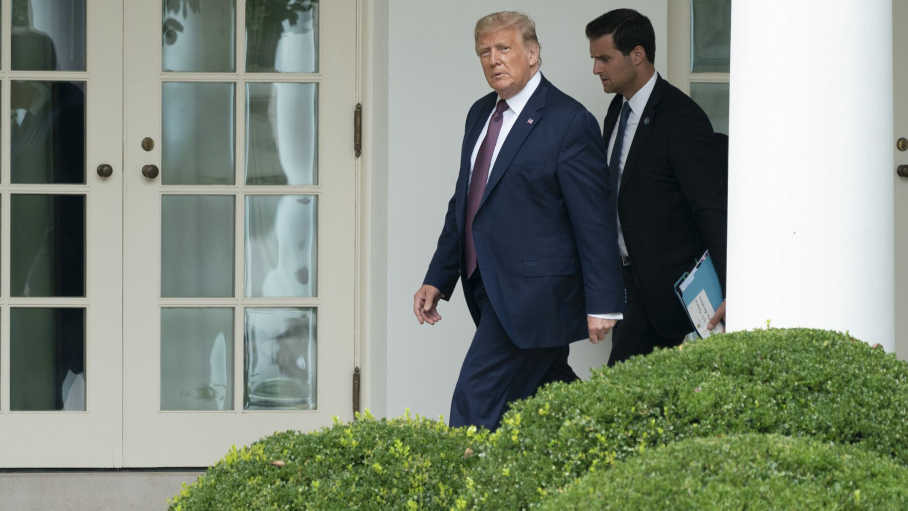

The United States is on the brink of a government shutdown because lawmakers have yet to reach a funding deal. With the fiscal year ending at midnight on Tuesday, millions of Americans could face service disruptions, and the economy could suffer.
This standoff is tense, especially since President Donald Trump and congressional Democrats clash over healthcare and federal spending. Although shutdowns have become common, this one carries unique risks and consequences.
Why the Crisis Exists
At the core of the problem, Congress has not passed the 12 annual appropriations bills needed to fund federal agencies for the new fiscal year, which begins October 1. Usually, Congress bundles these bills into a single omnibus package. However, this year, none are finalized.
Earlier this year, a Republican-led funding bill ensured that key agencies, including the Department of Defense and Homeland Security, remain funded. Meanwhile, other agencies would stop operating once funding lapses.
As a result, both parties proposed temporary measures. Democrats suggested a seven- to ten-day extension, while Republicans proposed funding through November 21. Unfortunately, neither side agreed.
Senate Democratic Leader Chuck Schumer said the divide is large: “We have very large differences.” Similarly, House Democratic Leader Hakeem Jeffries added, “We will not accept a plan that undermines healthcare protections.”
Consequently, Republicans plan a vote on their stopgap measure Tuesday, even though it already failed in the Senate. Therefore, both sides are preparing to blame each other if the government shuts down.
The Core Dispute: ACA Subsidies
The fight centers on subsidies under the Affordable Care Act (ACA). These tax credits help 24 million Americans afford insurance and expire at the end of the year.
Accordingly, Democrats want to make them permanent. Jeffries said, “We believe that simply accepting the Republican plan to continue to assault and gut healthcare is unacceptable.”
On the other hand, Republicans want to separate healthcare from government funding. Senate Majority Leader John Thune stated, “We can have that conversation. But before we do, release the hostage. Set the American people free. Keep the government open.”
Furthermore, the dispute is political. Democrats aim to energize their base before the 2026 midterms, while Republicans accuse Democrats of using the shutdown threat for leverage.
What Happens During a Shutdown
If funding fails, many federal agencies will partially or fully close. Consequently, agencies must classify work as essential or non-essential.
Essential workers—including military personnel, law enforcement, TSA agents, air traffic controllers, and hospital staff—must work without pay. In contrast, non-essential workers are furloughed but usually receive back pay once the government reopens.
This time, however, the Trump administration has warned of possible permanent layoffs, adding further uncertainty.
Likely service impacts
-
Air travel: Staffing shortages could cause delays.
-
National parks: Many could close or operate with reduced staff.
-
Small business grants and federal courts: May halt operations.
-
Postal service: Will continue since it is self-funded.
Meanwhile, Social Security, Medicare, and Medicaid payments will continue, although staff shortages may delay new enrollments or claims.
Funding at Stake
The dispute involves $1.7 trillion in discretionary spending, roughly one-quarter of the $7 trillion US budget. Meanwhile, the rest funds entitlements and interest on a $37.5 trillion national debt.
Unfortunately, few agencies have detailed shutdown plans, leaving uncertainty about operations. Furthermore, the White House extended 20 federal advisory committees through 2027, but their work during a shutdown remains unclear.
Past Shutdowns
Shutdowns have become more frequent due to partisan politics and narrow electoral margins. Since 1981, the US has experienced 14 partial shutdowns. The longest recent shutdown lasted 35 days in 2018–2019, affecting 800,000 federal employees.
Consequently, shutdowns ripple across the economy. Federal contractors face delays, and government workers reduce spending. Similarly, national parks and museums operate at limited capacity.
Why This Shutdown is Unique
Trump and Republicans control Congress. However, Democrats can block bills in the Senate through the filibuster. Meanwhile, Trump shows little interest in compromise. Democrats accuse him of using the shutdown threat to expand executive power.
Moreover, Trump has openly challenged funding decisions and refused to allocate funds approved for programs he opposes. Democrats worry public opinion could blame them if a shutdown occurs. Likewise, Republicans risk backlash if voters see them as responsible.
As the deadline nears, both sides brace for a high-stakes showdown. Consequently, millions of Americans and the economy face uncertainty.