
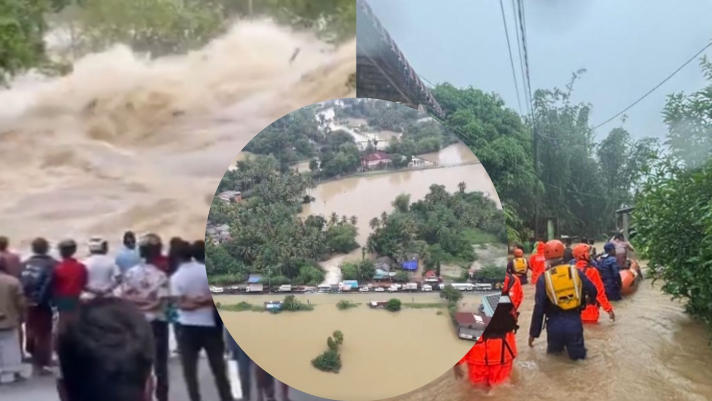

Cyclone Ditwah has triggered severe floods and landslides across Sri Lanka. According to the Disaster Management Centre, the death toll has risen to at least 334 people, while nearly 400 others are still missing. Even though the rain has weakened after a week of intense downpours, the impact remains severe in many areas.
Low-lying parts of Colombo, the capital city, are still underwater. More than one million people across the country have been affected by the disaster.
Record rainfall triggers landslides and floods
From last Thursday, Sri Lanka experienced record levels of rain. This led to several landslides in the central hilly regions. At the same time, swollen rivers overflowed and flooded entire towns in different parts of the country.
Homes, roads, and public services suffered major damage. Many communities remain cut off due to waterlogged roads and collapsed infrastructure.
Large-scale rescue operations underway
More than 24,000 personnel from the police, army, and air force are still working to reach people trapped by floodwaters. Their mission is to rescue stranded families and provide food, water, and medical help.
In the eastern part of Sri Lanka, the air force rescued over 120 people by helicopter after water broke through the Mavil Aru Reservoir dam. At the same time, the military helped move around 2,000 people to higher ground to protect them from rising waters.
Colombo among the worst-hit areas
Colombo, the main commercial hub of the country, is one of the hardest-hit cities. Dozens of families are still trapped inside their houses, surrounded by floodwaters.
In the suburb of Kelaniya, cooked meals are being provided by state agencies and donations. However, many residents said the help is not enough. More than 17,000 people have taken shelter in temporary relief camps and are waiting for the water to recede before returning home.
Families share their desperate struggle
One of the victims, Sunethra Priyadarshani, 37, described the terrifying situation she and her family faced, “My sister and I were trapped on the upper floor of our home with our four children for two days. We slowly ran out of food. We only had biscuits and water to give them last night,”
She said a boat later came and delivered lunch to them, helping them survive the crisis. She added: “We only have the clothes were are wearing. We will go stay at an aunt’s house for now. But we really need help.”
Floodwaters expected to recede soon
The irrigation department said floodwaters are likely to reduce gradually over the next three days, as Cyclone Ditwah moves towards southern India. Authorities also confirmed that electricity, water supply, and communication services will be restored step by step. Many power lines and transformers were washed away in the flooding.
Disaster spreads across Southeast Asia
The impact of the cyclone and heavy rainfall is not limited to Sri Lanka. In Indonesia, Malaysia, and Thailand, the combined death toll from floods and landslides has crossed 600. Tens of thousands of people in these three countries have also been displaced, and relief work is ongoing.