
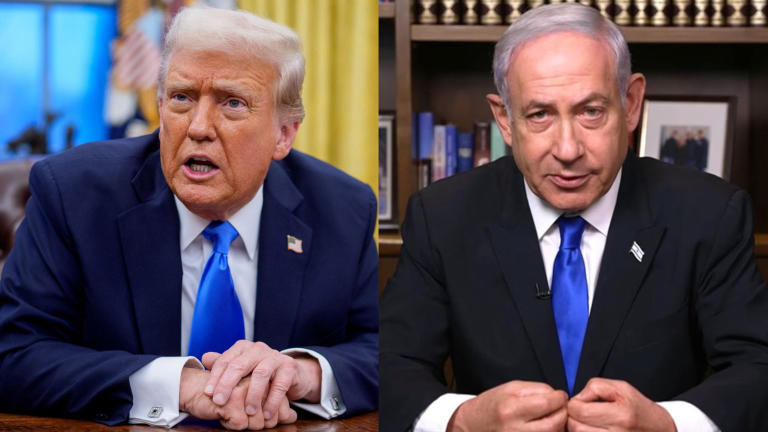

US President Donald Trump invited Israeli Prime Minister Benjamin Netanyahu on Monday to visit the White House “in the near future.” The invitation followed a phone call between the two leaders, according to a statement from Netanyahu’s office quoted by the Times of Israel.
“Prime Minister Benjamin Netanyahu, this evening, spoke with US President Donald Trump,” the statement said. It added, “Trump has invited Prime Minister Netanyahu to a meeting at the White House in the near future.”
This upcoming visit would be Netanyahu’s fifth trip to Washington since Trump resumed the presidency in January.
Talks centred on Gaza, peace deals, and regional stability
During their call, both leaders emphasized the importance of disarming Hamas and demilitarizing the Gaza Strip. They also discussed expanding existing peace agreements.
Netanyahu’s office pointed out that the conversation reinforced their mutual commitment to these objectives. The planned White House meeting, they said, would help further those goals.
Syria tensions and domestic politics
The call occurred soon after Trump publicly warned Israel not to destabilize Syria following reports of clashes between IDF forces and gunmen in southern Syria. On his social-media platform, Trump wrote: “It is very important that Israel maintain a strong and true dialogue with Syria, and that nothing takes place that will interfere with Syria’s evolution into a prosperous State.”
Also relevant is Netanyahu’s ongoing corruption case. He recently asked Isaac Herzog for a presidential pardon — a move that Trump has publicly supported. Their latest discussion came after Netanyahu’s formal request and Trump’s previous endorsement of the pardon, which he made in a speech to the Israeli parliament in October and later in a letter.
Why the invite matters
If Netanyahu accepts, his visit will deepen ties between the United States and Israel at a sensitive moment. The leaders’ agreement to focus on Gaza’s demilitarization and stronger peace deals suggests both sides want to leverage the meeting for diplomatic and security aims. Underlying regional tensions — such as those in Syria — also add urgency to their dialogue.