
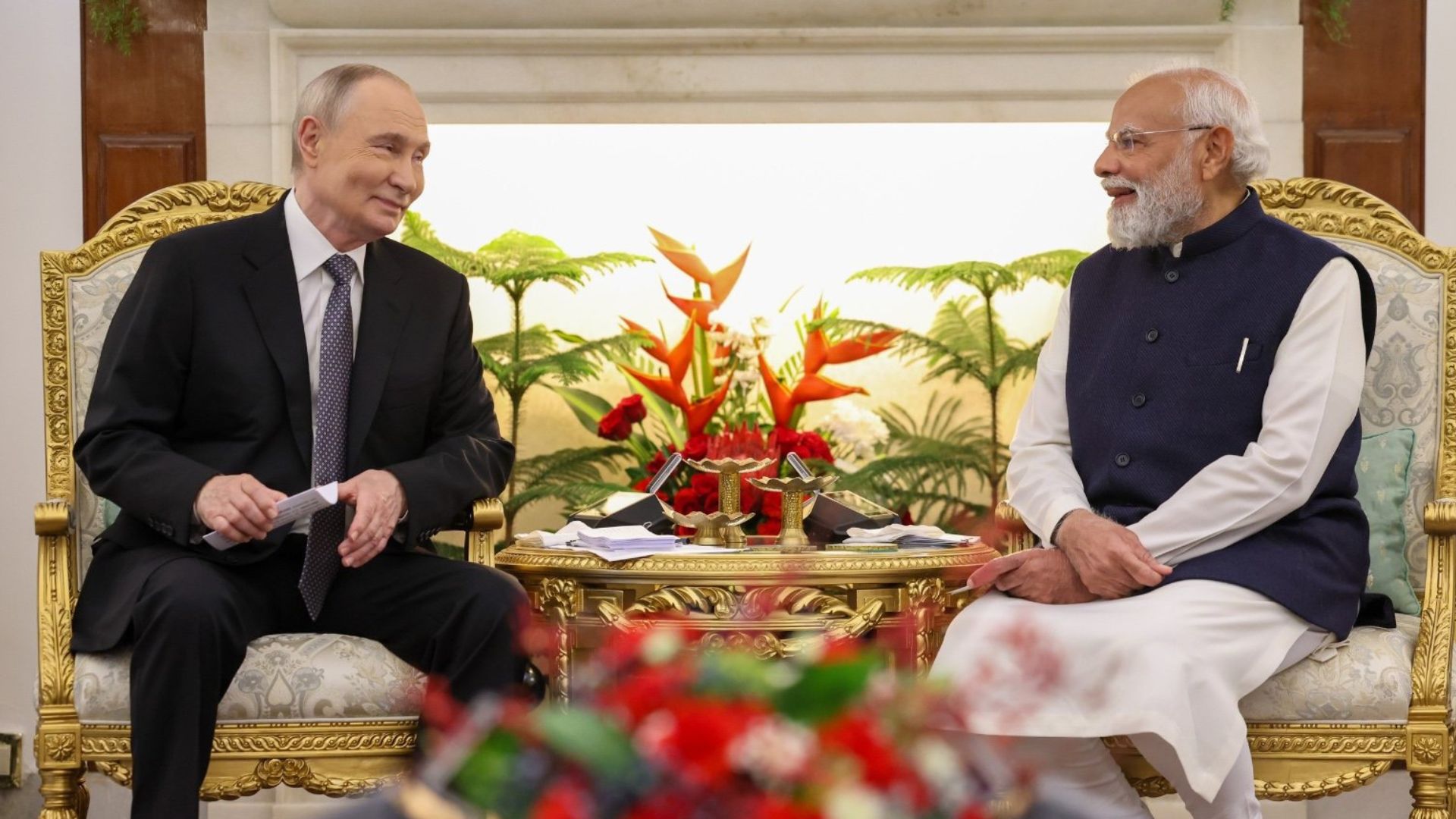

India’s largest nuclear project, the Kudankulam Nuclear Power Plant, received fresh momentum as Russian President Vladimir Putin arrived in New Delhi for the 23rd India–Russia Annual Summit. The timing highlighted close coordination between the two nations and underlined how central nuclear power is to their long-term partnership.
At a joint press conference with Prime Minister Narendra Modi, Putin spoke about the project’s scale. He said, “We’re conducting a flagship project to build the largest Indian nuclear power plant, Kudankulam. Two out of six reactor units have already been connected to the energy network, and four are still under construction. Getting this nuclear power plant to full power output will make an impressive contribution to the energy requirements of India.”
On the same day, Russia’s state-run nuclear agency, Rosatom, delivered the first batch of fuel for Unit 3. This delivery marked an important step toward bringing the reactor into operation.
A Boost For India’s Net Zero Goal
India aims to achieve “Net Zero” emissions by 2070. To reach this target, the country must expand its clean and reliable energy sources. Nuclear power plays an important role in this plan because it provides constant electricity without carbon emissions.
At the same time, the steady progress of Kudankulam sends a strong message from Russia. It shows that Moscow can complete major international projects even while facing wide Western sanctions.
Unit 3 Moves Closer To Start-Up
The nuclear fuel arrived on a specialised cargo flight from Russia. This delivery reflected the “uninterrupted” supply chain that Putin had promised during talks with Modi.
He also said, “Russia is a reliable supplier of oil, gas, coal, and everything that is required for the development of India’s energy.” He reaffirmed Russia’s commitment to completing all six reactors at the site.
With the fuel now on site, engineers will begin the “initial loading” stage. In this process, they place fuel inside the reactor core for the first time. This step moves Unit 3 toward “criticality,” when a self-sustaining nuclear reaction begins. After that, the unit can move towards testing and connection to the grid.
Rosatom confirmed that the new fuel is advanced. It allows the reactor to run for 18 months before refuelling. Older systems usually needed new fuel after 12 months. As a result, the plant will see less downtime and better efficiency.
Kudankulam’s Scale And Status
The Kudankulam Nuclear Power Plant sits in the Tirunelveli district of Tamil Nadu. It remains the strongest symbol of long-term technological cooperation between India and Russia.
Once all six units are complete, the total capacity will reach 6,000 MW. This will make it the largest power station of any kind in India.
Units 1 and 2 are already operational. They have supplied electricity since 2013 and 2016. They serve Tamil Nadu, Kerala, Karnataka, and Puducherry.
Unit 3 has now entered the pre-commissioning phase. Unit 4 is in an advanced stage of construction. Meanwhile, work continues on Units 5 and 6, with civil construction and concrete pouring in progress.
The project began with a 1988 agreement between Prime Minister Rajiv Gandhi and Soviet leader Mikhail Gorbachev. Even after the Soviet Union collapsed, both sides kept the project alive. Today, Kudankulam is the only foreign-built nuclear plant that is producing power in India.
Talks Expand To Small Modular Reactors
During the summit, India and Russia also discussed cooperation on Small Modular Reactors, or SMRs. These are compact nuclear reactors that can produce up to 300 MW per unit. Engineers build them in factories and then transport them for installation.
Rosatom presented its SMR technology as a strong option for India. These reactors can supply round-the-clock, carbon-free power to industries like steel and aluminium. They can also serve remote regions where extending the national grid is difficult and expensive.
Rosatom Director General Alexey Likhachev said Russia currently runs the only proven SMR technology. He pointed to the Akademik Lomonosov, the world’s first floating nuclear power plant, which is already operating in the Arctic.
Both sides agreed to “actively explore” the localisation of SMR technology. This opens the door for production in India under the Make in India initiative, similar to the BrahMos defence project.
Strategic Meaning For India
After the Ukraine conflict, the US and Europe placed heavy sanctions on Russia and urged countries to reduce their dependence on Moscow. However, Kudankulam’s smooth progress shows that India and Russia have protected their strategic cooperation.
Putin said, “The independent foreign policies of our nations are a source of stability in the world.”
To avoid restrictions on dollar-based trade, both countries now use the Rupee and Rouble in settlements and rely on alternative payment systems. The regular flow of fuel and equipment proves these arrangements are working.
India has made it clear that energy security for its 1.46 billion people comes first. Reliable, affordable electricity remains a national priority.
As Unit 3 moves closer to operation, the focus will shift to completing the remaining units. Once Kudankulam reaches its full 6,000 MW capacity, it will become a backbone of southern India’s power grid. It will also support the growing share of solar and wind energy by providing stability when renewable supply drops.
In the future, if India adopts Russian SMR technology, it could replace coal in many industrial zones and speed up the country’s transition to clean, low-carbon energy.