

Fighting between Thailand and Cambodia has resumed after a brief pause. The clashes began in July and had temporarily stopped following a ceasefire arranged by US President Donald Trump. However, tensions have now flared again along the border.
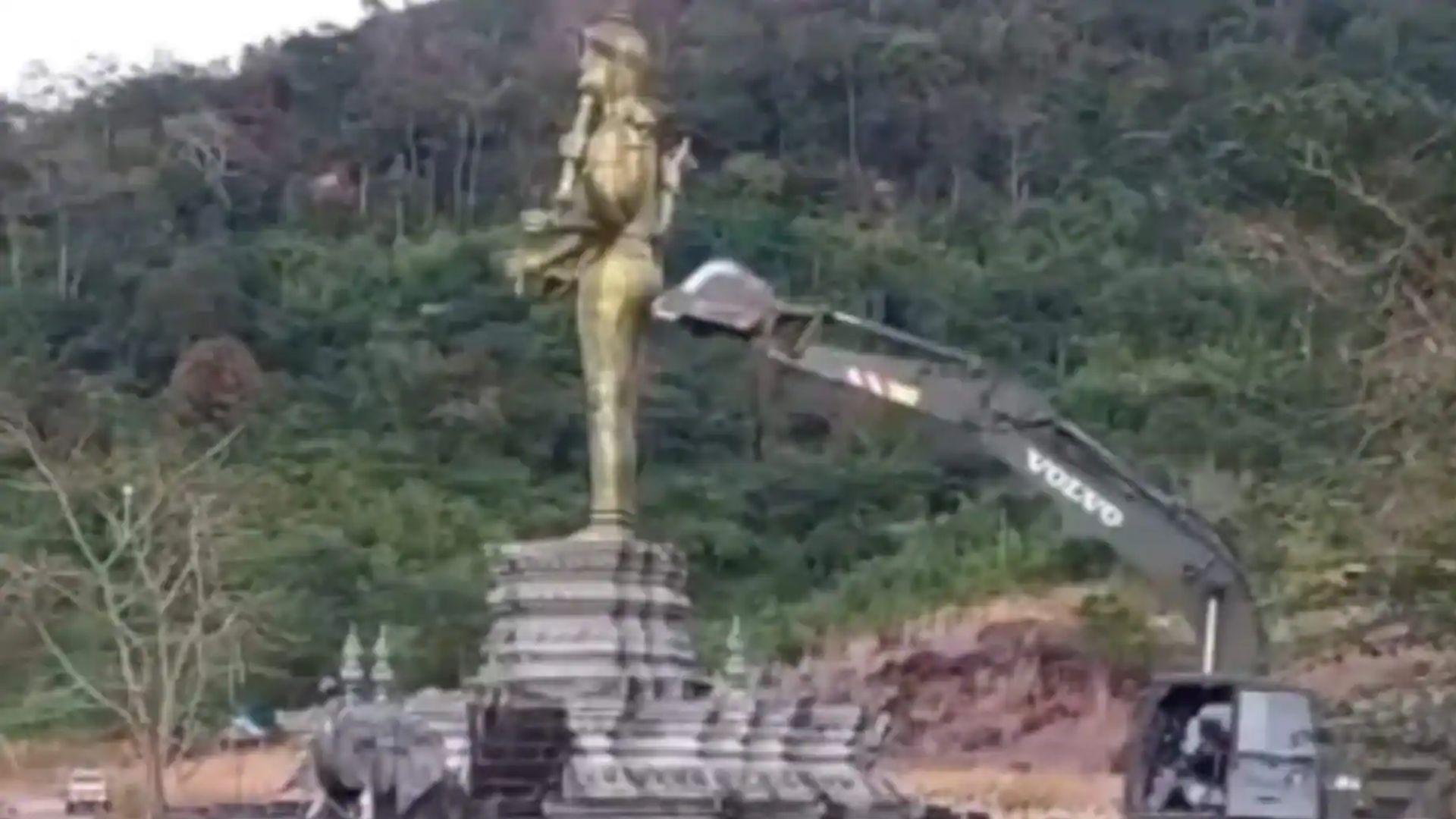
As the conflict intensified, videos spread rapidly on social media. These clips showed a statue of Lord Vishnu being damaged, allegedly by the Thai army. As a result, anger grew quickly, especially among Indians. Lord Vishnu is a highly respected deity in Hinduism, and many viewed the incident as deeply offensive.
The statue reportedly stood in Cambodia’s An Ses area, around 100 metres from the Thai border. Officials said workers built it in 2014. Cambodian authorities also stated that Buddhists and Hindus used the site for worship. However, Thailand maintained that security concerns prompted the demolition and denied any religious motive.
Indians Call for Boycott of Thailand
After the videos went viral, calls to boycott Thailand gained momentum on social media. Many Indians expressed outrage and urged others to avoid travelling to the country. Thailand remains a popular destination for Indian tourists due to its beaches, culture, food, and nightlife. Still, many now say they will rethink travel plans.
Several users shared emotional posts online. One wrote,
“Dear Indian friends: Please reconsider travelling to Thailand. Hindu heritage on Cambodian land has been destroyed, while Cambodia continues to honour Hinduism through its ancient temples. Why support a country that disrespects your faith?"
Another post stated,
“Thailand brought down Lord Vishnu statue, I want to start the “Boycott Thailand" and “Boycott Pattaya" campaigns. Hope my Hindu brethren support this cause by canceling bookings and ensuring that country is brought to its knees and forced to beg before India Challenge accepted?"
One user expressed personal anguish,
“Why is Thailand so cruel? What is wrong with the statue of Lord Vishnu, and why did you destroy it like this? As a devotee of Lord Vishnu, I condemn Thailand and call for a boycott by refusing to travel to your country,"
Meanwhile, another person called for broader action,
“We urge Indian citizens to stand for justice and ethics by boycotting Thai tourism, travel, goods, and services. Do not support a country that shows no respect for religion, civilians, or international norms. A peaceful, global boycott sends a clear message,"
Thailand Justifies the Demolition
In response to the backlash, Thailand released an official explanation. Authorities said the statue was not a registered religious site. The Thai-Cambodian border press centre clarified,
“The actions were not intended to involve religion, beliefs, or disrespect any sacred entities, but were solely for the purpose of area management and security, following the Thai side’s regaining control of areas under Thailand’s sovereignty."
Thailand also alleged that Cambodian soldiers built the statue on disputed land to strengthen Cambodia’s territorial claim. Additionally, Thai officials stressed respect for all religions and expressed “sincere regret for any discomfort that may have arisen from misunderstandings" caused by the circulating images.
Cambodia Rejects Thailand’s Claim
Cambodia firmly disputed Thailand’s version of events. Cambodian officials said the statue stood inside Cambodian territory in An Ses and served as a shared religious site.
Preah Vihear’s spokesperson Lim Chanpanha said,
“We condemn the destruction of ancient temples and statues that are worshipped by Buddhist and Hindu followers."
India Reacts Strongly
India also responded sharply to the incident. The government said such “disrespectful" acts hurt religious sentiments across the world and “should not take place."
External Affairs Ministry spokesperson Randhir Jaiswal stated,
“We have seen reports on the demolition of a statue of a Hindu religious deity, built in recent times, and located in an area affected by the ongoing Thai-Cambodia border dispute."
Finally, India urged both Thailand and Cambodia to resolve the issue through dialogue and diplomacy. It called on both sides to prevent further damage to people, property, and religious sites.