

A serious development is unfolding across the Persian Gulf involving Iran. New satellite images and military reports show one of the largest US military buildups ever seen in the Gulf region, at a time when Iran marked the 47th anniversary of its Islamic Revolution with strong and defiant celebrations in Tehran.
This rise in military presence includes Patriot missile systems, large transport aircraft, and powerful naval strike groups. Many observers fear this could lead to a situation similar to last year’s air strikes on Iran’s nuclear sites.
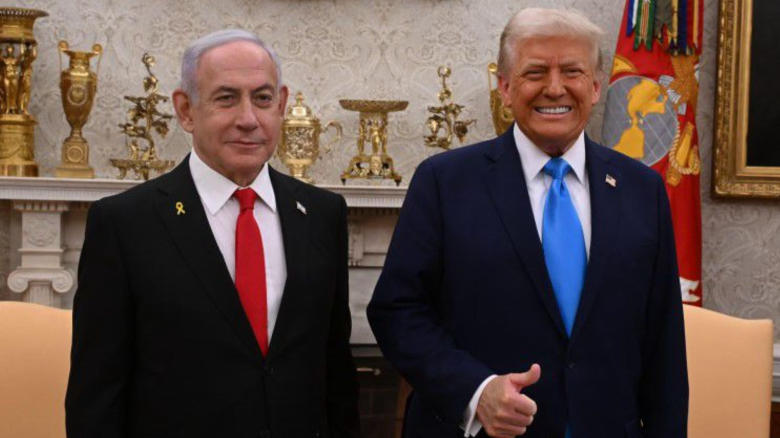
The timing of this military activity is important. It comes just as US President Donald Trump held an urgent and quiet meeting at the White House on Wednesday with Israeli Prime Minister Benjamin Netanyahu. The talks were aimed at “stiffening the resolve” of the US government while it handles delicate new nuclear discussions with Iran.
Growing US military presence in the region
Recent satellite images from commercial companies have shown the scale of the US deployment. At Al-Udeid Air Base in Qatar and Muwaffaq Salti base in Jordan, several advanced military aircraft have arrived. These include F-15E Strike Eagles, KC-135 refuelling planes, and C-17 Globemaster III transport aircraft.
Another important change is the movement of Patriot missile defence systems. These have been shifted from fixed positions to mobile truck launchers so they can respond quickly if Iran carries out retaliatory strikes.
At sea, the USS Abraham Lincoln carrier strike group is already positioned in the region, along with several guided-missile destroyers. President Trump has also spoken about sending a second “armada,” possibly led by the USS George H.W. Bush, to increase pressure on Iran. This strong military setup is not just meant to show strength. It also prepares the US for possible offensive action if diplomatic talks in Oman fail.
For the Trump administration, the approach appears clear. Officials are looking for a “good deal” that limits Iran’s ballistic missile programme. If that does not happen, a military outcome could be “tougher than last time.”
Netanyahu presses for stricter approach
In the middle of these developments, Israeli Prime Minister Benjamin Netanyahu travelled to Washington earlier than planned. This was his sixth meeting with Trump since January 2025. Iran’s nuclear programme was “first and foremost” on his agenda.
Israel has long argued that any agreement with Iran must include restrictions not only on nuclear activities but also on its missile programme. Israeli leaders see Iran’s growing missile strength as a direct threat.
During last year’s conflict, Iran launched several ballistic missile attacks toward Israel, hitting both military and civilian targets. Israeli officials believe that if the missile programme is not included in any deal, Iran would still keep a powerful strategic advantage.
President Trump has shown support for some of these concerns. He has said that any agreement must guarantee “no nuclear weapons, no missiles.” At the same time, his administration continues to push for a negotiated solution. The arrival of more US naval forces is meant to strengthen America’s position in talks and reassure allies in the region.
The low-profile but urgent nature of Netanyahu’s visit shows Israel’s worry that fast progress in US-Iran talks could lead to compromises it does not accept. Israeli leaders are expected to push for strict limits and strong enforcement measures.
Tension between deterrence and diplomacy
The growing US military presence in the Gulf sends two messages. It shows readiness for possible military action while also supporting ongoing negotiations. Defence experts say that placing more aircraft, warships, and missile systems in the region gives the US the flexibility to act quickly if talks collapse.
Iran, meanwhile, is continuing diplomatic discussions but also using strong language. President Pezeshkian recently spoke in Tehran under heavy security, showing the pressure inside the country and the rising tension outside. Last month, protests took place across Iran, and authorities responded with a crackdown. Earlier, Washington had warned it might take action in support of demonstrators.
Apart from the Iran issue, Trump and Netanyahu are also expected to discuss the situation in Gaza and the West Bank. Recent decisions by Israel’s cabinet to increase control over parts of the occupied West Bank have faced global criticism. A US official said Trump does not support annexation of the territory, but Iran remains the main focus of current discussions.
Region on edge as talks continue
The mix of military buildup and diplomatic talks has created uncertainty across the region. While the US and Iran exchange proposals, warships and aircraft are being placed close to key areas where conflict could break out.
It is still unclear whether this military presence will remain a warning or lead to more strikes. The future depends largely on how negotiations turn out. For now, the Gulf region is once again at the centre of global attention, where diplomacy is unfolding under the shadow of carrier ships and missile systems.