
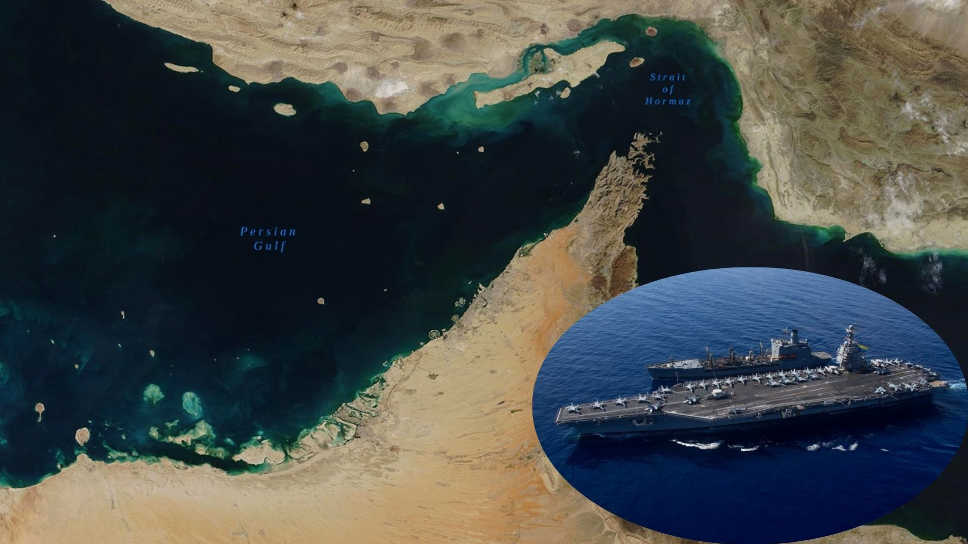

The United States has strengthened its military deployment in the Middle East by sending dozens of fighter jets to the region. The move comes at a time of growing tensions with Iran and ongoing indirect nuclear negotiations in Geneva.
Reports said the US sent more than 50 fighter aircraft to the region within 24 hours as part of a larger buildup of air and naval forces near Iran. The development was reported by The Jerusalem Post, which cited Axios and a US official. Independent flight trackers also spotted advanced jets heading toward the area.
This increased deployment reflects Washington’s growing military readiness as tensions over Iran’s nuclear programme and regional security continue to rise. The buildup also includes increased naval movements, showing that the US is preparing while diplomatic efforts continue.
Khamenei issues strong warning
As the military activity increased, Iran’s Supreme Leader Ayatollah Ali Khamenei delivered a sharp message aimed at US President Donald Trump during a speech in Tehran.
Responding to repeated US claims of military strength, Khamenei said, “The US President keeps saying that they have the strongest military force in the world. The strongest military force in the world may at times be struck so hard that it cannot get up again."
He also spoke about the increased US naval presence near Iran. He said, “The Americans constantly say that they’ve sent a warship toward Iran. Of course, a warship is a dangerous piece of military hardware. However, more dangerous than that warship is the weapon that can send that warship to the bottom of the sea."
Khamenei rejected decades of pressure from Washington and said the US had failed to defeat Iran despite long-standing tensions. He added, “You, too, will not be able to do this."
Strait of Hormuz drills raise concerns
At the same time, Iran announced the temporary closure of the Strait of Hormuz for live-fire military exercises. The move marked a serious step and added to the already tense situation.
Iranian state media said missiles were fired toward the waterway during the drills for “safety and maritime concerns." The Strait of Hormuz is one of the world’s most important shipping routes, with nearly 20 percent of global oil supplies passing through it.
Iran has held military exercises there before, but announcing a temporary closure sent a stronger signal this time. Iranian officials also warned that any attack on their country would have consequences beyond its borders, highlighting the risk of a wider regional conflict.
Talks continue despite military activity
Even as tensions rise, diplomatic talks between Washington and Tehran have continued. Reports from Asian News International and Associated Press said indirect discussions resumed in Geneva.
The US delegation is being led by Steve Witkoff and Jared Kushner, while Oman is acting as a mediator between the two sides.
Iranian Foreign Minister Abbas Araghchi sounded hopeful about the talks. He said “a new window has opened" for negotiations and expressed hope for a “sustainable and negotiated solution."
US Vice President JD Vance also commented after the discussions. He said the talks went well “in some ways," but added that major differences still remain over key US conditions.