
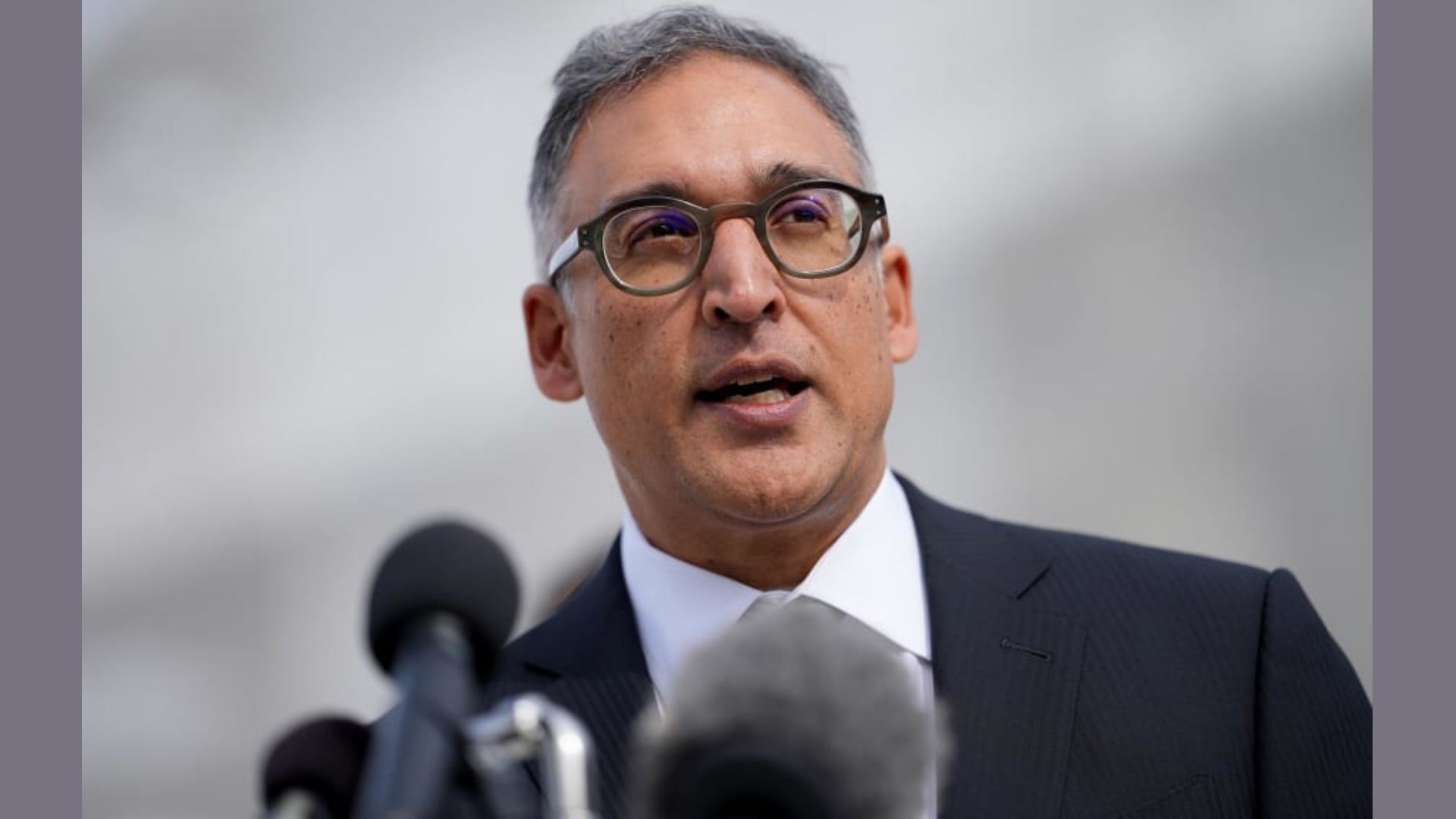

Neal Katyal, a former Acting Solicitor General of the United States and the son of Indian immigrants, played a central role in the major Supreme Court ruling that struck down President Donald Trump’s sweeping tariffs. The judgment marked a key moment in the ongoing debate over the limits of presidential power.
The decision came from the Supreme Court of the United States and overturned Trump’s use of emergency authority to impose broad import duties.
Challenging emergency tariff powers
Katyal argued that Trump wrongly used the 1977 International Emergency Economic Powers Act (IEEPA) to introduce what he called “unjust, unconstitutional taxes” on goods from nearly all US trading partners.
Small businesses brought the case, with legal backing from the Liberty Justice Center. Trump had defended the tariffs by claiming they were necessary for national security and economic strength. He pointed to trade deficits and fentanyl overdoses as national emergencies that justified the action.
After the ruling, Katyal called it a major constitutional victory. “The US Supreme Court gave us everything we asked for in our legal case. Everything,” he said.
He added, “This case has always been about the presidency, not any one president. It has always been about the separation of powers, and not the politics of the moment. I’m gratified to see our Supreme Court, which has been the bedrock of our government for 250 years, protect our most fundamental values.”
A career built on constitutional law
Katyal was born in Chicago to Indian immigrant parents, his father a doctor and his mother an engineer. He studied at Dartmouth College and later graduated from Yale Law School. He then clerked for Justice Stephen Breyer at the Supreme Court.
In 2010, President Barack Obama appointed him Acting Solicitor General. In that role, he represented the federal government before the Supreme Court and appellate courts across the country. Over his career, he has argued more than 50 cases before the top court, setting records for minority advocates.
He now works as a partner at Milbank LLP and teaches as the Paul Saunders Professor at Georgetown University Law Center. His practice focuses on constitutional and complex appellate litigation.
Katyal has handled several high-profile cases. He defended the constitutionality of the Voting Rights Act of 1965. He also challenged Trump’s 2017 travel ban and won unanimous rulings in major environmental and national security cases. In addition, he served as Special Prosecutor for the State of Minnesota in the murder case of George Floyd. He also wrote the book Impeach: The Case Against Donald Trump.
Recognition and broader impact
Katyal has received the US Justice Department’s highest civilian honour, the Edmund Randolph Award. The American Lawyer named him Litigator of the Year in 2017 and again in 2023. Forbes listed him among the top 200 lawyers in the United States in 2024 and 2025.
Legal experts expect the Supreme Court’s ruling to limit a president’s ability to rely on emergency economic powers to impose wide-ranging tariffs without clear approval from Congress.
Reflecting on the outcome, Katyal said in an interview with MS Now, “Just think about it like that. The son of immigrants was able to go to court and say on behalf of American small businesses, hey, this president is acting illegally. And I was able to present my case, have them ask really hard questions at me. It was a really intense oral argument. And at the end of it, they voted and we won.”
He continued, “That is something so extraordinary about this country, the idea that we have a system that self-corrects, that allows us to say you might be the most powerful man in the world, but you still can’t break the Constitution. I mean, that to me is what today is about.”
In another interview with MSNBC, he said, “Today, the United States Supreme Court stood up for the rule of law, stood up for Americans everywhere. Its message was simple. Presidents are powerful, but our constitution is more powerful still.”
Standing outside the Supreme Court building, Katyal stressed the constitutional principle at stake. “In America, only Congress, the chief justice writing for six justices said, only Congress can impose taxes on the American people. And that’s what tariffs are. Tariffs are taxes,” he said.