
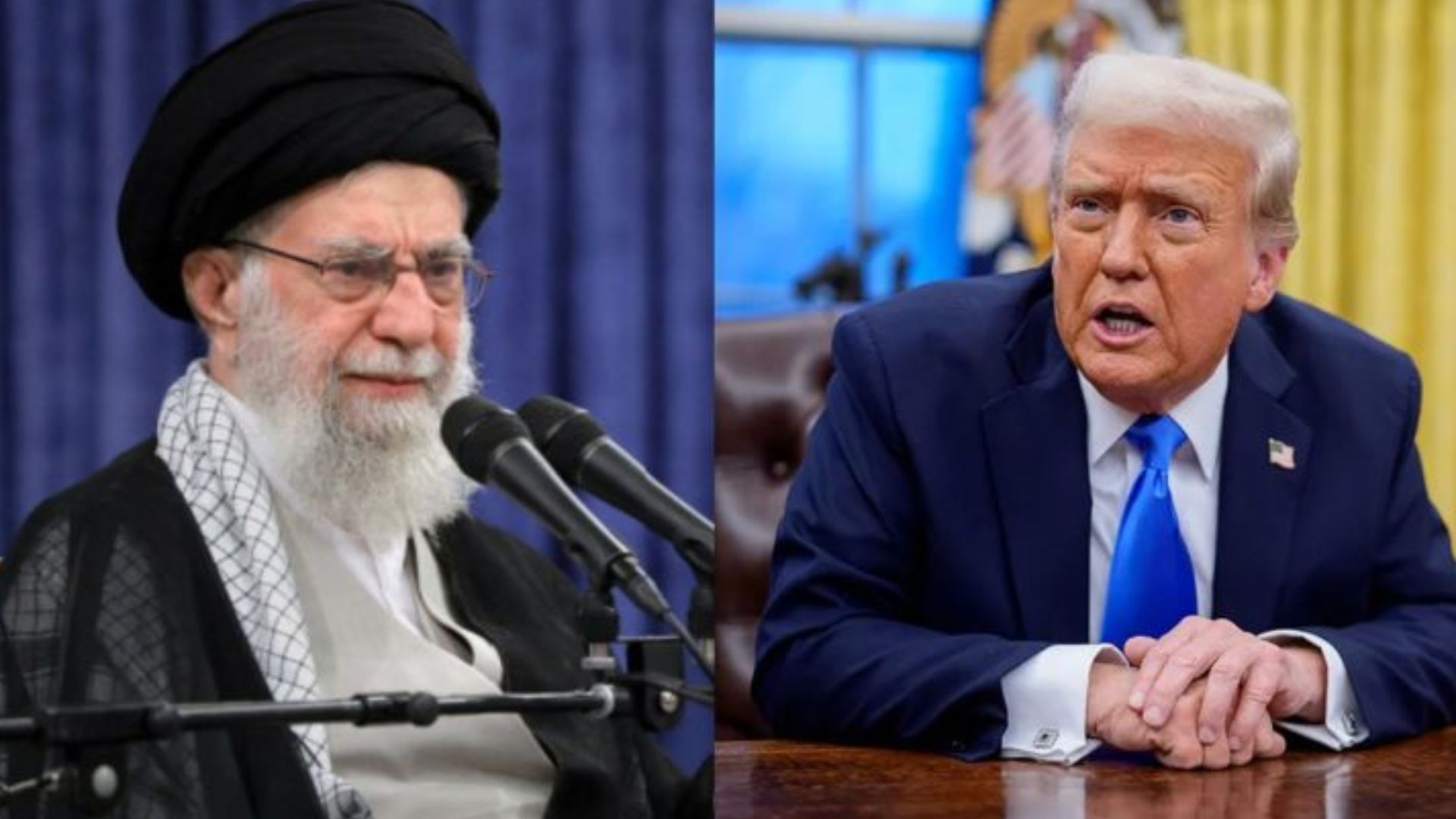

Thousands of people across Iran reportedly received a mysterious message on their phones on Monday. The text, written in Persian, read: "The US President is a man of action. Wait and see," according to Iran International, which cited state media.
Anonymous message sparks tension
The alert appeared as tensions between Washington and Tehran continued to rise. US President Donald Trump has increased his verbal attacks on Iran’s leadership. At the same time, the United States has expanded its military presence in the Middle East, deploying aircraft and naval forces.
Trump recently said he is considering a “limited military strike” on Iran. Another round of talks between the two countries is scheduled to take place in Geneva on Thursday.
Iran signals openness to diplomacy
Iran’s Foreign Minister Abbas Araghchi told CBS on Sunday that he sees a “good chance” for a diplomatic breakthrough over Iran’s nuclear programme. However, he stressed that Tehran would not give in to pressure from the US military buildup.
Iran has prepared a draft proposal regarding its nuclear programme and plans to present it to mediators in the coming days. Tehran maintains that its nuclear activities are for peaceful civilian purposes. Western nations, however, believe Iran aims to develop nuclear weapons.
War fears intensify
Iran warned the United States on Monday that any attack would be met "ferociously", responding to Trump’s threat of possible military action. Last week, Trump said Iran had no more than 15 days to reach a deal, or the US could launch strikes using the forces it has assembled in the region.
Although Iran insists the negotiations focus only on its nuclear programme, Washington also wants to discuss Iran’s missile development and its support for militant groups.
The two sides held a second round of indirect talks in Switzerland last week under mediation by Oman. Iran and Oman confirmed that discussions would continue on Thursday, though the United States has not yet officially confirmed the schedule.
In a Fox News interview, US negotiator Steve Witkoff said Trump questioned why Iran had not "capitulated" despite Washington’s growing military presence.
International concern grows
The European Union urged both sides to pursue diplomacy. EU foreign policy chief Kaja Kallas said, "We don't need another war in this region." She added, "It is true that Iran is at its weakest point that they have been. We should be really using this time to find a diplomatic solution."
Meanwhile, the US embassy in neighboring Lebanon reduced staff as a precaution, reflecting fears of possible escalation.
Several countries have advised their citizens to leave Iran. India joined Sweden, Serbia, Poland, and Australia in issuing travel advisories.
Protests return to Iranian campuses
At the same time, domestic unrest resurfaced. University students launched fresh protests at the start of the new academic term. According to AFP, demonstrators revived slogans from nationwide protests that peaked in January.
Videos verified by AFP showed students in Tehran burning the Iranian flag adopted after the 1979 revolution. Protesters, many of them women, chanted "down with the Islamic republic."
The earlier protests began in December over worsening economic hardship caused by sanctions. Security forces crushed the demonstrations with force. The US-based Human Rights Activists News Agency (HRANA) reported more than 7,000 deaths, mostly protesters, though rights groups believe the true figure is higher.
Iranian authorities acknowledged over 3,000 deaths, including security personnel and civilians. They blamed the violence on "terrorist acts" allegedly encouraged by the United States and Israel, claiming foreign enemies exploited legitimate economic grievances.
A volatile moment
Iran’s leadership now faces growing internal and external pressure. The country recently endured a 12-day conflict with Israel and has seen its regional allies weakened.
With military threats rising, diplomatic talks pending, and protests re-emerging at home, the standoff between Iran and the United States stands at a critical and highly unstable point.