
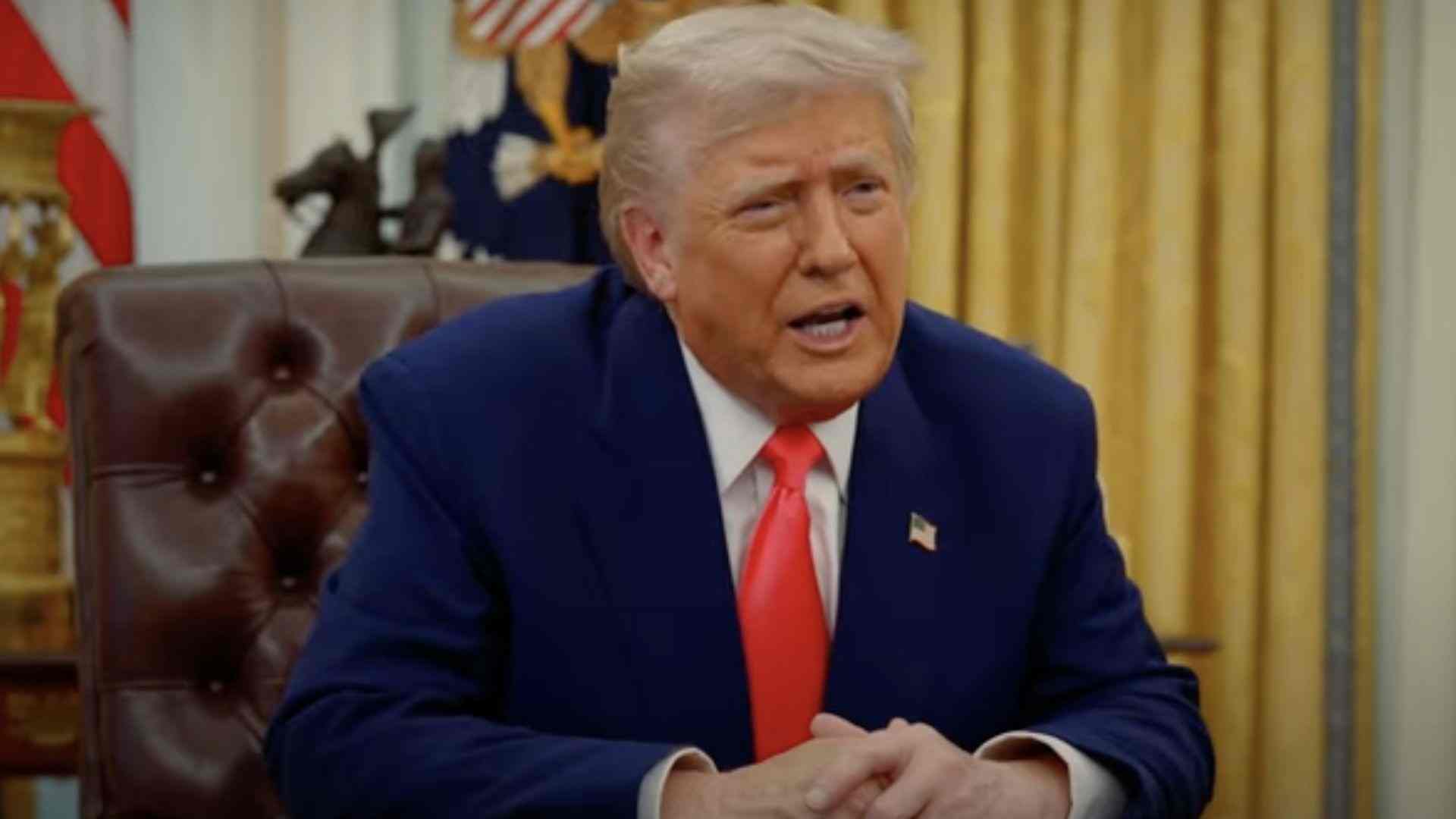

US President Donald Trump strongly criticised Iran over its actions in the Strait of Hormuz. He said Iran is doing a “very poor” and “dishonourable” job in managing the vital shipping route.
His remarks came just before important peace talks between the US and Iran. These talks are scheduled to take place in Islamabad on April 10 and may help end the war that has continued for over five weeks.
Trump shared his concerns on Truth Social on April 9. He wrote, “Iran is doing a very poor job, dishonourable, some would say, of allowing Oil to go through the Strait of Hormuz. That is not the agreement we have!”
In another post, he added, “There are reports that Iran is charging fees to tankers going through the Hormuz Strait — They better not be and, if they are, they better stop now!”
Strait Dispute Complicates Ceasefire Efforts
The disagreement over Iran’s control of the Strait of Hormuz has become a major issue in ongoing peace efforts. At the same time, Israel’s large-scale military strikes in Lebanon have further complicated the situation.
The Trump administration had made it clear that one key condition of the proposed two-week ceasefire was the free movement of ships through the strait. However, Iran has effectively restricted this passage.
In response, Tehran has said it will reopen the route, but only under certain conditions. It wants ships to coordinate with its military and pay a fee for passing through.
This is a major shift, as ships were never charged earlier. The Strait of Hormuz has always been considered an international waterway, not controlled by any single country.
Leaders Head to Pakistan for Crucial Talks
Senior US officials, including Vice President JD Vance, special envoy Steve Witkoff, and Jared Kushner, are expected to arrive in Islamabad on April 10.
They will meet Iranian representatives in what is seen as a decisive step toward ending the conflict in West Asia.
Iran’s team will likely be led by Foreign Minister Abbas Araghchi and Parliament Speaker Mohammad Baqer Qalibaf. Both leaders have strongly criticised the US in recent weeks.
It is still unclear whether formal talks will begin on April 10 or April 11. Meanwhile, Pakistan has announced two local holidays in Islamabad ahead of the meetings.
Mixed Signals on Peace and Ongoing Fighting
Despite his tough stance, Trump told NBC News that he is “very optimistic” about reaching a peace agreement with Iran. He also claimed that Israel is “scaling back” its attacks in Lebanon.
However, Israeli Prime Minister Benjamin Netanyahu contradicted this claim. In a video message, he said there is “no ceasefire” in Lebanon.
Trump also said that Iranian leaders appear “much more reasonable” during private discussions. Still, he warned, “if they don’t make a deal, it’s going to be very painful.”
Israel’s Lebanon Offensive Raises Tensions
At the same time, Israel has increased its military operations in Lebanon. Netanyahu has ordered stronger attacks targeting Hezbollah fighters.
These strikes have shaken the fragile ceasefire understanding between the US and Iran. In the past two days alone, more than 300 people have been killed, drawing criticism from several world leaders.
The US and Israel argue that Lebanon was not included in the ceasefire agreement with Iran. However, Iranian officials disagree. They say attacks on Hezbollah, which they support, could break the truce.
Uncertainty Remains Over Peace Deal
As both sides prepare for talks, tensions remain high. The dispute over the Strait of Hormuz, ongoing violence in Lebanon, and conflicting claims about the ceasefire continue to create uncertainty.
The upcoming discussions in Islamabad are now seen as a crucial opportunity to reduce tensions and possibly bring the conflict to an end.