
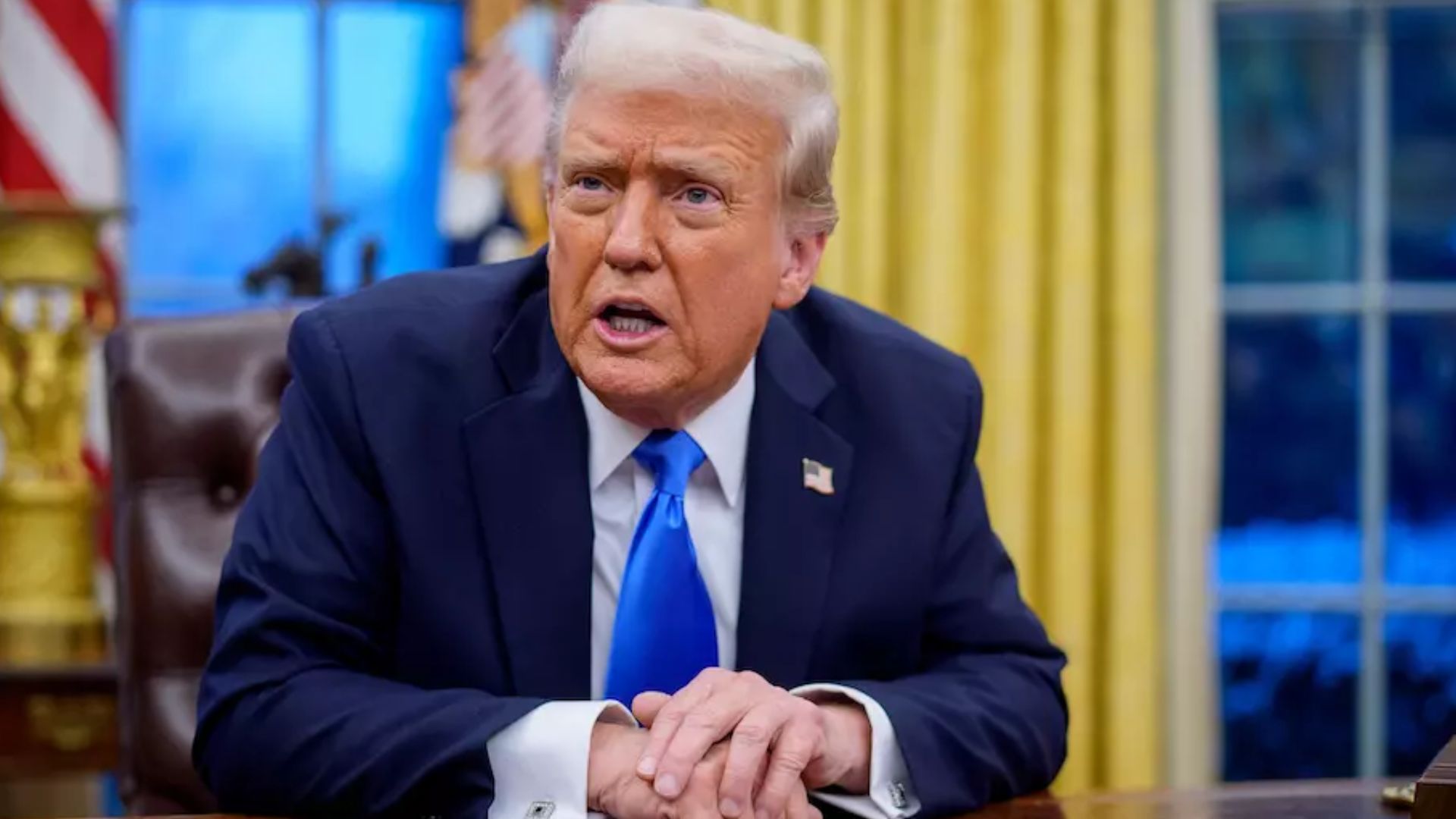

US President Donald Trump reacted strongly after the US–Iran talks in Islamabad ended without a deal. He hinted at tougher action and shared an article on his Truth Social platform that discussed a possible naval blockade against Iran.
US–Iran Talks End Without Agreement in Islamabad
The United States and Iran held a rare face-to-face meeting in Pakistan’s capital, but they failed to reach an agreement after 21 hours of continuous negotiations. US Vice President JD Vance confirmed the outcome, saying, "...The bad news is that we have not reached an agreement." As a result, the future of the fragile two-week ceasefire remains uncertain.
Trump Shares Naval Blockade Strategy Against Iran
Trump shared an article published by Just the News titled: “The Trump card: President holds if Iran won’t bend - naval blockade.” The report suggested that the US may consider a naval blockade if Iran refuses to accept Washington’s final proposal. This move could increase pressure on Tehran by targeting its key economic sectors.
US May Target Iran’s Oil Exports
According to the report, the US could restrict Iran’s oil exports and pressure countries that continue to buy Iranian crude. The article also referred to earlier US actions, including a naval strategy used against Venezuela during Nicolas Maduro’s presidency, to show how such pressure tactics could work.
"If Iran refuses to accept the final deal the United States offered Saturday, Trump could bomb Tehran back to the “Stone Ages” as he vowed. Or he might just reprise his successful blockade strategy to choke an already teetering Iranian economy and ratchet up diplomatic pressure on China and India by cutting them off one of their key sources of oil," the report said.
JD Vance Blames Iran for Deadlock
Vice President JD Vance, who led the US delegation during the talks, said negotiations failed because Iran did not accept American terms. He stated that the US had asked Iran to stop developing nuclear weapons, but Tehran refused to agree. As a result, both sides left Islamabad without a deal.
Ceasefire Uncertainty Grows After Failed Talks
With no agreement in place, tensions between the two countries remain high. The collapse of talks has also created uncertainty over the temporary ceasefire. Key issues like nuclear policy, oil exports, and control of important routes such as the Strait of Hormuz continue to block progress.