
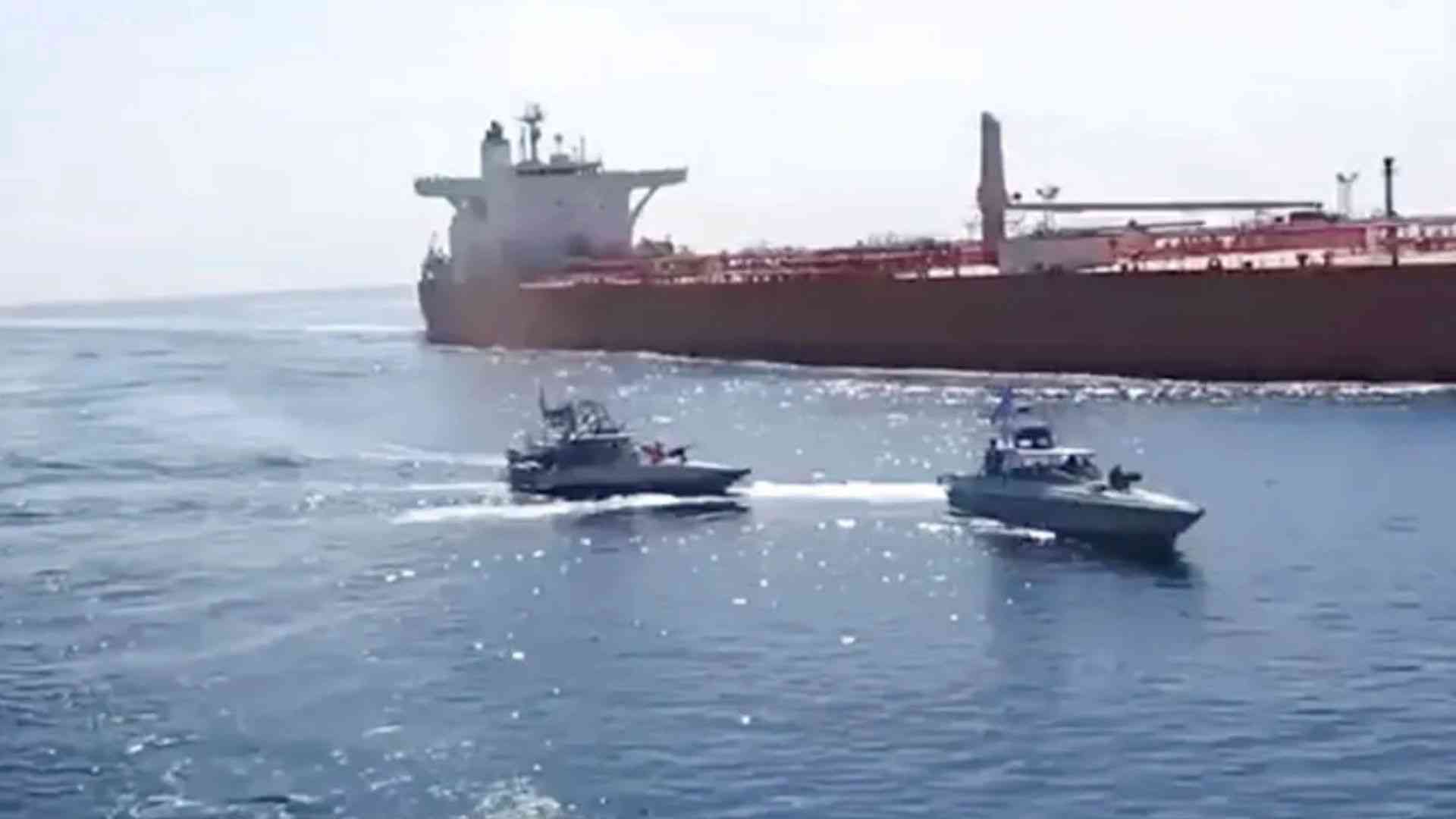

Iran’s Islamic Revolutionary Guards issued a strong warning on Saturday, saying American military bases and ships in the Middle East would come under attack if Iranian tankers were targeted again. The warning came after the United States struck two Iranian tankers in the Gulf of Oman and as Washington waited for Tehran’s response to a new peace proposal.
Iranian media quoted the Revolutionary Guards as saying, “Any attack on Iranian tankers and commercial vessels will result in a heavy attack on one of the American centres in the region and enemy ships.”
The threat highlighted the growing tensions between Iran and the United States despite ongoing diplomatic efforts to prevent a wider regional conflict.
US Awaits Iran’s Reply to Peace Proposal
US President Donald Trump said on Friday that he expected Iran’s response to Washington’s latest peace proposal “supposedly tonight.” However, there was no public indication by Saturday that Tehran had formally responded through Pakistani mediators.
At the same time, Abbas Araghchi openly questioned America’s commitment to diplomacy. During a conversation with Turkey’s foreign minister, Araghchi reportedly said the recent US military actions had increased distrust toward Washington.
“The recent escalation of tensions by American forces in the Persian Gulf and their numerous actions in violating the ceasefire have added to suspicions about the motivation and seriousness of the American side in the path of diplomacy,” he said, according to Iran’s ISNA news agency.
US-Iran Naval Clash Raises Regional Fears
The latest confrontation began on Friday when an American fighter jet fired on and disabled two Iranian-flagged tankers in the Gulf of Oman. Washington accused the vessels of violating its blockade around Iranian ports.
An Iranian military official later claimed that Iran’s navy had responded with strikes of its own.
The incident followed another major escalation in the Strait of Hormuz, one of the world’s most important oil shipping routes. Iran has attempted to tighten control over the strategic waterway to increase economic pressure on the United States and its allies.
The US has repeatedly said that allowing Tehran to dominate the key maritime route is unacceptable.
Diplomatic Efforts Continue Through Pakistan and Qatar
The United States has reportedly sent a proposal to Iran through Pakistani mediators seeking an extension of the current Gulf truce. Washington hopes the extension could create space for negotiations aimed at ending the conflict that began ten weeks ago after joint US-Israeli strikes on Iran.
French broadcaster LCI journalist Margot Haddad said Trump told her during a brief interview that he expected Iran’s reply “very soon.”
Meanwhile, Iran’s foreign ministry stated on Friday that the American proposal was still “under review.”
Diplomatic activity also intensified in Qatar, which has emerged as a major intermediary between Washington and Tehran. US Secretary of State Marco Rubio met Qatar’s leadership on Saturday to discuss regional security and efforts to prevent further escalation.
According to the US State Department, both sides discussed “continued close coordination to deter threats and promote stability and security across the Middle East.”
Qatar’s Prime Minister Sheikh Mohammed bin Abdulrahman Al Thani had earlier met US Vice President JD Vance to discuss Pakistan-led negotiations for a long-term peace settlement.
Iran had previously targeted sites in Qatar during the conflict because the Gulf nation hosts a major American military air base.
Oil Slick Detected Near Iran’s Key Export Hub
Meanwhile, satellite images revealed a large oil slick spreading near Iran’s Kharg Island, a major oil export terminal critical to the country’s economy.
Global monitoring organisation Orbital EOS estimated the slick covered more than 20 square miles off the island’s western coast. However, the exact cause of the spill remains unclear.
The UK-based Conflict and Environment Observatory later said the spill appeared to have reduced significantly by Saturday and suggested it may have been caused by leaking oil infrastructure.
Kharg Island remains central to Iran’s oil exports and sits north of the strategically important Strait of Hormuz.
After the conflict began on February 28, Iran largely shut the strait, triggering panic in global energy markets and sharply increasing oil prices. In response, the United States imposed its own blockade on Iranian ports.
Trump also recently ended a short-lived US naval mission that had attempted to reopen the strait for commercial shipping.
Lebanon Ceasefire Also Under Pressure
At the same time, tensions continued rising on another front involving Hezbollah and Israel.
Lebanese authorities said Israeli airstrikes killed at least nine people in southern Lebanon on Saturday. State media also reported attacks on a highway south of Beirut, outside Hezbollah’s traditional strongholds.
The latest violence marked one of the most intense periods since a fragile ceasefire between Israel and Hezbollah began three weeks ago.
Hezbollah said it launched drones targeting Israeli troops in northern Israel in response to continuing Israeli strikes.
Israel’s military confirmed that several explosive drones entered Israeli territory. One reservist was severely injured, while two others suffered moderate injuries.
The fresh escalation comes ahead of planned direct talks between Lebanon and Israel in Washington next week. Hezbollah strongly opposes the negotiations, even though the two countries have technically remained at war since 1948.