
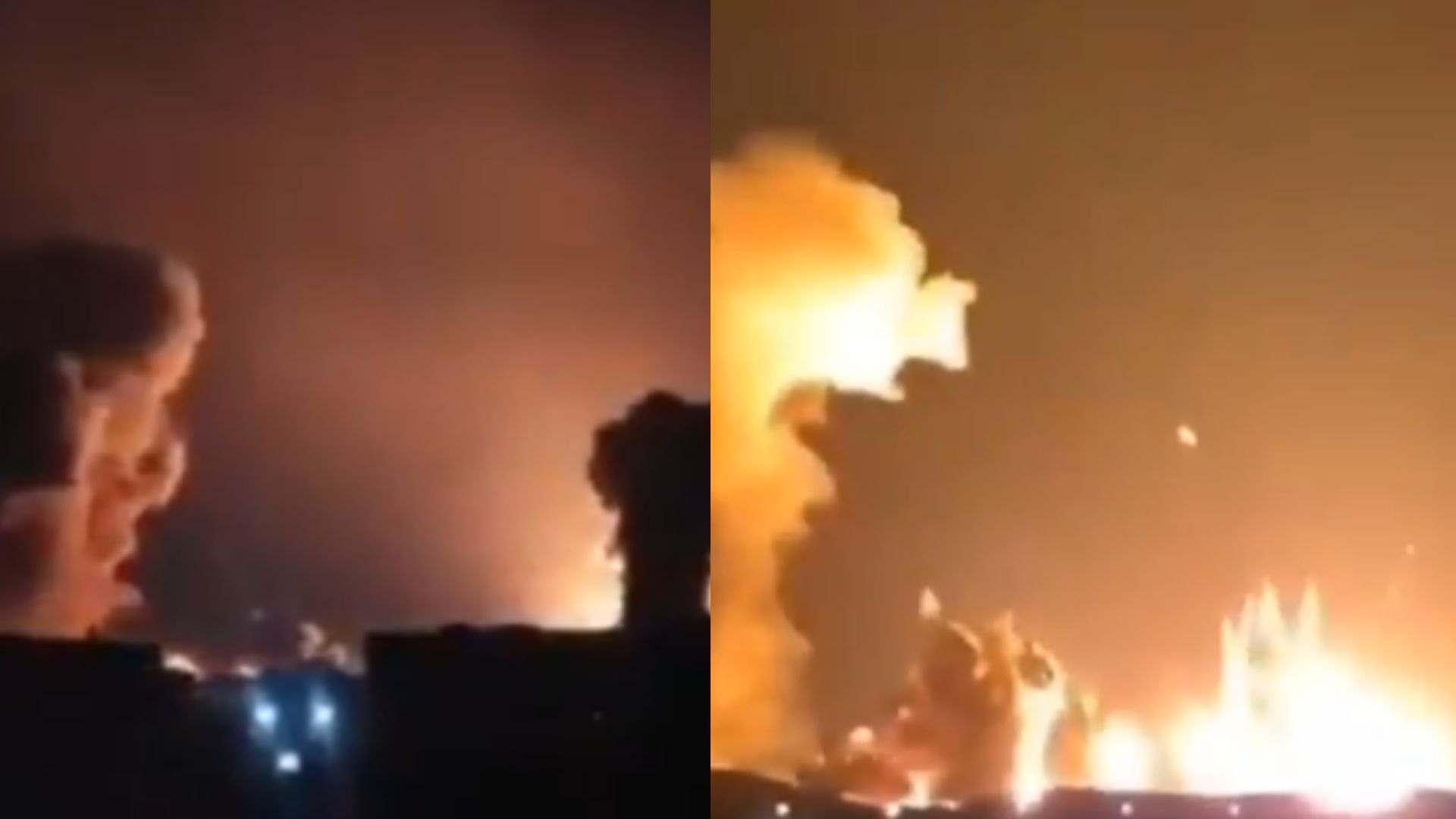

The United States launched military strikes against Iran on Tuesday after an American military helicopter was shot down a day earlier. US President Donald Trump said the attacks were a direct response to Iran’s actions and warned that Washington would react forcefully to any aggression.
The strikes increased tensions across West Asia and raised concerns about a wider regional conflict. In response, Iran vowed to deliver a stronger reaction and warned the United States against further military action.
Explosions Reported Near Strait of Hormuz
Iranian media reported several explosions along the country's southern coastline near the strategically important Strait of Hormuz. However, officials later said that the situation had become stable and was “now reported to be calm.”
According to digital news outlet Axios, American forces targeted multiple Iranian air defence installations and radar systems located around the strait. The area is one of the world's most important shipping routes for oil and gas exports.
Iran Threatens Retaliation
Following the US operation, Iranian Foreign Minister Abbas Araghchi issued a strong warning and promised retaliation. "Despite its defeats on the battlefield, the US opted to test our determination. Our Powerful Armed Forces will leave no attack or threat unanswered. Leave our region if you want to be safe," Araghchi posted on X.
His statement signaled that Tehran intends to respond firmly to the American strikes.
Strikes Come Hours After Trump Spoke of Peace Efforts
The military action came only hours after Trump claimed that negotiations aimed at ending the conflict in West Asia were nearing completion. The US president has repeatedly stated in recent weeks that diplomatic efforts were making progress toward a peace agreement.
However, the situation changed dramatically after an American Army Apache helicopter was brought down on Monday. Speaking to ABC News, Trump defended the US response and said the strikes were necessary. "We're responding in a strong manner" after "what they did with our helicopter last night," he said during a telephone interview.
"And I believe the response should be very strong, very powerful, and that's what this one is," he added.
CENTCOM Calls Operation a Defensive Response
The US military's United States Central Command (CENTCOM) confirmed that American forces launched the strikes on orders from the president. According to the command, US forces "began launching self-defence strikes against Iran, at 5 pm ET (2100 GMT) today at the Commander in Chief's direction."
CENTCOM described the mission as "a proportional response to unjustified Iranian aggression."
The statement indicated that Washington views the operation as a defensive measure rather than the beginning of a broader offensive campaign.
Fragile Ceasefire Faces New Challenges
A ceasefire between the opposing sides has technically remained in effect since April 8. However, that truce has come under severe pressure in recent days.
Over the weekend, Iran and Israel exchanged fresh attacks, raising fears that the conflict could reignite on a larger scale. Although both sides later announced a halt to those operations, the latest US-Iran confrontation has again placed the ceasefire in doubt.
Israeli Airstrikes Continue in Lebanon
While attention focused on the US-Iran tensions, Israeli military operations in Lebanon continued. Lebanese authorities said Israeli airstrikes struck the historic southern city of Tyre on Tuesday, killing 11 people. The Israeli military also issued a warning urging residents across the city to evacuate.
According to AFP, many residents rushed to leave Tyre after the warning, including people living in the city's Christian neighborhoods. Heavy traffic was reported on roads heading north as families attempted to escape the danger.
Displaced Families Flee North
AFP also reported that large numbers of displaced residents from Tyre arrived in the coastal city of Sidon further north. Many families were seen transporting their belongings on vehicles, with luggage and household items quickly tied to car roofs as they fled the affected areas.
The scenes highlighted the growing humanitarian impact of the conflict in southern Lebanon.
Iran Demands Lebanon Truce as Part of Wider Peace Deal
Tehran has maintained that any agreement to end the broader conflict must also include a ceasefire in Lebanon. The country became involved in the conflict after the Iran-backed Hezbollah launched rockets toward Israel on March 2.
Israel responded with an extensive military campaign that included heavy airstrikes and a ground offensive. According to reports, more than 3,600 people have been killed since the fighting escalated.
Although a truce remains officially in place, clashes and exchanges of fire between Israeli forces and Hezbollah have continued, keeping tensions high across the region.