
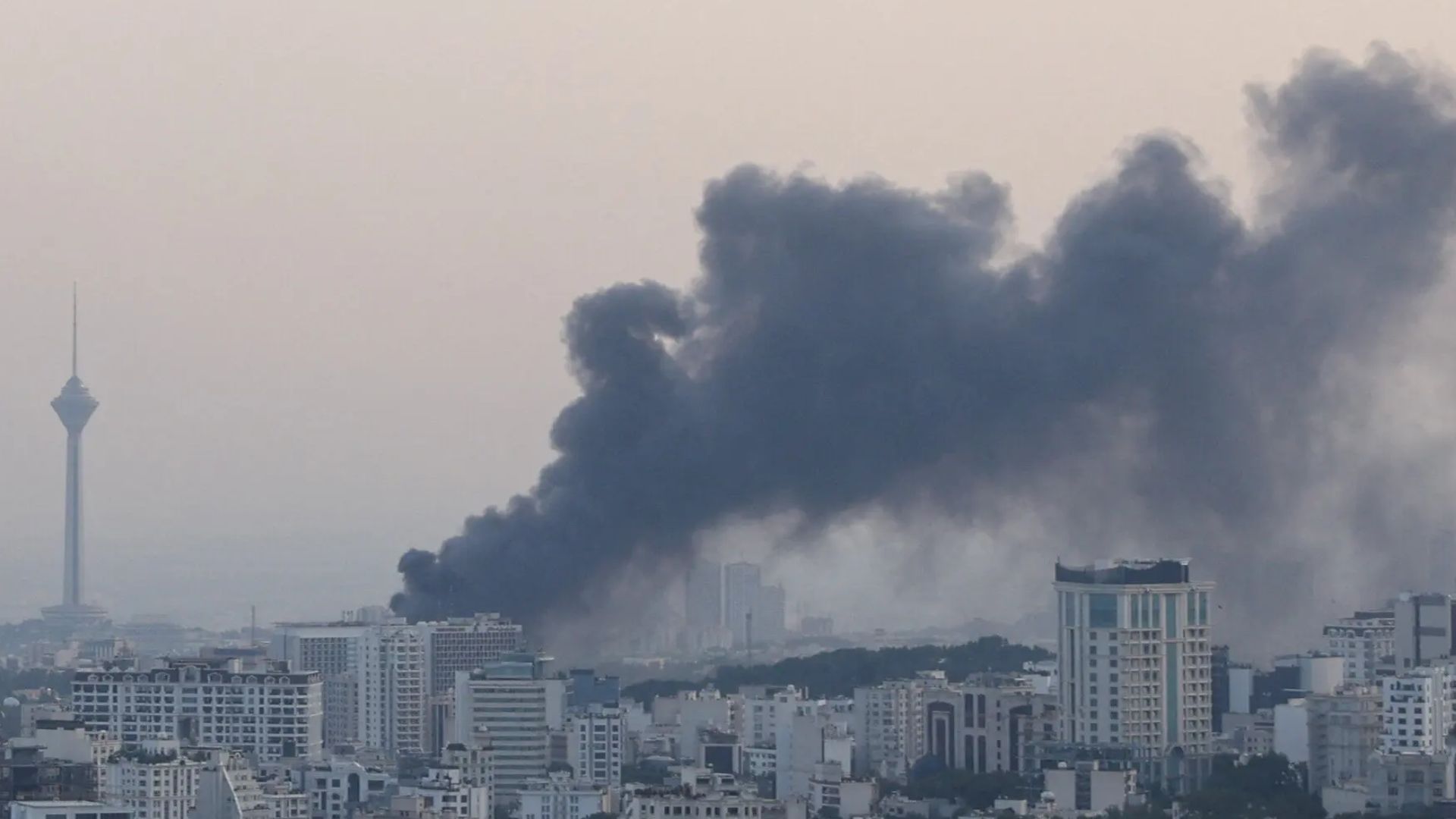

The fragile ceasefire between Iran and the United States came under fresh pressure late Friday and early Saturday after Iran's Islamic Revolutionary Guard Corps (IRGC) Navy claimed it had targeted US military positions in response to recent American airstrikes on Iranian coastal facilities. The latest exchange has raised new concerns about stability in West Asia, coming just days after both countries agreed to begin efforts to reduce tensions and restore security in the strategically important Strait of Hormuz.
Fresh Escalation After Cargo Ship Attack
The latest confrontation began after a drone attack targeted a cargo vessel passing through the Strait of Hormuz on Thursday. US President Donald Trump described the incident as a breach of the recently agreed ceasefire and indicated that Washington was considering a military response.
“You’ll find out,” Trump told reporters when asked whether the United States would retaliate. Within hours, the US military launched strikes against what it identified as Iranian missile and drone facilities, along with coastal radar installations. The operation was later confirmed by US Central Command.
Speaking shortly before the strikes, Trump said, “I don’t like the fact that they took a shot yesterday, actually four of them.” When asked why military action was being taken despite ongoing diplomatic efforts with Tehran, Trump replied, “They’re a little bit different.”
Iran Rejects Ceasefire Violation Allegations
Iran denied that the drone attack violated the ceasefire agreement. Ebrahim Azizi, head of Iran's parliamentary national security commission, defended Tehran's position and emphasized Iran's authority over the Strait of Hormuz.
“The Strait of Hormuz is governed by Iran, so: Respect the rules,” Azizi wrote on social media. He added that other countries should “not mistake control for escalation.” “This is not a violation of the ceasefire; it is ceasefire management,” he said. Iran has continued to insist that all vessels using the strategic waterway must comply with navigation procedures approved by Tehran.
US Warns Against Further Attacks
US Vice President JD Vance urged Iran to resolve disputes through diplomatic channels while warning against further military action. “But violence will be met with violence,” Vance said. He also urged Tehran to “pick up the phone” if disagreements arise regarding the ceasefire arrangements. His remarks highlighted Washington's effort to keep diplomatic communication open while maintaining a firm military stance.
Direct Communication Channel Established
Despite the renewed tensions, both countries have established a direct communication mechanism to prevent incidents in the Strait of Hormuz from escalating into a wider conflict. According to Iran's state news agency Press TV, the hotline was created following negotiations held in Zurich last week and forms part of the final agreement reached through international mediation. The communication channel is intended to reduce misunderstandings, improve coordination and help implement the provisions of the Islamabad memorandum of understanding.
Iran Reaffirms Control Over Shipping Routes
Iran has maintained that ships travelling through the Strait of Hormuz must follow routes approved by Tehran. Deputy Foreign Minister Kazem Gharibabadi repeated that position on Friday. “Safe passage through the Strait of Hormuz cannot be guaranteed under ambiguous arrangements, parallel routes or decision-making that does not take Iran’s role as a coastal state into account,” he said. He also warned that Iran could suspend alternative transit routes if vessels fail to coordinate with Iranian authorities.
Shipping Activity Faces Fresh Uncertainty
The Strait of Hormuz remains one of the world's most important maritime chokepoints for global energy supplies. The current dispute follows the 14-point interim agreement signed on June 18, which temporarily halted fighting that began after US-Israeli strikes on Iran.
Shipping traffic had started recovering following the ceasefire. On Wednesday, 78 vessels passed through the strait, the highest daily total since the conflict began, although it remained below the pre-conflict average of more than 130 ships per day.
However, disagreements over navigation rules have already disrupted maritime operations. Reports indicated that at least two oil tankers turned back after attempting to use a United Nations-backed shipping route near Oman because Iran insisted vessels travel only through routes approved by Tehran.
Even after Thursday's drone attack, more than two dozen commercial ships continued using the southern navigation corridor through the Strait of Hormuz on Friday, reflecting continued efforts to keep one of the world's busiest shipping lanes operational despite growing regional tensions.