The
United States and Iran exchanged fresh military strikes over the weekend, raising tensions in West Asia despite an interim peace agreement aimed at ending the conflict. The latest escalation began after the US accused Iran of attacking a commercial oil tanker in the Strait of Hormuz. Washington responded with airstrikes on Iranian military targets, while Tehran launched missile and drone attacks on US military facilities in Kuwait and Bahrain.
US launches airstrikes after alleged tanker attack
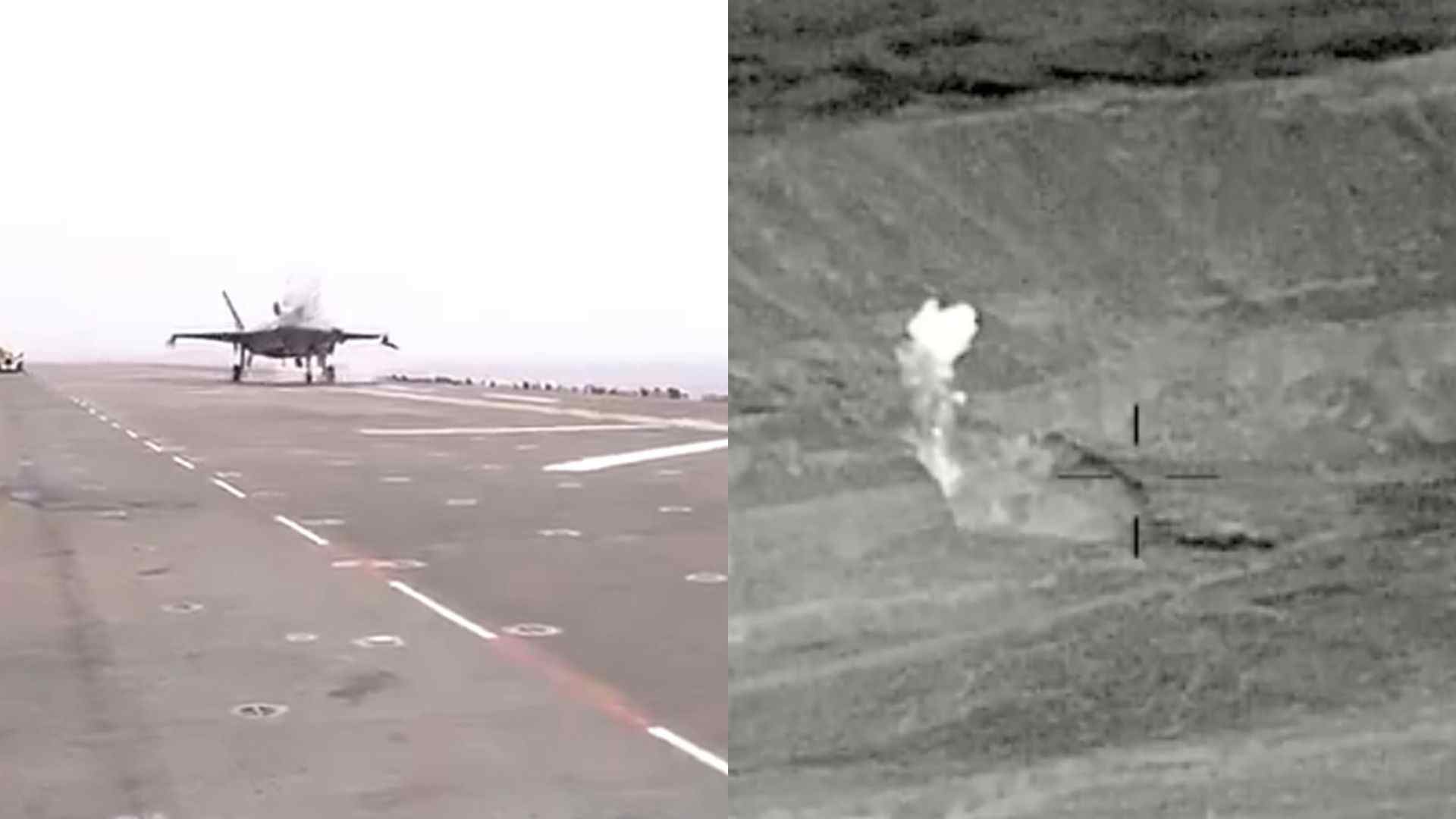
The US Central Command (CENTCOM) said American military aircraft struck 10 Iranian military targets in and around the Strait of Hormuz on Saturday. According to CENTCOM, the strikes targeted Iranian "surveillance infrastructure, communication systems, air defence sites, drone storage facilities, and minelayer capabilities."
The US military said the operation followed an alleged Iranian drone attack on the oil tanker
Kiku, which was carrying more than two million barrels of crude oil through the Strait of Hormuz. CENTCOM later released a video showing the strikes. The US military accused Iran of violating the ceasefire agreement.
"Iran had a chance to honour the ceasefire agreement" but "elected not to" when it carried out the attack on the Kiku.
"Commercial vessel transits through the Strait of Hormuz continue. US forces remain vigilant, lethal, and ready," the statement read.
Donald Trump warns Iran
US President Donald Trump defended the latest military action and accused Tehran of breaching the ceasefire. In a post on Truth Social, Trump wrote, "United States aircraft just struck Iranian missile and drone storage locations, and coastal radar sites, for violating the Cease Fire Agreement, AGAIN!"
He also warned that the United States could launch a larger military campaign if Iran continued its actions. "There may come a point when we are no longer able to be reasonable, and will be forced to militarily complete the job that we very successfully started. If that happens, the Islamic Republic of Iran will no longer exist!"
Iran launches retaliatory strikes
Iran responded on Sunday with a joint missile and drone operation targeting US military facilities in Kuwait and Bahrain. The Islamic Revolutionary Guard Corps (IRGC) said it targeted the Ali al-Salem Air Base in Kuwait and the US Fifth Fleet naval base in Port Salman, Bahrain.
The IRGC claimed it had "destroyed eight important US military facilities at the Ali al-Salem base in Kuwait and at the Fifth Fleet naval base in Port Salman in Bahrain". The United States has not confirmed that claim.
The Guards also warned that any future military action against Iran would trigger a stronger response. "Any enemy aggression, whatever the pretext, even against insignificant targets... will have a crushing response," the Guards added.
Iran warns against further ceasefire violations
Ibrahim al-Fiqar, the official military spokesperson for Iran's Khatam al-Anbiya Central Headquarters, said any future violation of the ceasefire would bring serious consequences.
"Any new aggression, regardless of its pretext or the scale of its objectives, will be met with a crushing response. Violating the ceasefire constitutes a breach of Article 1 of the Islamabad Understanding and will lead to a complete halt of all tracks. Under the Islamabad understanding, Iran will regulate maritime traffic in the Strait of Hormuz. Violent vessels will be dealt with more firmly than before."
The IRGC Navy also issued a fresh warning, saying US military bases across West Asia would experience “hell” in these days.
Peace negotiations continue
Despite the latest military exchanges, diplomatic talks between Washington and Tehran remain underway. Officials from both countries are continuing negotiations on a comprehensive peace agreement. The discussions include guarantees for the safe passage of commercial ships through the Strait of Hormuz, the future of Iran's nuclear programme, and the fate of its stockpile of highly enriched uranium.
Under the interim agreement, both sides have 60 days to finalise the terms of a permanent peace deal. However, the latest exchange of attacks has cast fresh doubt over whether the negotiations can succeed without further escalation.