
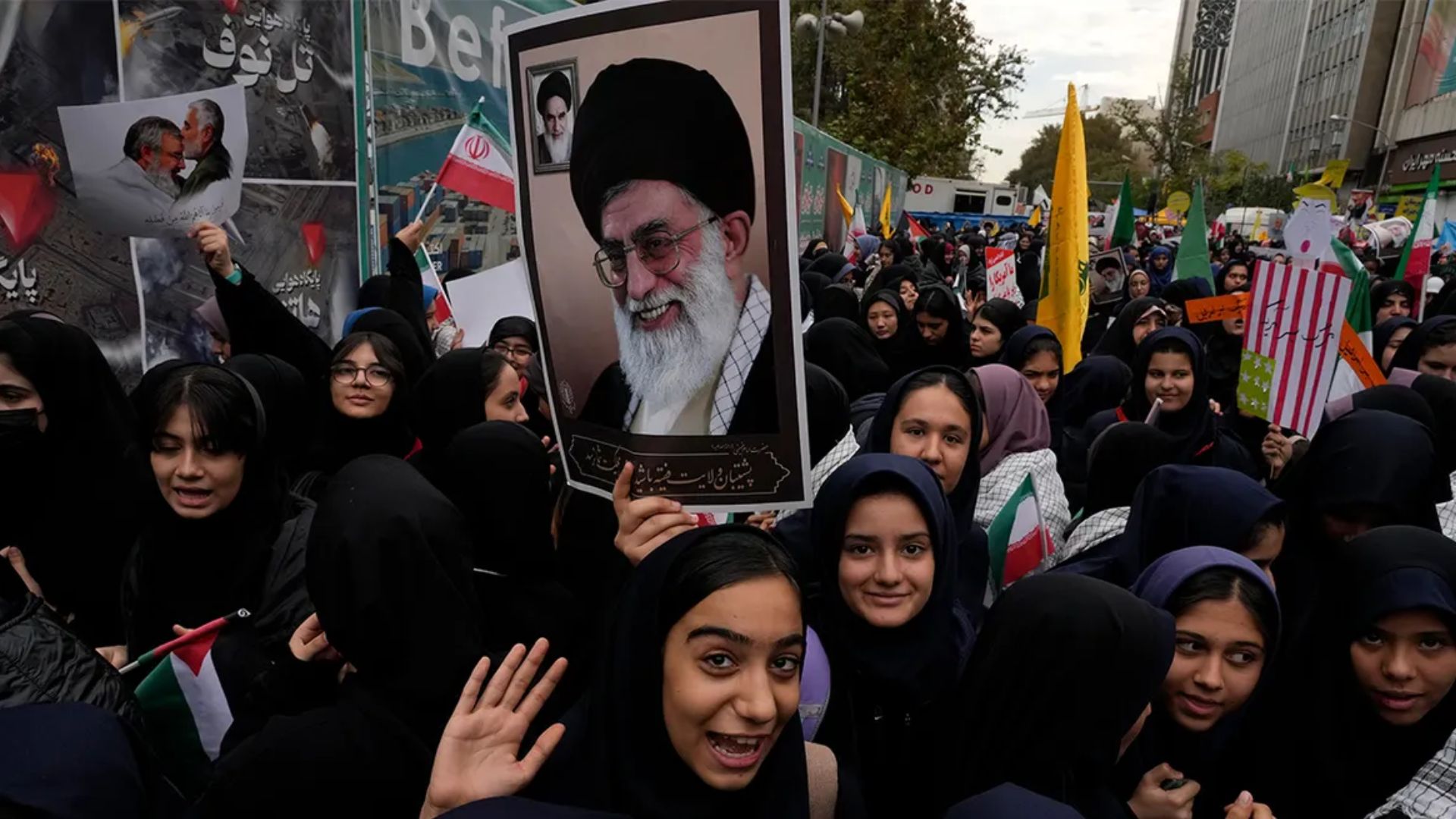

Millions of mourners gathered in Tehran on Monday for the funeral procession of Iran's slain Supreme Leader Ayatollah Ali Khamenei. The massive turnout came as the coffins of Khamenei and four of his family members were carried through the Iranian capital on a large truck.
Videos released by Iranian media showed huge crowds stretching for kilometres from Tehran's Azadi (Freedom) Square along the city's main boulevard. Many mourners carried red flags during the procession. The banners attracted attention across the world because of their religious and symbolic meaning.
What Do the Red Flags at Khamenei's Funeral Mean?
The red flags are widely associated with martyrdom in Shia Islam. They also represent justice and revenge for those who are believed to have been killed unjustly. The banners carry the Arabic phrase "Ya Litharat al Hussein" ("O avengers of Hussein"), according to Iran's Tasnim news agency. The phrase has deep roots in Shia tradition and reflects the belief that justice should be delivered for Imam Hussein's martyrdom.
Why Is Imam Hussein Important in Shia Islam?
The red flag refers to the death of Imam Hussein, the grandson of Prophet Mohammed. Imam Hussein was killed during the Battle of Karbala in the seventh century. His death became one of the defining events in Islamic history and marked the historic split between Sunni and Shia Muslims. For many Shia Muslims, the red flag represents innocent blood that was unjustly shed and serves as a reminder that justice is still awaited.
The banner appears most often during Muharram mourning ceremonies. However, it can also symbolise resistance and the determination to seek justice or revenge against those considered responsible for a martyr's death.
How Iran Uses the 'Ya Hussein' Symbol
The Iranian government has frequently used the "Ya Hussein" symbol during periods of conflict. Officials often connect modern events with the historical story of Karbala to reinforce messages of sacrifice, resistance and justice.
Iran also displayed the same red banner after the killing of senior military commander Qasem Soleimani in 2020. At that time, the flag represented martyrdom, resistance and, according to Iranian leaders, retaliation.
Images shared last week through Khamenei's official X account also showed the red flag draped over his coffin. Earlier this year, Iran raised the same "flag of revenge" over the Jamkaran Mosque, one of the country's most important religious sites, after Khamenei was killed in United States-Israeli strikes. Authorities described the flag as a symbol of justice and revenge.
Anti-US and Anti-Israel Slogans Heard During Funeral
The funeral ceremonies also featured strong political messages. Crowds gathered at Tehran's Grand Mosalla chanted slogans calling for the deaths of US President Donald Trump and Israeli Prime Minister Benjamin Netanyahu. Similar chants continued during Monday's funeral procession. One mourner, Sahar Zaraatgar, told the Associated Press:
"We are here to show that his path will continue, and every single one of these people will continue down his path with clenched fists and soon we will certainly avenge his death against the US and Israel.”
State media also reported that people gathered at Imam Hussein Square in eastern Tehran, where they hung an effigy of Donald Trump during the mourning ceremonies. The funeral highlighted both the religious symbolism surrounding Khamenei's death and the continued political tensions between Iran, the United States and Israel.