
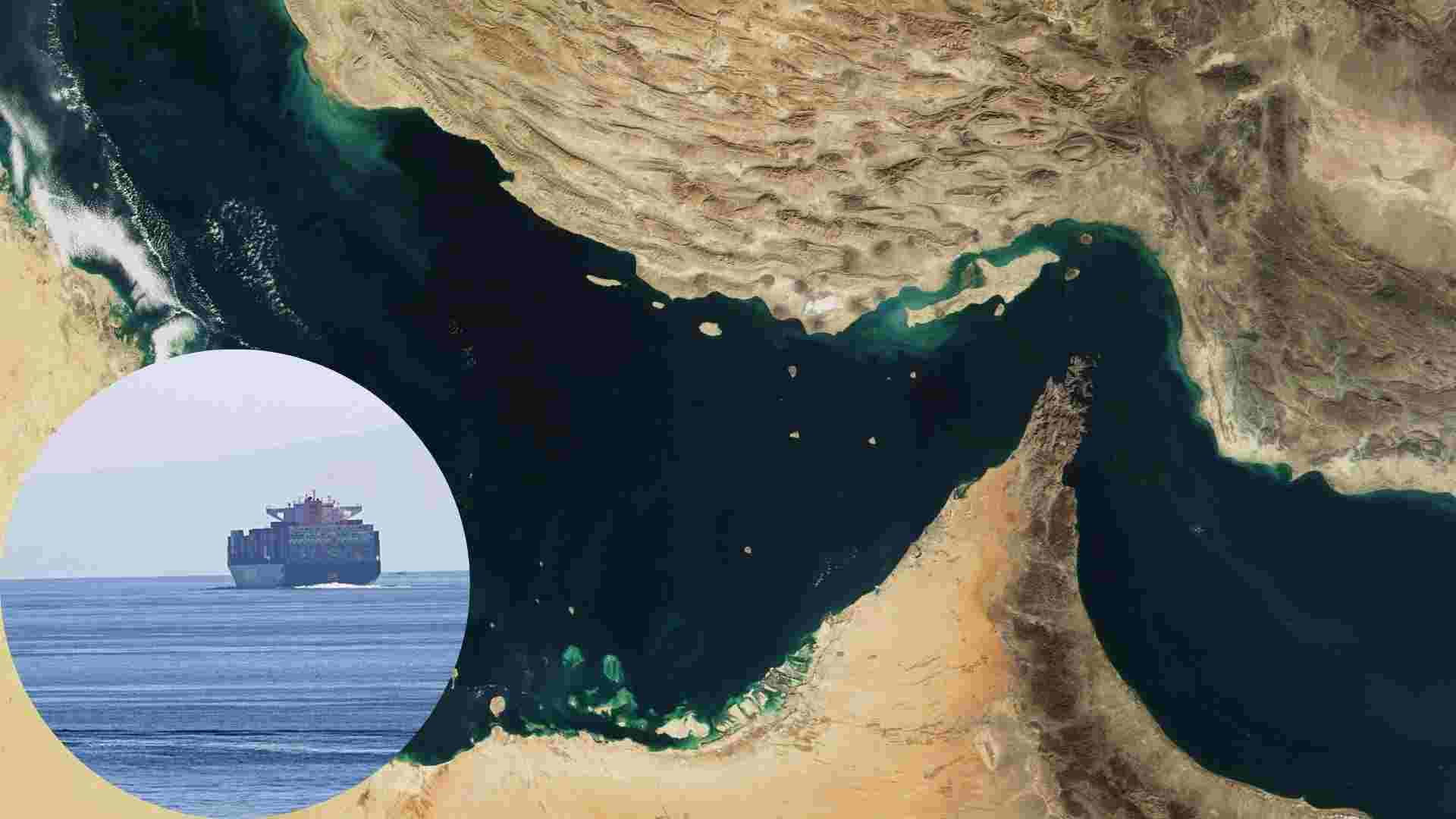

Iran’s Revolutionary Guards announced on Sunday that the Strait of Hormuz has been closed “until further notice” after forces intercepted a vessel travelling through what they described as an “unauthorised route.” According to Iranian state media, military forces fired warning shots at the ship before bringing it to a stop. The official news agency IRNA quoted the Revolutionary Guards as saying the vessel was “hit by warning shots and stopped”.
Iran blames foreign intervention
The Revolutionary Guards said they decided to close the strategic waterway because of what they called growing insecurity caused by foreign involvement in the region.
“Following this incident, firstly, due to the emergence of this insecurity due to illegal intervention by foreigners, the Strait of Hormuz will be closed until further notice and until the end of American interventions in this region and no vessels will be allowed to pass through,” they said. The announcement effectively halted ship traffic through one of the world's most important maritime trade routes.
Strait of Hormuz remains a vital global route
The Strait of Hormuz is one of the busiest shipping lanes in the world. A significant share of global oil and natural gas exports passes through the narrow waterway every day.
Any disruption to shipping in the strait can affect global energy markets and international trade. The latest closure has raised concerns about possible delays in oil shipments and increased tensions across the Gulf region.
War of words between Iran and the US intensifies
The closure came as tensions between Iran and the United States continued to grow. On Saturday, Iran’s Supreme Leader Mojtaba Khamenei vowed to take revenge for the killing of his father and predecessor, Ali Khamenei, who was killed during US-Israeli military strikes.
His remarks came just hours after US President Donald Trump warned Iran that any attempt on his life would bring severe consequences. The exchange of threats highlighted the deepening confrontation between the two countries despite ongoing diplomatic efforts.
Fresh violence weakens ceasefire
The latest statements followed renewed military exchanges earlier this week. The fighting further weakened the temporary agreement that had been reached to end the conflict, which began in late February after large-scale US-Israeli strikes that killed former supreme leader Ali Khamenei.
Although Trump declared that the ceasefire was over, he also said negotiations remained possible.
Diplomatic efforts continue
Even as military tensions increased, diplomatic talks continued behind the scenes. Iranian media reported that a delegation from Qatar travelled to Iran on Friday as part of efforts to reduce tensions and revive negotiations. Regional mediators continue to work towards preventing the conflict from expanding further.
Mojtaba Khamenei vows revenge
In his first public message since his father's funeral, Mojtaba Khamenei said Iran would not abandon its promise of retaliation. “Vengeance is the will of our nation and must inevitably be carried out,” he said in a written statement.
He also stressed that the plan for retaliation did not depend on any individual leader. “This matter depends neither on my personal existence nor on that of other officials. Whether we are present or not, it will come to pass,” he wrote. His comments are likely to increase concerns about further military escalation in the region.