
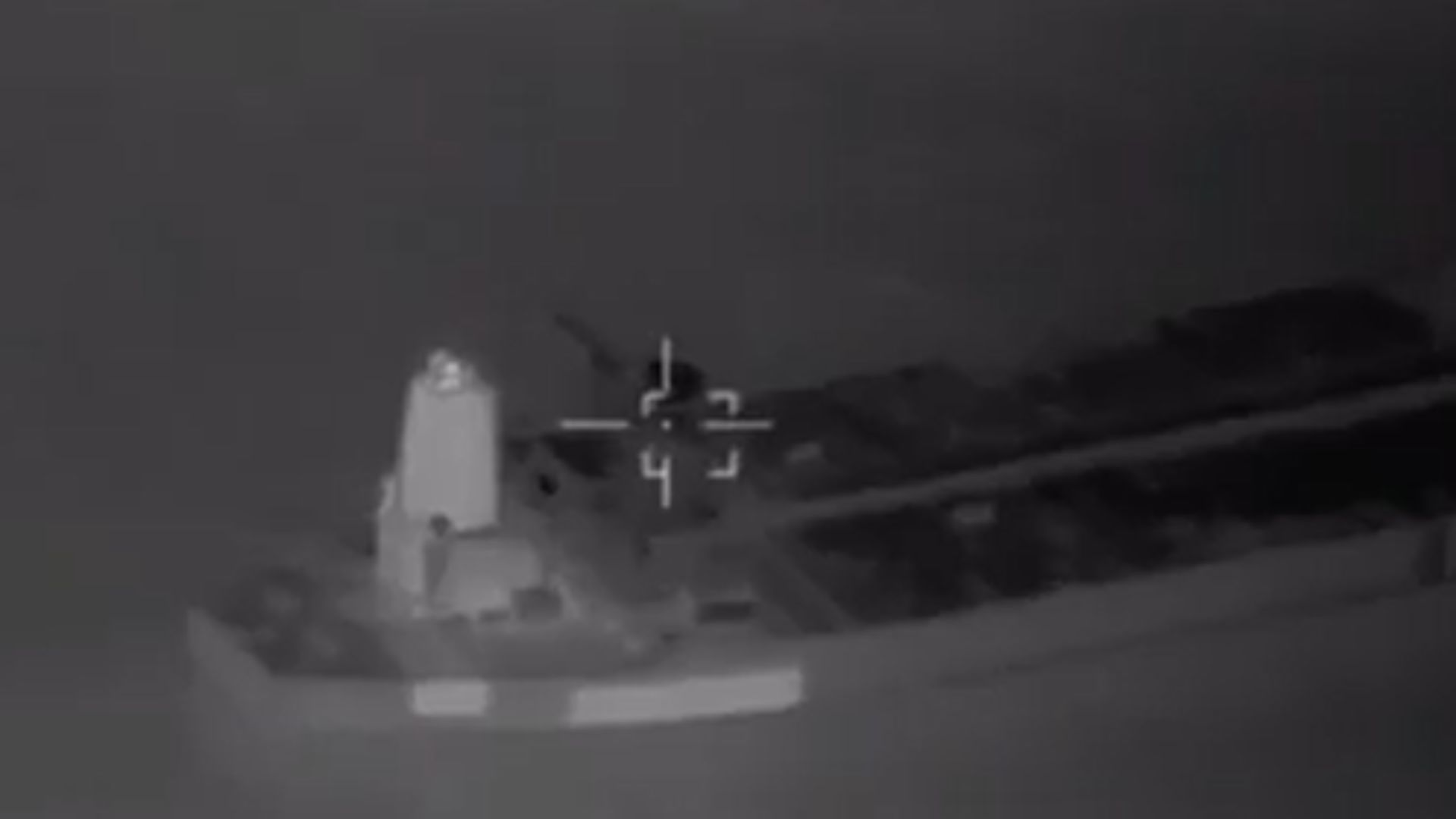

Iran’s Islamic Revolutionary Guard Corps (IRGC) said on Saturday that two oil tankers exploded after hitting mines in the Strait of Hormuz, as military tensions between Iran and the United States continued to escalate with fresh drone and missile attacks.
The claims came as the US military confirmed a seventh straight night of strikes on Iranian targets, raising concerns about the growing risk to global energy supplies and regional security.
Iran Claims Tankers Hit Mines in Strait of Hormuz
In a statement carried by Iran’s state news agency IRNA, the Revolutionary Guards claimed two oil tankers caught fire after striking mines in waters south of the Strait of Hormuz.
“An hour ago, two oil tankers, which were trying to pass through the minefield south of the Strait of Hormuz by deceptive American intelligence agencies, exploded and caught fire,” the Guards said.
Iran did not identify the vessels, and the claims have not been independently verified. The Revolutionary Guards also said on state television that they had “stopped” four ships attempting to pass through the strategic waterway.
US Launches Seventh Consecutive Night of Strikes
The US Central Command (CENTCOM) said American forces carried out another round of military operations against Iran. In a statement posted on X, CENTCOM said the attacks were intended to “continue degrading Iranian military capabilities.”
The latest strikes marked the seventh consecutive night of US military operations against Iranian targets.
Iran Accuses US of Hitting Civilian Infrastructure
Iran accused the United States of expanding its attacks beyond military targets. Officials claimed US strikes hit civilian infrastructure, including an airport, a railway station and two bridges. Tehran also said its forces launched attacks against US military assets across the Middle East in response.
Although US President Donald Trump had previously warned that Iranian infrastructure could become a target, Washington has not confirmed striking civilian facilities.
Iran Warns of 'Full-Scale Offensive'
Senior Iranian military adviser Major General Mohsen Rezaei warned that Tehran could significantly expand its military response if US attacks continue. According to Iran’s IRIB news agency, Rezaei said, “Iran will no longer limit itself to retaliatory, like-for-like responses…and no political border will be safe.”
He added that Iran would launch “full-scale offensive operations” if US strikes continued for another two or three days.
Conflict Continues Around Strait of Hormuz
The latest fighting follows months of escalating tensions that began after deadly US-Israeli strikes on Iran on February 28. Iran responded by effectively closing the Strait of Hormuz, one of the world's most important shipping routes for crude oil exports, and by launching attacks against Israel and US interests across the Gulf.
IRGC aerospace force commander Majid Mousavi said Iran would continue military operations. He stated that “targeted strikes from across Iran against the enemy will continue” until the United States ends military operations against Iranian coastal facilities and areas surrounding the Strait of Hormuz.
Expert Warns Conflict Is Expanding
Middle East analyst David Khalfa of the Jean-Jaurès Foundation said the conflict is drawing more strategic infrastructure into the fighting. “The paradox is that, while the conflict continues to escalate, neither side has a strategic interest in allowing this dynamic to continue. Yet both perceive any compromise as a form of capitulation,” Khalfa told AFP.
Energy Infrastructure Comes Under Pressure
Iran's Energy Ministry urged citizens to reduce electricity consumption and avoid using air conditioners during peak hours. Officials said the country's power grid had come under pressure following what they described as US attacks on energy infrastructure. The appeal came despite extremely high temperatures in several parts of the country.
Regional Military Exchanges Intensify
Military exchanges continued across the Gulf region. In Kuwait, where Iran claimed it targeted US military sites, the country's Electricity Ministry said an attack damaged a power and water plant. Authorities urged residents to conserve electricity.
The Kuwaiti military also reported that several soldiers were injured after Iranian drones targeted military bases and camps. Iran's Revolutionary Guards claimed they struck US radar systems and military aircraft in Qatar to “punish the aggressor.” Qatari authorities said they intercepted a missile attack.
The Guards also claimed attacks on two US radar sites in Oman and the Al-Tanf military base in Syria. A Syrian military source denied that Al-Tanf had come under attack, while US officials said American forces had already withdrawn from the base earlier this year.
Jordan, Bahrain and Iraq Also Affected
Jordan's military said it intercepted and shot down three Iranian missiles. Iranian state media reported attacks targeting US helicopters and aircraft at an airbase in Bahrain. Bahraini authorities responded by urging residents to take shelter.
In Iraq's Kurdistan region, the exiled Komala Party of Iranian Kurdistan said drone and rocket attacks killed nine members of the group on Friday. The organisation blamed Iran for the strikes.
Casualties Rise as Calls for Talks Grow
Iran's Health Ministry said at least 38 people have died and more than 400 others have been injured since the latest round of fighting began. Meanwhile, diplomatic efforts to reduce tensions continued.
Several mediators have attempted to bring Washington and Tehran back to the negotiating table. China and Pakistan also called on both countries to end military operations and resume dialogue.
At the same time, the United States has reimposed its blockade of Iranian ports, while attacks on commercial shipping continue in the Strait of Hormuz. The UK Maritime Trade Operations agency reported that a tanker was hit by a projectile off the coast of Oman overnight on Friday, highlighting the growing risks to one of the world's busiest energy shipping routes.