
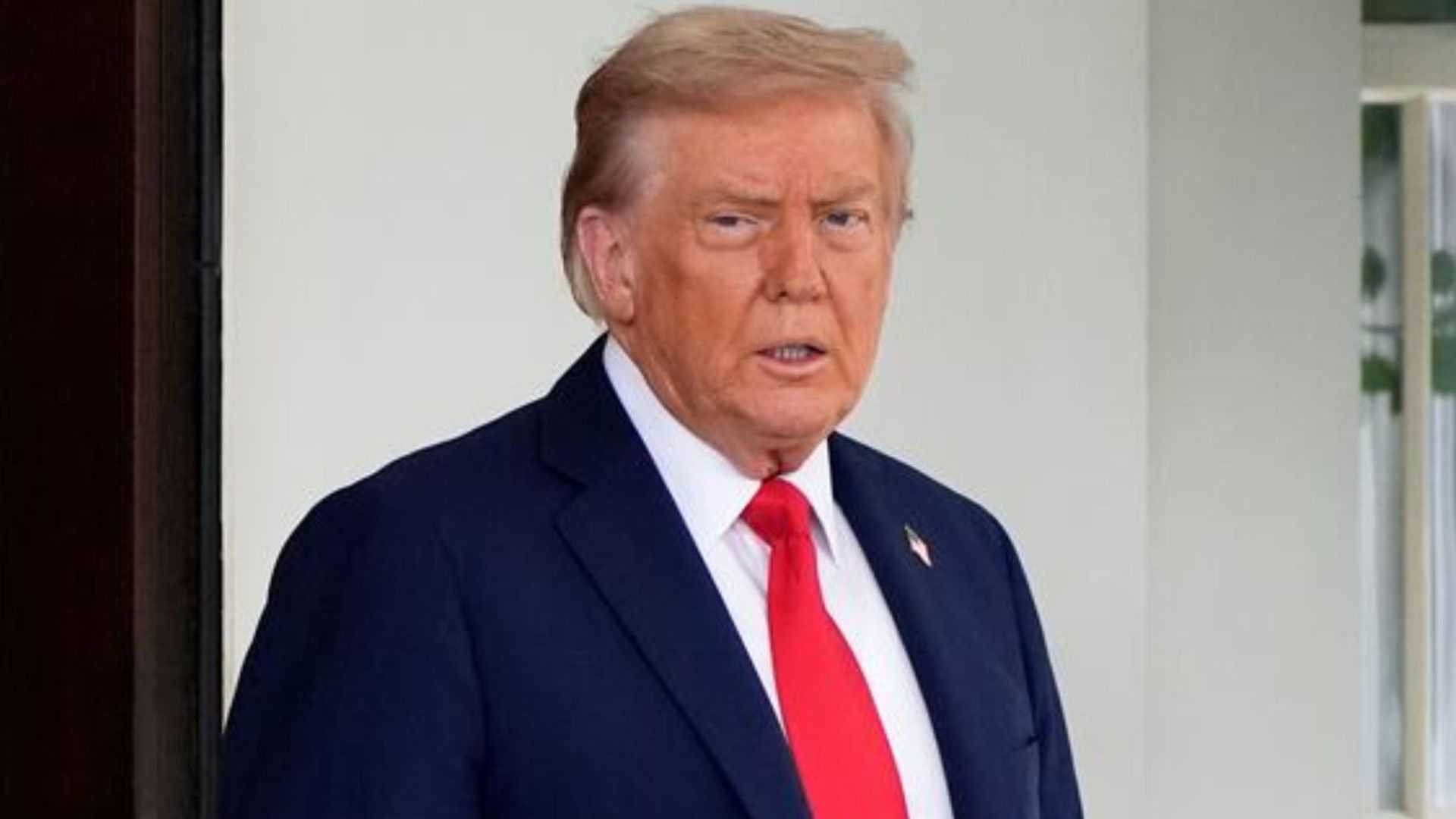

US President Donald Trump has said that the United States has not yet approved Ukraine's request to manufacture Patriot missile interceptors, although discussions on the proposal are still underway.
His remarks come just days after Ukrainian President Volodymyr Zelenskyy stated that Ukraine had received permission to develop the advanced missile system to strengthen its air defences against Russian attacks.
Trump Urges Caution Over Sharing Advanced Missile Technology
Speaking during a Cabinet meeting at the Camp David retreat on Friday, Trump stressed that Washington must be extremely cautious before allowing another country to produce advanced US military technology. He said the issue remains under discussion but no final agreement has been reached. “It’s a big step,” the American leader explained.
Referring to Ukraine's military requests, Trump said Zelenskyy wants access to both Patriot missile systems and Tomahawk missiles. “In the case of President Zelenskiy, he’d like to have some Patriots, he’d like to have some Tomahawks, which are, you know, lethal — one offensive, one defensive,” Trump said.
Trump added that transferring such technology requires careful consideration because of long-term security risks. “You have to be very judicious, but you have to be very careful. Now we have not agreed to that. We’re talking about it, but it’s a hard thing to give away that kind of technology. And I don’t think this would ever happen, but, you know, there are people that you give that technology to; they can someday turn on you,” he said.
Earlier Promise Now Faces Uncertainty
Earlier this month, during a meeting with Zelenskyy in Turkey, Trump had indicated that the United States would grant Ukraine a licence to manufacture Patriot missile interceptors. The proposal was intended to help Kyiv strengthen its air defence capabilities against continuing Russian missile strikes.
However, Trump has since stepped back from that commitment despite later hosting Zelenskyy at the White House. His latest comments suggest the administration is still reviewing the proposal rather than moving ahead with immediate approval.
Ukraine Faces Critical Shortage of Patriot Missiles
Trump's remarks come as Russia continues to intensify its aerial attacks on Ukraine. Kyiv is facing a serious shortage of Patriot missile interceptors, which remain the country's only effective defence against incoming ballistic missiles.
The limited supply has increased pressure on Ukraine to secure a long-term solution by producing the missiles domestically.
Kyiv Pushes for Domestic Missile Production
Ukraine has been seeking a co-production agreement that would allow it to manufacture Patriot PAC-3 missile interceptors inside the country. Such an arrangement would reduce dependence on foreign deliveries while strengthening Ukraine's ability to defend itself against Russian missile attacks.
Trump's earlier indication that Washington could approve such a licence surprised many observers and raised expectations in Kyiv. Following those remarks, Ukrainian officials began discussions with Pentagon representatives and defence industry executives to work out the details of a possible agreement.
Lockheed Martin Continues Cooperation Talks
Despite the uncertainty surrounding US approval, Ukraine says discussions with defence manufacturers are progressing. Ukrainian Ambassador Olha Stefanishyna said on Thursday that Lockheed Martin, the manufacturer of Patriot PAC-3 missiles, remains committed to expanding cooperation with Ukraine.
She revealed that company executives met President Zelenskyy earlier this week and are expected to visit Ukraine soon to continue discussions on future collaboration.
Decision Still Pending
Although negotiations continue, the United States has not yet made a final decision on allowing Ukraine to manufacture Patriot missile interceptors.
As Russia continues its missile campaign, Kyiv hopes the ongoing talks with Washington and Lockheed Martin will eventually lead to an agreement that strengthens the country's air defence capabilities while addressing US concerns over sharing sensitive military technology.