
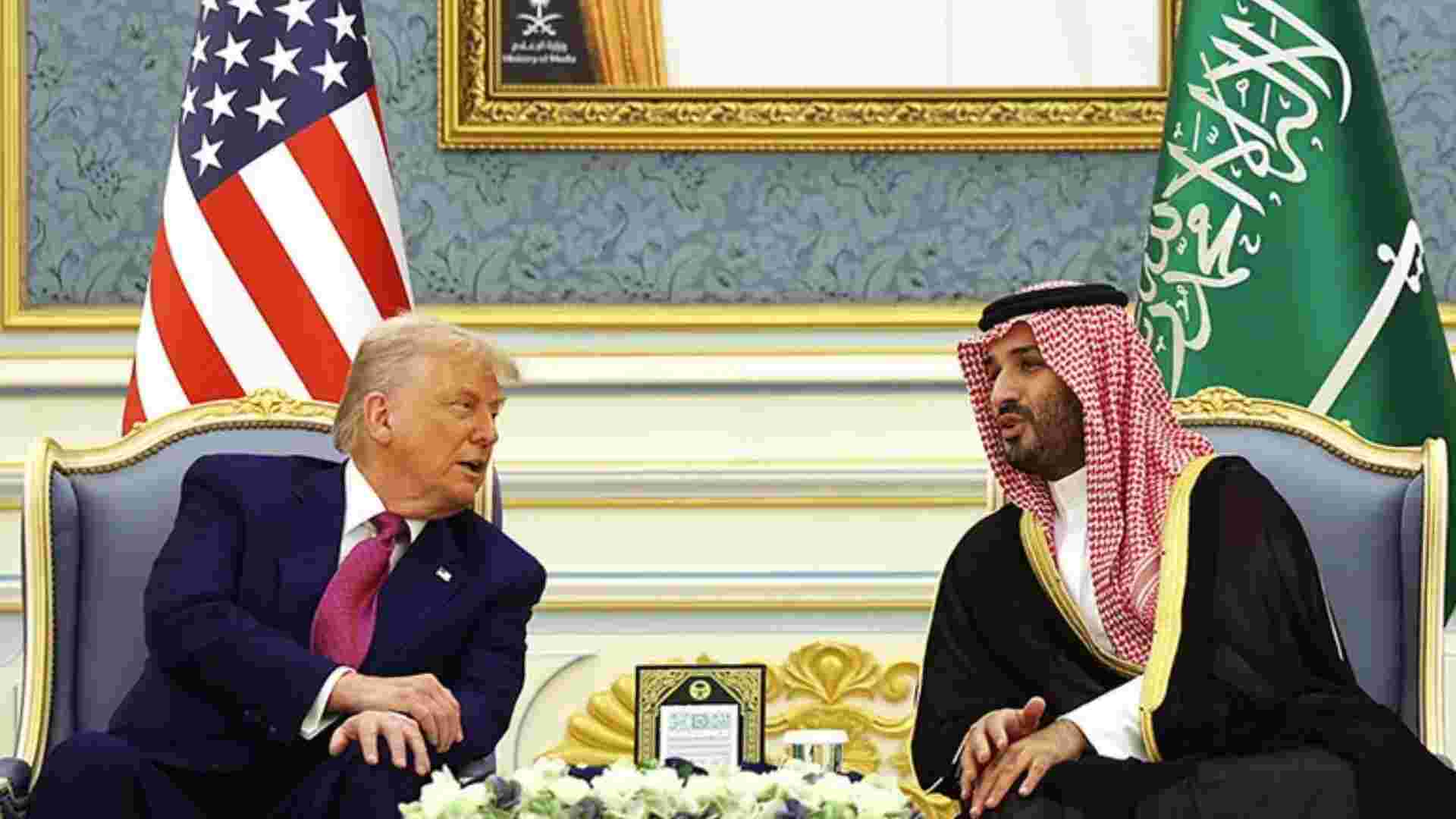

Saudi Arabia has officially entered the expanding Iran conflict by joining the United States in launching strikes against Iran-backed militias in Iraq. The decision marks a major shift in Riyadh’s approach after spending months trying to stay away from direct military involvement.
The move came after repeated drone attacks on Saudi territory and growing threats to the kingdom’s oil industry and shipping routes. While Saudi Arabia has now taken military action, it continues to stress that it wants to avoid a wider regional war and protect its long-term economic plans.
Saudi Arabia Launches Its First Direct Military Operation
Saudi Arabia carried out its first direct military strikes in the ongoing conflict alongside the United States. The joint operation targeted weapons depots and logistics facilities used by Iran-backed militias in Iraq.
The attacks followed a series of drone strikes on Saudi territory. One of the most serious incidents reportedly targeted the strategically important Abqaiq oil-processing facility. Saudi officials have blamed Iran-aligned Iraqi militias for carrying out nearly 30 drone attacks against the kingdom in recent months.
According to a person familiar with Saudi Defence Minister Khalid bin Salman’s discussions at the White House, the operation was designed to send a clear warning to Iran and its allied groups. The message was that Saudi Arabia would not accept attacks on its oil facilities or other critical infrastructure.
During his visit to Washington, Prince Khalid met US President Donald Trump and Vice-President JD Vance. He reportedly shared Crown Prince Mohammed bin Salman’s view that Iran has lost influence in countries like Syria and Lebanon but continues to support armed groups in Iraq and Yemen.
At the same time, Saudi Arabia told US leaders that it still wanted tensions to ease and hoped the United States and Iran would return to negotiations instead of allowing the conflict to grow further.
Why Saudi Arabia Decided to Act Now
Saudi Arabia stayed away from direct involvement for several months despite rising regional tensions. However, repeated attacks on its territory and energy infrastructure forced Riyadh to change its strategy.
The kingdom believes Iran-backed groups operating in Iraq have become a direct threat. These militias have allegedly launched drones into Saudi Arabia while Yemen’s Houthis have continued attacks on Saudi airports, oil tankers and Red Sea shipping routes.
Saudi leaders now believe that limited military action is necessary to discourage future attacks without becoming trapped in a long and costly regional conflict.
How the Regional War Expanded
The current conflict began after the United States and Israel launched attacks on Iran on February 28. Since then, fighting has spread far beyond Iran itself.
Military bases, oil facilities and commercial shipping routes have become targets across several countries, including Iraq, Yemen, Jordan and the Gulf region. As more regional players become involved, concerns are growing that the conflict could develop into a much larger Middle East war.
Iran and Its Regional Allies
Iran remains at the centre of one side of the conflict through its Islamic Revolutionary Guard Corps (IRGC) and several allied armed groups operating across the Middle East.
Iraq
Iran-backed factions within Iraq’s Popular Mobilisation Forces are accused of launching drone attacks against Saudi Arabia. Their military facilities became the main targets of the recent joint US-Saudi operation.
The attacks carry particular significance because Saudi Arabia's Abqaiq and Khurais oil facilities suffered a devastating strike in September 2019 that temporarily halted nearly half of the country's oil production. According to the BBC, satellite images indicate that Abqaiq was struck once again earlier this week.
Yemen
Iran-backed Houthis continue to pose one of Saudi Arabia’s biggest security threats. The group controls large parts of Yemen and possesses drones, ballistic missiles and anti-ship weapons. It has previously attacked Saudi airports in Abha and Jizan, threatened Saudi-linked vessels in the Red Sea and claimed responsibility for firing ballistic missiles at a Saudi oil tanker.
The Houthis threaten Saudi Arabia from the south, while Iraqi militias increase pressure from the north.
Lebanon
Hezbollah remains one of Iran’s closest regional allies. However, unlike previous confrontations, the Lebanese group has maintained a relatively limited military role during the latest phase of the conflict.
The United States Leads Military Operations
The United States remains the primary military force confronting Iran.
US Central Command has deployed troops, aircraft, naval forces and missile defence systems across the Middle East. American forces continue attacking Iranian positions and allied militias while protecting US military bases and regional partners.
Iran recently claimed it launched ballistic missiles toward Jordan’s Muwaffaq Salti Air Base, an important American military installation. President Donald Trump said US defences intercepted the missiles.
“They’ve already apologized, but, you know, we got to smack them a little bit,” Trump told reporters. “It’s our turn, and we’ll see if we get there with an agreement at some point. But we’re going to hit them very hard.”
Soon afterward, the US military announced “a powerful response to yesterday’s attempted Iranian attacks on U.S. forces based in the Middle East”, although it did not immediately reveal which targets had been struck.
Jordan, Bahrain and Kuwait also support American security efforts in different ways and host US military assets. Iran has launched missile and drone attacks toward all three countries during the conflict.
Israel’s Position in the Conflict
Israel joined the United States in launching attacks against Iran when the conflict began on February 28. However, Washington is now taking the lead in the latest military operations.
Israeli Prime Minister Benjamin Netanyahu met President Trump at the White House shortly before the joint US-Saudi strikes. According to an Israeli official who spoke to AP, Netanyahu assured Trump that the United States, rather than Israel, would direct the current strategy against Iran.
Israeli officials are reportedly worried that President Trump may limit military operations because of rising global oil prices, the approaching US midterm elections and pressure on American weapons supplies.
The Center for Strategic and International Studies estimates that months of fighting have significantly reduced US stocks of Patriot and THAAD missile interceptors. Patriot missile inventories have reportedly fallen below 1,000, while THAAD interceptor stocks have dropped to around 250.
Why Saudi Arabia’s Oil Exports Face New Risks
The war has created major challenges for global energy supplies.
Iran has effectively restricted commercial shipping through the Strait of Hormuz, a route that previously carried around 20 per cent of the world's oil and liquefied natural gas exports.
To reduce dependence on Hormuz, Saudi Arabia has increased oil shipments through its east-west pipeline, transporting roughly five million barrels each day to the Red Sea port of Yanbu.
From Yanbu, oil tankers travel through the Bab el-Mandeb Strait toward Asian markets.
However, continued Houthi attacks on Red Sea shipping now threaten this alternative export route. If both the Strait of Hormuz and Bab el-Mandeb become unsafe, Saudi Arabia's oil exports could face serious disruptions from both directions.
Why Riyadh Wants to Prevent a Bigger War
Despite entering the conflict, Saudi Arabia is trying to avoid a prolonged military campaign.
The kingdom’s Vision 2030 programme depends heavily on attracting foreign investment, boosting tourism, expanding technology projects and diversifying the economy beyond oil.
A larger regional war would threaten airports, ports, energy facilities, data centres and trade routes. It could also discourage international investors and slow economic growth.
Saudi Arabia also wants to avoid returning to full-scale war with Yemen’s Houthis. Although Riyadh spent years leading military operations against the group, it failed to defeat them. A fragile truce reached in 2022 reduced cross-border violence, but the latest Iran conflict has placed that agreement under fresh pressure.
As a result, Saudi Arabia is following a dual strategy. It is responding militarily to attacks while simultaneously encouraging the United States and Iran to restart diplomatic talks.
Can Diplomacy Still End the Fighting?
Efforts to restart negotiations appear to have stalled.
President Trump and his allies have claimed that Iran wants to return to talks. However, Iran’s deputy foreign minister said the country has not requested renewed negotiations for more than two weeks.
A senior US official told AP that Washington is not actively seeking new negotiations at present and believes direct diplomacy is unlikely to resume soon.
Trust between both sides has also deteriorated since an interim understanding reached in June collapsed.
Ali Vaez, Iran project director at the International Crisis Group, said senior Iranian leaders had initially supported that arrangement.
“But now none of them believe that Trump is a reliable negotiating partner,” he told AP. “The problem, I think, is that Trump also has now the same impression about the Iranians.”
Saudi Arabia Faces Difficult Choices Ahead
Saudi Arabia now finds itself balancing military action with diplomacy.
The kingdom has demonstrated that it is prepared to strike Iran-backed groups if they continue attacking Saudi territory. At the same time, Riyadh remains determined to prevent the conflict from turning into a full-scale regional war that could threaten its economy, energy exports and Vision 2030 ambitions.
Whether Saudi Arabia expands its military role or continues pushing for negotiations will largely depend on whether attacks from Iraq-based militias and Yemen’s Houthis continue in the coming weeks.