
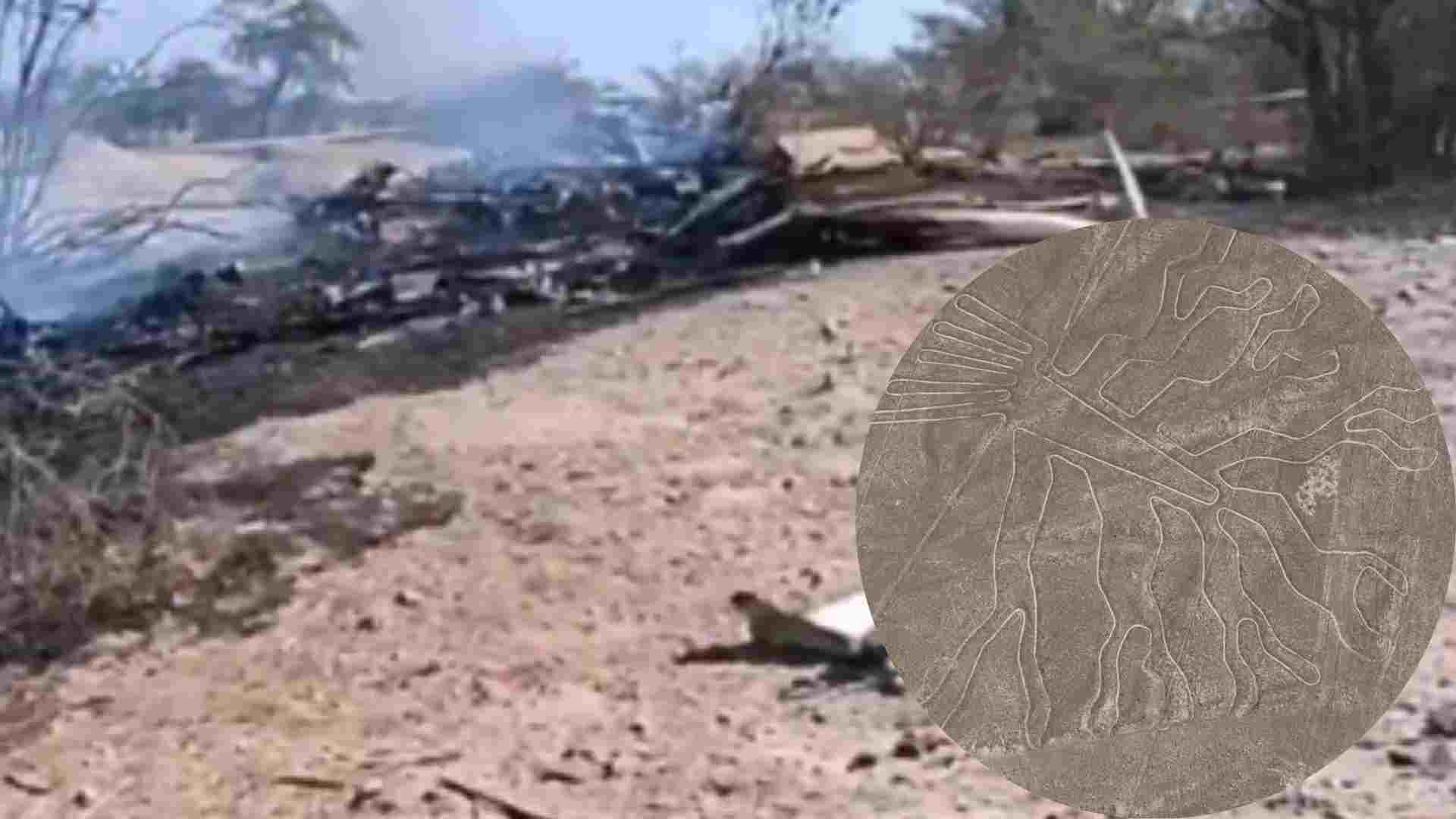

A sightseeing aircraft carrying foreign tourists to Peru’s famous Nazca Lines crashed shortly after taking off on Saturday, killing all 13 people on board. Officials said the aircraft went down near Pisco Airport, and authorities have started an investigation to determine what caused the tragedy.
Aircraft Crashes Minutes After Take-Off
The aircraft departed from Pisco Airport, located about 240 kilometres (150 miles) south of Peru’s capital, Lima. It crashed at around 1:00 pm local time (1800 GMT), only a short time after leaving the airport. Police confirmed that everyone on board died in the accident. The aircraft was carrying 11 passengers and two crew members.
Police Major Jorge Andrade said, “We have information that 11 passengers and two crew members have died,” while speaking to reporters at the crash site. He further added, “Given the severity of the accident, there are no survivors. We have recovered four bodies so far.”
Authorities have not yet released the identities of the victims.
Investigation Into Cause of Crash Begins
Officials said there is currently no clear evidence explaining why the aircraft crashed. Peru’s civil aviation authority has launched a formal investigation, and investigators have reached the site to collect evidence and examine the wreckage.
Photos shared by local media on Facebook showed firefighters and police officers working around the badly damaged and still-smoking remains of the aircraft.
Foreign Tourists Were Among the Victims
Peru’s Foreign Trade Ministry confirmed that all 11 passengers were foreign tourists visiting the country. The ministry said it would coordinate with the embassies of the affected countries to provide necessary assistance.
According to local broadcaster RPP radio, the victims included seven tourists from Italy, two tourists from Germany and two tourists from Spain
The aircraft was operated by AeroDiana, a company that offers sightseeing flights over the Nazca Lines. These flights usually last between 30 minutes and one hour, giving visitors an aerial view of the ancient desert drawings.
The airline said it would provide more information as the investigation progresses.
Possible In-Flight Emergency Reported
Local authorities in Vista Alegre, where the aircraft crashed, said early findings suggest the aircraft may have suffered an “in-flight emergency.” However, officials have not confirmed the exact cause and said further investigation is required.
A local resident told reporters that the aircraft exploded when it struck the ground.
Nazca Lines Attract Visitors From Around the World
The Nazca Lines are one of Peru’s most famous tourist attractions. They consist of massive geoglyphs carved into the desert between 500 BC and 500 AD.
The giant figures include geometric shapes and animal designs that continue to puzzle historians and archaeologists. Some researchers believe they may have had religious or astronomical significance, although no theory has been proven.
The site was recognised as a UNESCO World Heritage Site in 1994 and attracts thousands of visitors every year. Most tourists view the enormous designs from the air, making sightseeing flights a popular activity.
Similar Accidents Have Happened Before
This is not the first deadly accident involving flights over the Nazca Lines. In 2022, another sightseeing aircraft crashed, killing seven people, including two Chilean tourists and three Dutch nationals.
Earlier, in October 2010, an AirNasca sightseeing plane crashed after a tour of the Nazca Lines, killing four British tourists along with two Peruvian crew members. The latest tragedy has once again raised concerns about the safety of sightseeing flights operating over one of Peru’s most visited archaeological landmarks.