
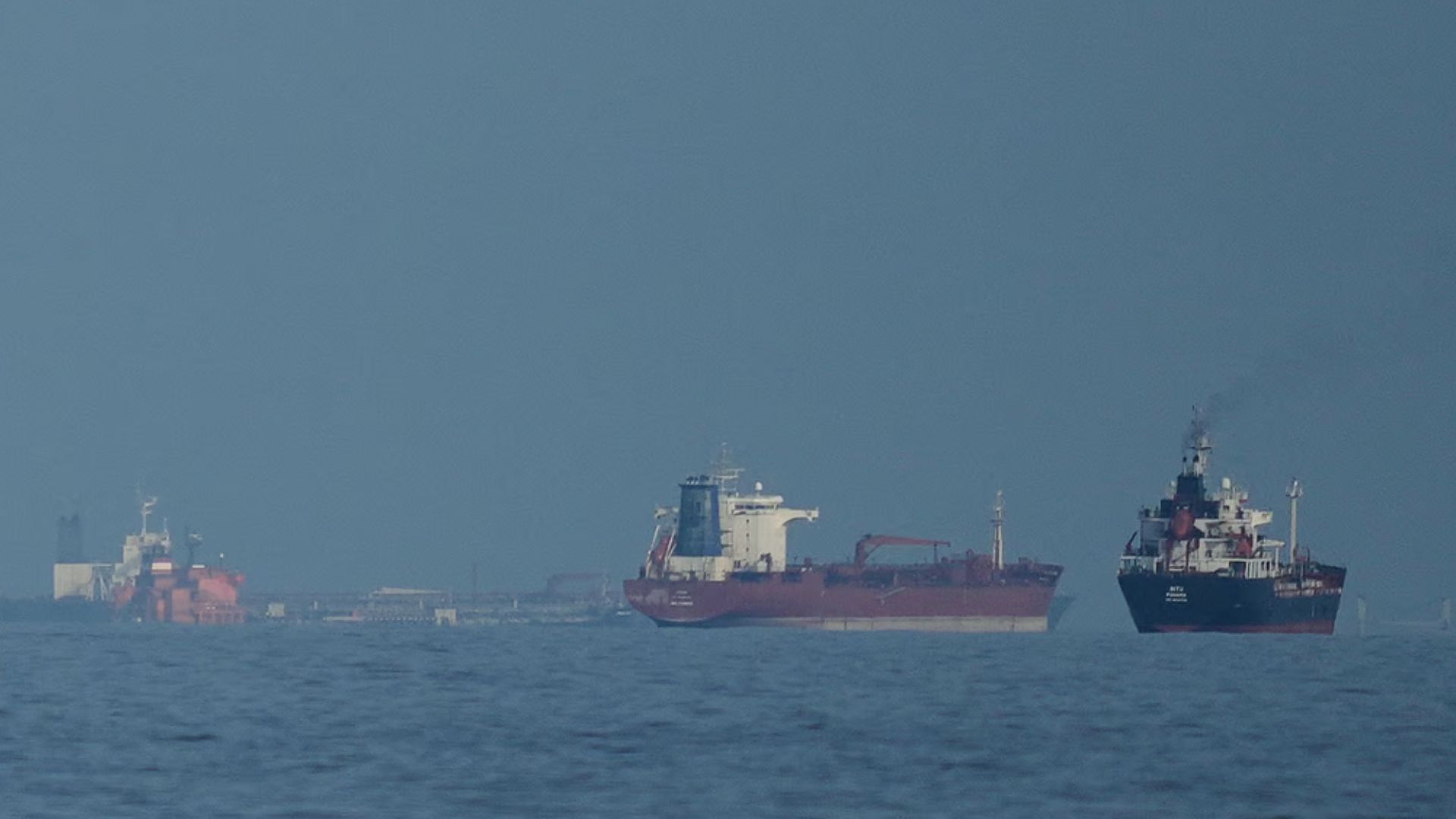

Iran has reportedly blacklisted 45 tankers, including two vessels linked directly to Indian companies, as tensions between Tehran and Washington continue to rise. The vessels include India-based tankers Maha Roos and Disha. Iran’s Persian Gulf Strait Authority (PGSA) published the list on Monday. It described the 45 vessels as non-compliant and accused them of violating Iranian protocols for passing through the Strait of Hormuz. The development could create fresh concerns for India and the global energy market. The Strait of Hormuz remains one of the world’s most important energy routes.
Iran Tightens Control Over Strait of Hormuz
The blacklist signals Iran’s attempt to enforce stricter rules over maritime traffic through the strategic waterway. The move comes only days after the United States threatened Iran with what it described as the “toughest sanctions in history”. An analysis of the PGSA list shows that the restrictions could have wider effects on global energy trade. Several vessels on the list have links to companies in India and other major trading nations. Most of the blacklisted ships have connections to entities based in the United Arab Emirates. Other vessels are linked to companies or interests in Qatar, Saudi Arabia, South Korea and Malta. A Pakistan-flagged crude oil tanker named Mardan also appears on the PGSA violations list. According to AFP, around one-third of the vessels that Iran has threatened to confiscate had already faced targeting during the war that began in February. The report also said about 39 vessels on the list are commodity carriers that have crossed the Strait of Hormuz at least once since early March.
Indian Companies Linked to Two Tankers
As many as 14 vessels on the blacklist have commercial or energy-transport links with India. However, Disha and Maha Roos are the only two vessels owned and operated by Indian companies, according to the report. The PGSA warned that vessels accused of violating Iranian transit arrangements could face serious penalties. “In light of violations by certain vessels of the Iranian arrangements for transiting the Strait of Hormuz, these vessels will face restrictions in their future transits through Strait of Hormuz, such as fines, seizure, or confiscation,” the PGSA said in a post on X. The authority also advised cargo owners to check its list before arranging shipments. “To avoid potential issues, it is necessary for cargo owners to the destination or from the origin to review the list of the vessels on the PGSA’s website.” However, the PGSA did not explain what specific violations the blacklisted vessels had committed.
Why the Move Matters to India
The development comes at a sensitive time for India. Washington has recently imposed fresh secondary sanctions on four Indian companies and people associated with them over their alleged dealings with Iran. According to a US State Department release, the entities and Indian nationals faced sanctions for importing petroleum and petrochemical products from Iran. The companies named by the US include Portease Partners LLP, Sadashiva Overseas Limited, PP Softtech Private Limited and Prakrutees Infra Impex India Private Limited. The US action could add further pressure on Indian businesses that maintain commercial ties with Iran.
US Steps Up Pressure on Iran
The United States has accused the four Indian firms of "knowingly engaging in a significant transaction for the purchase, acquisition, sale, transport, or marketing of petrochemical products from Iran." US President Donald Trump had earlier announced a major new economic campaign against Tehran. On August 20, Trump described it as the "most crushing economic operation ever taken" against Iran. He also warned countries that provide financial or other support to Tehran of facing "tremendous economic consequences". The US sanctions campaign has therefore created additional challenges for countries and companies that continue to conduct business with Iran.
India-Iran Trade Has Declined
India has traditionally maintained strong commercial ties with Iran. However, bilateral trade has declined significantly in recent years. Official figures from India’s Ministry of Commerce and Industry show that trade between the two countries stood at about $1.6 billion in the financial year ending March 2026.That marked a decline from around $2.3 billion in the year ending March 2023. The latest developments could put further pressure on India-Iran economic relations. At the same time, any restrictions affecting tankers using the Strait of Hormuz could have wider implications because the waterway plays a critical role in international energy transportation.