
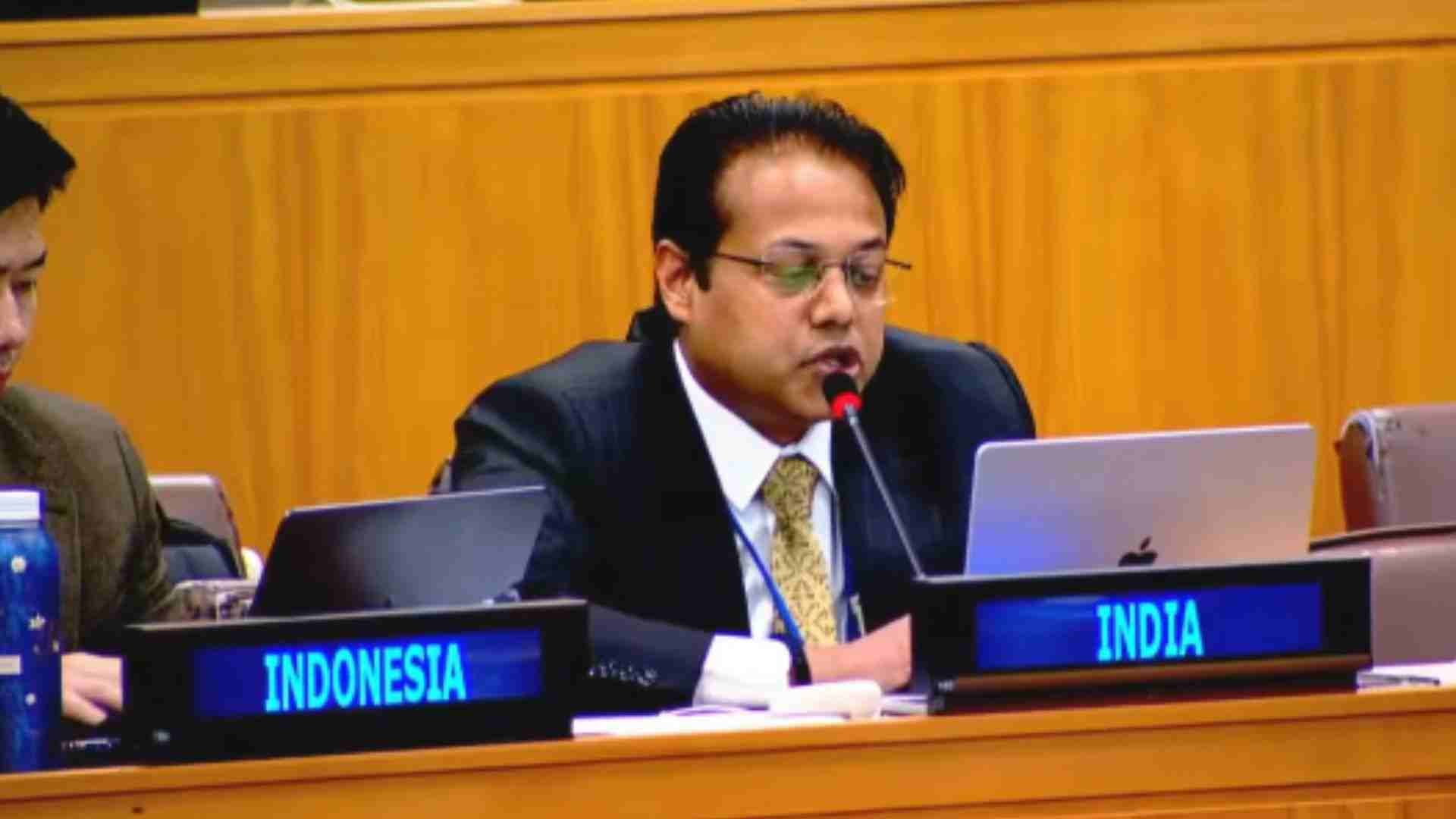

India has strongly rejected allegations by UN Special Rapporteur Gina Romero that young people in the country face retaliation and stigma for raising concerns about mental health and gender justice. India questioned the credibility of the claims and criticised the report for relying on what it described as unverified information.
Speaking during the 81st session of the United Nations General Assembly’s (UNGA) Third Committee, India’s First Secretary Anuj Swarup defended the country’s constitutional protections for freedom of expression and peaceful assembly. He also described the report’s approach as arbitrary.
“In India, these freedoms, together with freedom of speech and expression, are guaranteed to every citizen under Article 19 of our Constitution, and are protected by an independent judiciary, a free press, and an empowered National Human Rights Commission,” Swarup said during an interactive dialogue with the Special Rapporteur on the rights to freedom of peaceful assembly and of association.
The UN report has drawn attention amid protests in India demanding the resignation of Chief Election Commissioner (CEC) Gyanesh Kumar over the revision of voter rolls.
Swarup also questioned the report’s reliance on anonymous submissions, saying it offered little verifiable evidence to support its allegations.
"This level of arbitrary report writing is precisely the reason that the United Nations and its institutions have lost credibility,” he added.
"A sweeping charge against the world's largest youth population resting on anonymous and unverified claims is not evidence. It is hearsay, dressed up as a UN report, and my delegation rejects it outright,” Swarup further said.
#IndiaAtUN
Anuj Swarup, First Secretary, delivered 🇮🇳’s statement at the 81st Session of the UNGA Third Committee in the Interactive Dialogue with the Special Rapporteur on the rights to freedom of peaceful assembly and of association, highlighting the following: ➡️ 🇮🇳’s constitution guarantees freedom of assembly, association, speech and expression to every citizen which are protected by an independent judiciary, a free press and an empowered National Human Rights Commission. ➡️ Youth engagement by the Government and swift actions taken against individuals engaged in exam fraud and systemic overhaul of competitive examinations. ➡️ Viksit Bharat Young Leaders Dialogue in which over five million young people shaped national priorities directly with the Prime Minister and continued direct engagement with youth. @PMOIndia @MEAIndia @IndianDiplomacy @PIB_India @airnewsalerts @DDNewslive @EduMinOfIndia @YASMinistry — India at UN, NY (@IndiaUNNewYork) October 16, 2026