
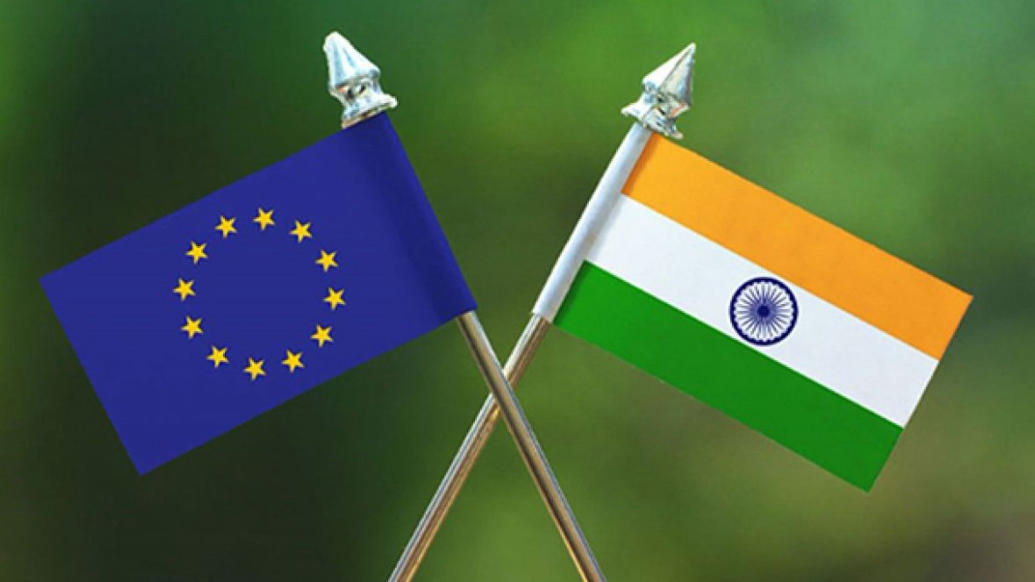

India and the European Union (EU) will meet in New Delhi this week for the 13th round of free trade agreement (FTA) talks. This round will focus on deeper issues like market access, non-tariff barriers, and public procurement. Both sides are working toward concluding the negotiations by the end of 2025 to strengthen economic and strategic ties.
Political Momentum Behind Talks
According to officials familiar with the matter, the FTA discussions will be followed by visits from key EU leaders, including trade commissioner Maros Sefcovic and agriculture commissioner Christophe Hansen. Their visit aims to provide a political push to the negotiations, ensuring they move beyond technical roadblocks.
“The tariff wars are creating distortion and everyone is interested in figuring out how we can derisk,” one official said. Sefcovic will meet India’s trade minister Piyush Goyal to accelerate progress and prevent talks from slowing down.
The upcoming weeks will also include a series of meetings in both New Delhi and Brussels. These discussions will prepare the ground for the India-EU Summit, scheduled for the first quarter of 2026, where several strategic agreements and deliverables are expected to be unveiled.
Progress So Far
So far, India and the EU have finalized 11 out of 23 FTA chapters. These include crucial areas like intellectual property, customs, trade facilitation, dispute settlement, digital trade, and subsidies. Another chapter on capital movement is also nearing completion.
The 13th round in September and the 14th round in October, to be held in Brussels, will address more complex matters. These include rules of origin, technical barriers to trade, sanitary and phytosanitary standards, and public procurement.
Both sides are also reviewing each other’s proposals on services and investments, which were exchanged in July. The goal is to strike a balance that benefits both markets. In digital trade, technical issues remain, although there is already an agreement in principle.
Sticking Points and Key Demands
India has clearly marked certain “red lines” for the deal. Sensitive products like rice, sugar, and dairy are excluded from negotiations. Meanwhile, the EU is pushing for greater access to India’s automobile and liquor markets.
Additionally, the EU has shown interest in importing aquaculture products from India. This comes after the United States doubled tariffs on items like shrimps, which are a significant export for India. Last year alone, India exported shrimp worth approximately $2.8 billion to the US.
High-Level Discussions
Trade negotiations were also discussed in a phone call between Prime Minister Narendra Modi and top EU leaders, European Council President Antonio Costa and European Commission President Ursula von der Leyen, on September 4. During the call, the EU leaders emphasized the need to wrap up negotiations by the end of the year.
On September 17, EU foreign and security policy chief Kaja Kallas will present the EU’s new strategic agenda for its partnership with India. The European Council is expected to approve this plan before year-end so that it can be adopted at the 2026 summit.
Broader Strategic Cooperation
In addition to trade talks, both sides are strengthening security and technology partnerships. This week, a dialogue on counterterrorism will take place in Brussels. The EU’s Political and Security Committee will also engage with Indian officials to expand cooperation in defense and strategic matters.
External Affairs Minister S. Jaishankar will participate in the Indo-Pacific Forum in Brussels on November 9-10. This will be followed by a ministerial meeting of the India-EU Trade and Technology Council (TTC). The TTC is the highest-level platform overseeing joint work on cutting-edge fields like artificial intelligence, quantum computing, biotechnology, defense, and security.
Looking Ahead
As global trade tensions rise due to shifting tariff policies in the US, both India and the EU see their partnership as crucial for economic stability. The coming months will be decisive in finalizing a trade deal that could reshape economic relations and set the stage for a landmark summit in 2026.