
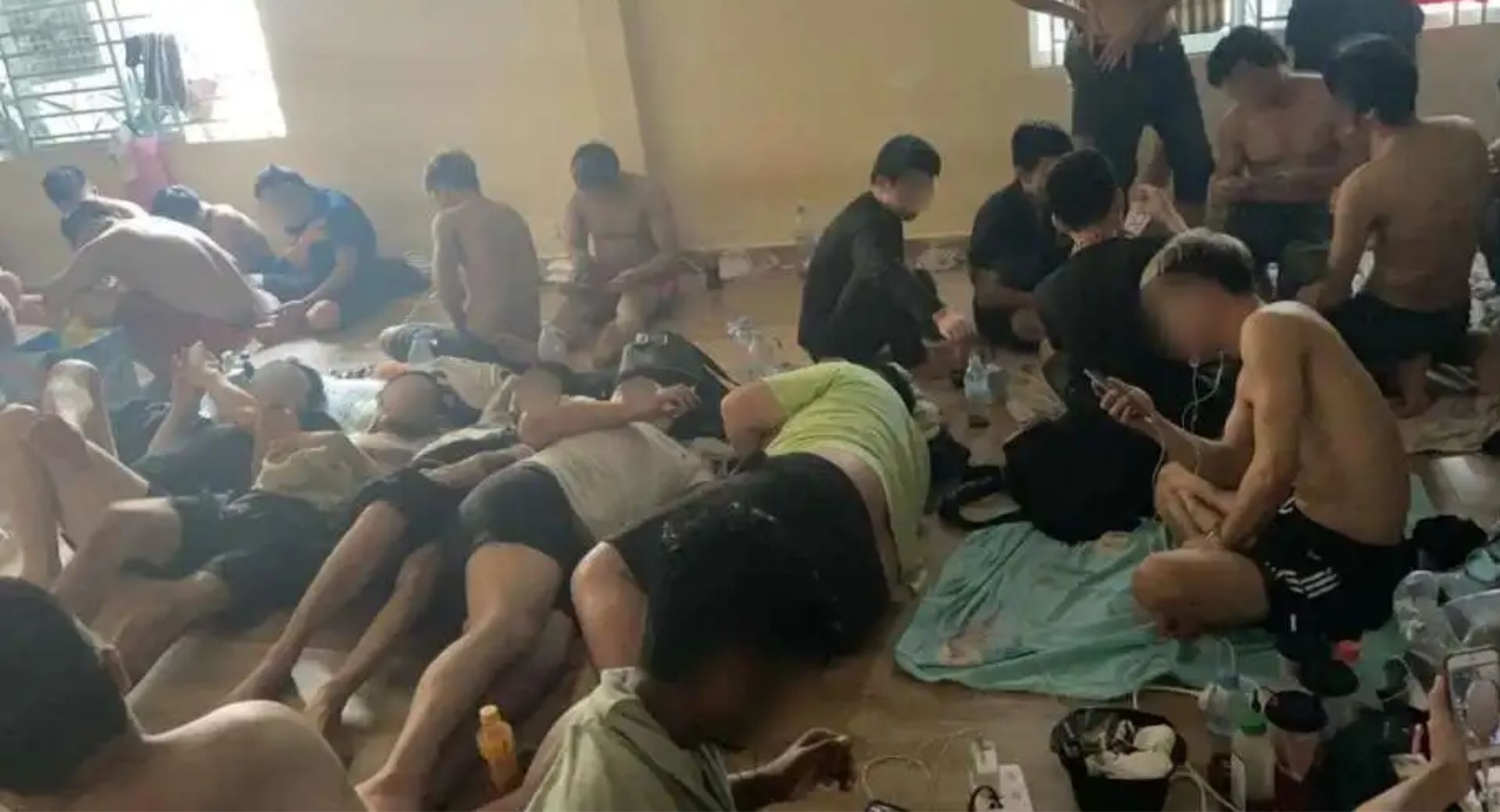

Relations between South Korea and Cambodia have worsened after authorities uncovered a massive online scam network in Southeast Asia. The scheme trapped hundreds of South Koreans, turning isolated disappearances into a diplomatic and humanitarian crisis. In response, Seoul issued its highest travel warning — a rare “code-black” advisory — for several parts of Cambodia.
Seoul Imposes Rare Travel Ban
On Wednesday, South Korea banned travel to key regions in Cambodia, including Poipet, Bavet, and the Bokor Mountain area in Kampot province. Officials said these locations have become “epicentres of fraudulent job schemes” targeting South Koreans and other foreigners.
The decision followed the brutal murder of a 22-year-old South Korean student who was visiting Cambodia during his summer break. Investigations revealed he had been tortured before his death, exposing the violent nature of Cambodia’s scam compounds.
South Korea’s Ministry of Foreign Affairs warned, “South Korean nationals visiting or staying in those areas may be subject to penalties under the Passport Act and other relevant regulations. Citizens planning to travel to such areas are therefore strongly advised to cancel their trips.”
Officials said the ban aims to prevent more incidents and to help rescue those already trapped in scam networks.
Student’s Murder Sparks Public Outrage
The crisis began when the student’s body was found in a pickup truck near Bokor Mountain in early August. He had told his family he was taking a summer job in Phnom Penh but later went missing.
A week later, his parents received a ransom demand of US$38,500 before contact with the kidnappers ended. Cambodian police later said he died from “cardiac arrest caused by torture and extreme pain.”
Authorities charged three Chinese nationals with murder and online fraud. South Korea sent investigators to Phnom Penh to assist in the case and trace the larger human trafficking network behind it.
South Korean security adviser Wi Sung-lac said the student’s death was “part of a much larger problem.” He added, “It is believed that around 200,000 people of various nationalities are working in Cambodia’s scam industry, which targets victims worldwide, including in South Korea.” About 1,000 South Koreans are believed to be trapped.
Inside Cambodia’s Scam Compounds
Rescued victims described harrowing conditions inside the scam compounds. Many said they were lured by fake job offers for tech or administrative roles but ended up imprisoned and forced to commit online fraud.
One survivor told Yonhap News Agency, “I don’t know if I fainted or just collapsed from lack of strength, but I couldn’t even scream.” Others spoke of beatings, electric shocks, and starvation.
A South Korean resident in Cambodia said, “It’s not uncommon for people to die from assault. About one person dies every day.” Victims reportedly come from Vietnam, Indonesia, Malaysia, and China.
Witnesses claimed some victims were sold to other criminal gangs or forced into organ trafficking. “If victims go into debt and fail to produce results, they are forced to sell their organs. They first have their eyeballs removed because corneas are easy to transplant,” one source said.
Amnesty International called the abuses “massive,” estimating that at least 53 such compounds operate across Cambodia. The group said these networks stretch into Myanmar, Laos, and the Philippines.
Seoul Launches Rescue Operations
Under growing pressure, South Korea formed a special task force led by Wi Sung-lac to oversee rescue and repatriation missions.
Officials estimate that about 60 South Koreans are still detained in Cambodia, while at least 80 remain missing. “We are making efforts to ensure repatriation by this weekend,” Wi said. Charter flights are being arranged for the return.
He added that returnees “will face investigation and judicial measures depending on their level of involvement.”
Second Vice-Foreign Minister Kim Jin-ah has been sent to Phnom Penh with senior officials to negotiate the release of detainees and strengthen cooperation.
President Lee Jae-myung called the crisis “a matter of national urgency.” He said, “Many of our citizens are deeply concerned about their family members, friends, and neighbours who have been detained in Cambodia.”
South Korea also plans to create a permanent “Korean desk” within Cambodia’s police to enhance coordination.
Political Reactions in Seoul
The scandal has triggered political tensions in Seoul. Lawmakers from both ruling and opposition parties demanded tougher action to protect citizens abroad.
Opposition lawmaker Song Eon-seog recalled the 2011 “Dawn of the Gulf of Aden” naval mission, saying, “In the past, our government carried out a full-scale military operation to rescue Korean citizens taken hostage.”
Ruling party member Lee Eon-ju wrote, “We must show the world that anyone who commits crimes or terrorism against Koreans will be punished to the end.” She suggested “self-help measures, including military action,” if Cambodia fails to act.
Although military intervention is unlikely, such remarks show growing frustration in Seoul as more cases come to light.
The Expanding Scam Network
Cambodia’s scam centres form part of a broader criminal network across Southeast Asia. Many use the “pig-butchering” method, where victims are tricked into fake cryptocurrency investments.
Most of these syndicates are run by Chinese criminal groups linked to operations in Myanmar, Laos, and the Philippines.
A major breakthrough came when the US Department of Justice seized $15 billion in bitcoin and charged UK-Cambodian businessman Chen Zhi. His company, Prince Holding Group, allegedly used forced labour to run global crypto scams.
US Attorney General Pam Bondi called it “one of the most significant strikes ever against the global scourge of human trafficking and cyber-enabled financial fraud.” The US Treasury later designated the company as a transnational criminal organisation.
Why South Koreans Are Targeted
Experts say scammers target South Koreans because they can access legitimate bank accounts in advanced economies.
A rescued victim explained, “One reason is that bank accounts are needed to launder their criminal proceeds. The other is to engage in fraudulent telemarketing and chatting targeting South Koreans.”
Many reportedly travelled to border towns like Poipet and Bavet to sell their bank accounts or take small jobs but were instead detained and forced into scams.
A Widening Regional Crisis
Beyond South Koreans, thousands of victims from Vietnam, Indonesia, Thailand, Malaysia, and China remain trapped in similar compounds. Human rights groups compare their conditions to modern slavery.
Despite repeated crackdowns, new scam hubs continue to emerge — some even using Starlink satellite internet to operate in remote parts of Myanmar.
Seoul now plans to review whether some Koreans voluntarily joined the scams. Wi Sung-lac said some “should be regarded as having committed criminal acts,” but each case would be reviewed individually.
South Korea’s labour ministry will work with online job platforms to remove fake listings used to lure citizens abroad.
Meanwhile, Cambodian authorities have promised cooperation, but rights groups continue to demand transparency and accountability as the crisis deepens.