
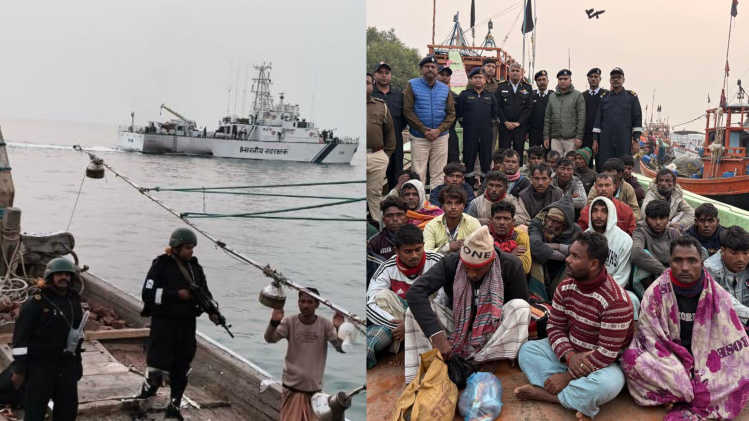

The Indian Coast Guard intercepted two Bangladeshi fishing boats on December 16. The boats were fishing illegally inside India’s Exclusive Economic Zone (EEZ) in the northern Bay of Bengal.
Authorities detained the vessels and 35 crew members. They later handed them to the Marine Police at Frazerganj, West Bengal. Police will take legal action under the Maritime Zones of India (Regulation of Fishing by Foreign Vessels) Act, 1981.
Patrol ship spots active fishing
ICG Ship Anmol spotted the boats during routine surveillance. The vessels were well inside India’s maritime limits. Officers found active fishing gear on board. They also found about 500 kilograms of fish. The evidence showed ongoing fishing activity.
None of the crew produced valid permits to fish in Indian waters. This confirmed a clear violation of Indian law.
@IndiaCoastGuard Ship, while on patrol in the Northern #BayOfBengal on 16 Dec 25, intercepted and apprehended two #Bangladeshi fishing boats along with 35 crew members and 500 kg of illegally harvested fish catch inside #Indian water. The seized boats and crew were handed over to… pic.twitter.com/shahycyCpT
— Indian Coast Guard (@IndiaCoastGuard) December 18, 2025
Similar cases in recent months
This was not an isolated case. Over the last three months, the Coast Guard has intercepted several Bangladeshi fishing boats. Authorities have detained more than 100 crew members for similar EEZ violations. Patrols have increased to protect maritime resources.
Bangladesh narrative draws concern
Intelligence and diplomatic sources tracking events in Dhaka point to a wider issue. Officials told CNN-News18 that Bangladesh increasingly portrays these arrests as Indian “harassment” of poor fishermen.
Political groups and sections of the media in Bangladesh frame the action as harmful to fishing livelihoods. Supporters of this view say it fuels anti-India sentiment, especially during economic stress.
Intelligence flags grey-zone tactics
Senior intelligence sources call the repeated violations deliberate and deniable. They say civilian fishing boats cross boundaries to avoid direct military confrontation.
Officials describe this as grey-zone behaviour. Civilian actors test sovereignty without triggering escalation. Sources say such moves can also help observe Coast Guard responses and gather informal intelligence.
Critics in New Delhi believe the tactic helps stir nationalist sentiment at home by portraying India as aggressive toward civilians.
Coast Guard to maintain vigilance
Indian authorities say they will continue strict surveillance in the Bay of Bengal. They stress that enforcement targets violations, not livelihoods. They add that actions follow law and international maritime norms.