
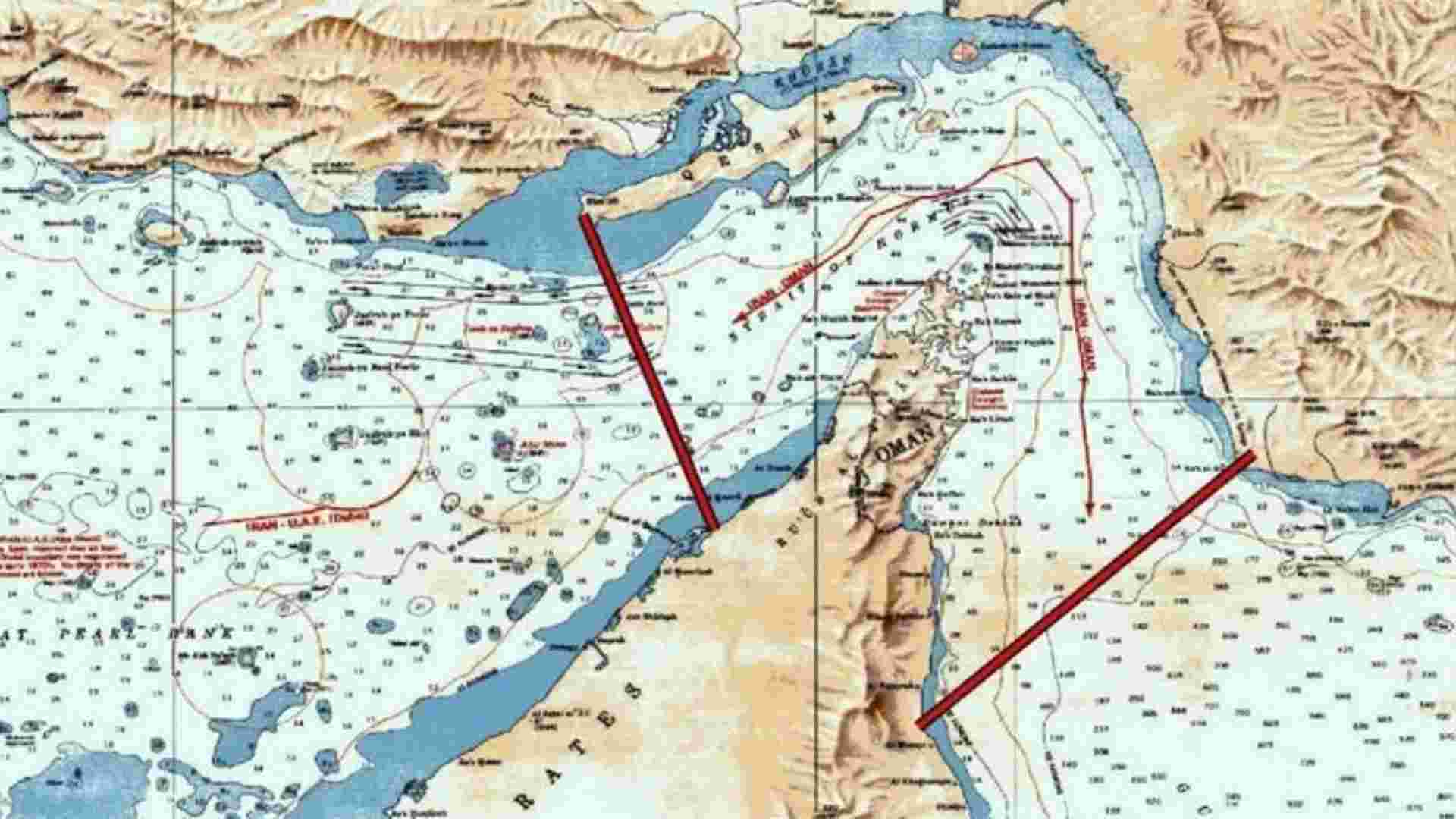

Iran has expanded its definition of the Strait of Hormuz. Tehran now describes the key waterway as a “vast operational area” instead of a narrow maritime passage.
The announcement came from the naval wing of Iran’s Islamic Revolutionary Guard Corps (IRGC). The move comes amid continuing tensions in the Gulf after months of conflict involving the United States and Israel.
IRGC Says Operational Zone Expanded Tenfold
Mohammad Akbarzadeh, deputy political director of the IRGC Navy, said Iran no longer sees the Strait of Hormuz as a limited zone around Hormuz and Hengam islands.
“In the past, the Strait of Hormuz was defined as a limited area around islands such as Hormuz and Hengam, but today this view has changed,” Akbarzadeh told Iran’s Fars news agency.
He said the new operational zone now stretches from the Iranian port city of Jask in the east to Siri Island in the west.
Iranian media claimed the effective width of the zone has expanded from around 32-48 kilometres to nearly 322-483 kilometres. That makes the area almost ten times larger than before.
Deputy Commander of the IRGC Navy: “The area of the Strait of Hormuz has become larger.”
— Iran Screenshot (@iranscreenshot) May 12, 2026
In the past, the Strait of Hormuz was defined as a limited area around islands such as Hormuz and Hengam. However, under the new plan, the operational scope of the Strait of Hormuz has… pic.twitter.com/vohPYmxlvO
Conflict Turned Hormuz Into Major Flashpoint
The crisis escalated after the United States and Israel launched strikes on Iran on February 28. Tehran later retaliated by targeting US military bases and allied interests across the Gulf region. The conflict quickly turned the Strait of Hormuz into one of the world’s most sensitive flashpoints.
Although both sides announced a fragile ceasefire in April, tensions remain high. The United States continues to enforce a naval blockade against Iranian shipping. Iran has repeatedly threatened to block commercial movement through the strait.
Now Tehran appears to be going further by redesigning the surrounding waters as a military-controlled security zone under IRGC oversight.
Why the Strait of Hormuz Matters
The Strait of Hormuz remains one of the world’s most important energy routes. Nearly one-fifth of global oil and liquefied natural gas supplies pass through the narrow waterway every day.
Countries such as India, Saudi Arabia, Iraq, Kuwait, United Arab Emirates and Qatar depend heavily on the route to export energy products. Any disruption in Hormuz can sharply increase global fuel prices within hours. Since the conflict began, oil prices have surged. Brent crude reportedly jumped from around $72 per barrel to more than $120.
Iran Releases New Maritime Map
Earlier this month, the IRGC released a map showing what it called a new maritime operational zone. The map introduced two “lines of control”.
The western boundary stretched from Iran’s Qeshm Island to Umm Al Quwain in the UAE. The eastern boundary ran from Mount Mobarak in Iran to Fujairah in the UAE. The zone includes major international shipping lanes and waters near Oman and the UAE.
The map also highlighted important Iranian ports such as Bandar Abbas and Chabahar. Iranian media later described the structure as a “complete crescent”.
Iran Vows to Defend Its Territory
Akbarzadeh said Iran would strongly defend its territory and waters.
“As it has been said before, we will give blood, but we will not give up an inch of soil. The armed forces will defend the country's territorial integrity and waters with all their might,” he said, according to Mehr News Agency.
Trump Jokes About ‘Strait of Trump’
Meanwhile, US President Donald Trump joked about the waterway during a speech in Miami.
Trump briefly called it the “Strait of Trump” before correcting himself.
He told the crowd that Iran needed to “open up the Strait of Trump — I mean, Hormuz.”
Trump also mocked media coverage by saying, “there’s no accidents with me.”
The remark came after his earlier executive order renaming the Gulf of Mexico as the “Gulf of America.”