
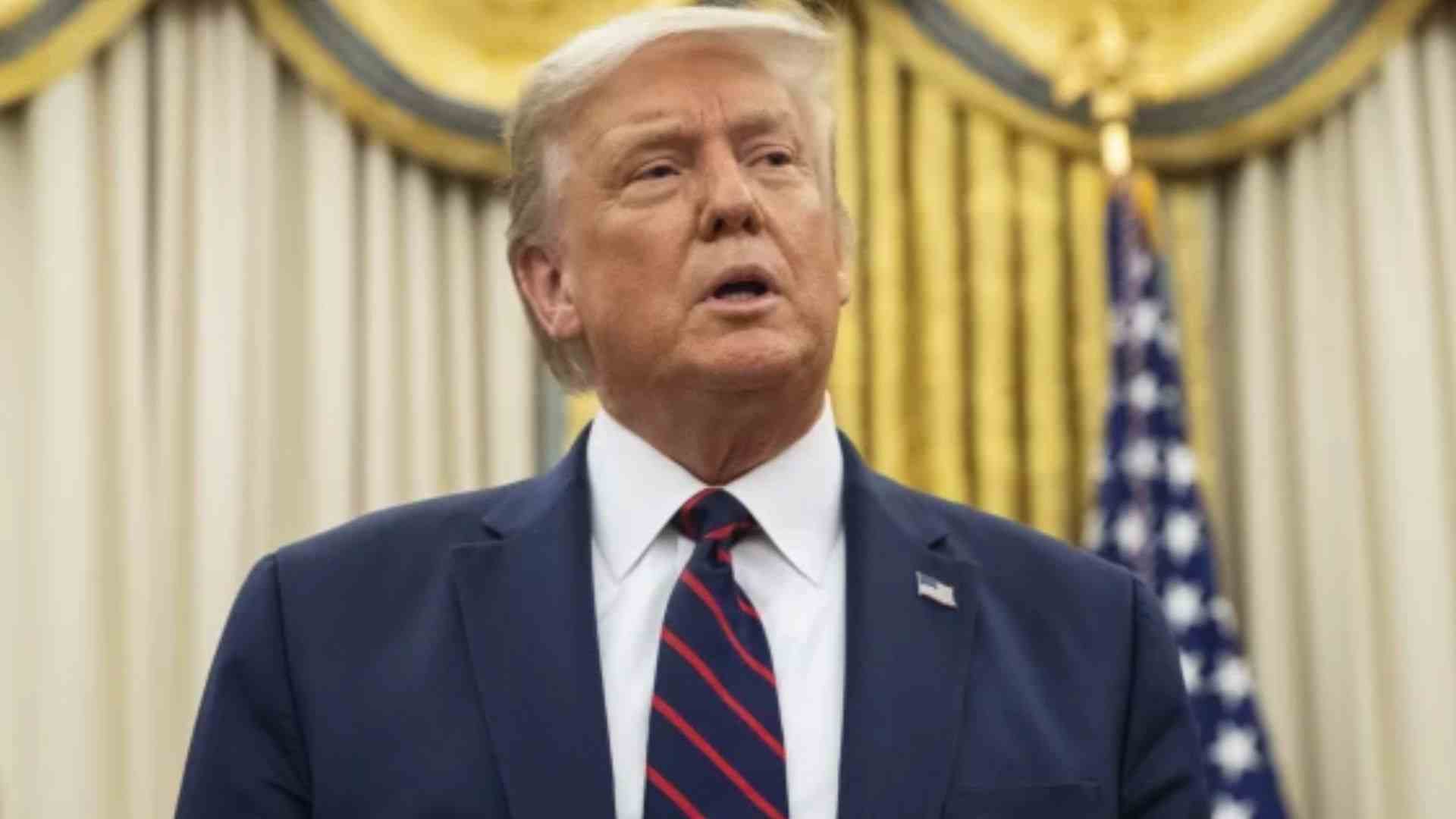

US President Donald Trump said on Tuesday that the Strait of Hormuz was fully open and handling record levels of oil traffic, calling it a major success for the United States. Speaking during a White House press briefing, Trump claimed that more oil moved through the crucial shipping route the previous day than at any other time in history.
“We took in more oil yesterday than has ever gone through the Strait! We have an oil Gusher. The Strait is totally open,” he said.
Trump Highlights Two Major Achievements
Trump said his administration had achieved two important objectives in the region. First, it ensured that the Strait of Hormuz remained open for global energy shipments. Second, it secured assurances that Iran would never obtain a nuclear weapon.
The president stressed the importance of maintaining stability in the Middle East. He said the United States wanted peace and would continue efforts to prevent tensions from escalating further.
“We have 2 things! We have an open Strait and we have a country that will never have a nuclear weapon.”
US Suspends Sanctions on Iranian Oil
A day earlier, the United States temporarily suspended sanctions on Iranian oil exports. The move followed comments by Vice President JD Vance, who said Iran had agreed to allow United Nations nuclear inspectors to return to the country.
The announcement came after talks held at Switzerland’s Burgenstock resort, where officials worked on a framework aimed at ending the recent conflict involving the United States, Israel and Iran.
“We laid a very good foundation for a successful final deal,” Vance told reporters after the discussions.
Talks Focus on Nuclear Issue
Iranian officials confirmed that the nuclear issue was raised during the negotiations, although they said discussions remained limited.
Iranian Foreign Ministry spokesman Esmaeil Baqaei stated, “a very brief discussion took place regarding the nuclear issue, but there was no discussion of details.”
The comments suggest that negotiators have started addressing sensitive nuclear concerns, but major issues still need to be resolved before a final agreement can be reached.
Tehran and Washington Sign Memorandum
Last week, Iran and the United States signed a memorandum of understanding that paved the way for the Switzerland negotiations. The agreement followed nearly 40 days of fighting that ended with a fragile ceasefire.
Negotiators are now trying to address long-standing disputes that have strained relations between Tehran and Washington for decades. Iran’s nuclear program remains one of the most difficult issues on the agenda. Vance compared the progress to building a house.
“The final deal is the house,” Vance said. “We haven’t built the house, but we’ve laid a successful foundation to get to a good place for the American people.”
Iran Announces Economic Relief Measures
Iranian Foreign Minister Abbas Araghchi welcomed the developments and highlighted the economic benefits emerging from the talks. Posting on social media, he wrote: “Oil and petrochem exports are waived, blockade lifted, some frozen assets released, and major reconstruction & development plan launched for Iran.”
The statement indicates that Iran expects significant economic gains if the negotiations continue moving forward.
Israel Remains Cautious
Despite the diplomatic progress, Israeli leaders have expressed concerns about the emerging agreement. They remain wary of any arrangement that could affect regional security.
Israeli Prime Minister Benjamin Netanyahu reaffirmed Israel’s security position on Monday, saying Israeli forces would continue to act against potential threats. He stated that Israeli troops “have full freedom of action to thwart any direct or developing threat” in southern Lebanon.
Diplomatic Efforts Continue
The latest developments mark a significant step in efforts to ease tensions between the United States and Iran. While both sides have made progress on oil exports, inspections and regional security issues, negotiators still face major challenges before reaching a comprehensive agreement. Israel’s concerns and unresolved nuclear questions are expected to remain key topics in the coming rounds of talks.