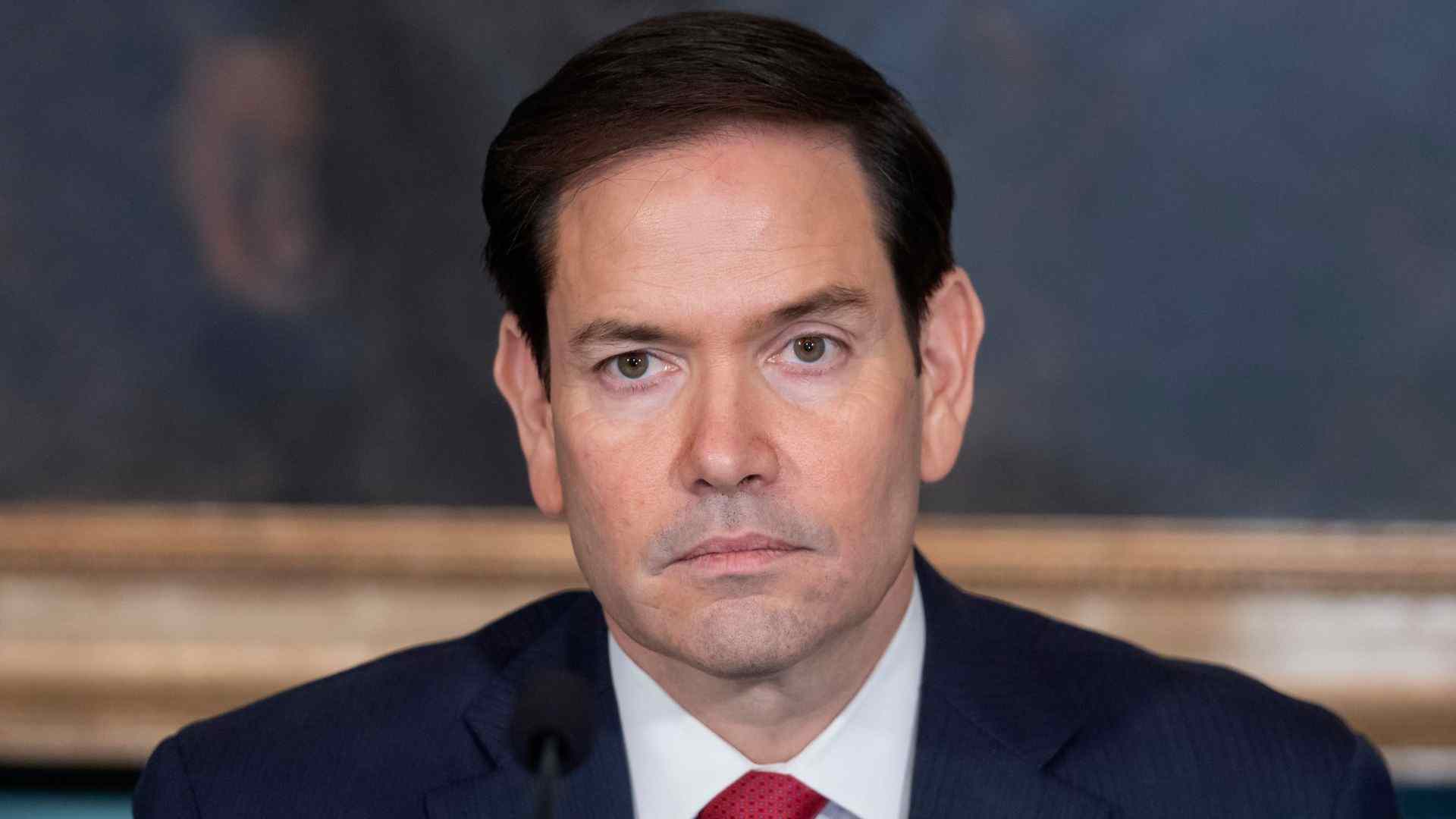
US Secretary of State Marco Rubio has denied claims that Washington ordered a
slowdown of Starlink internet services in Ukraine. He described reports of deliberate disruption as “categorically false” and clarified that Ukraine does not currently have access to Starshield, a separate satellite communications system designed for military use. Rubio addressed the issue while speaking to reporters at Joint Base Andrews before departing for Uzbekistan and India.
During the interaction, he also discussed US sanctions waivers related to Russian energy exports, India's energy purchases, rising global fuel prices, and Washington's diplomatic engagement with Central Asian countries. He also faced questions on other international security and humanitarian issues.
Rubio Rejects Claims of White House Involvement in Starlink Slowdown
Rubio denied that the White House or any other part of the US government had ordered a reduction in Starlink internet speeds in Ukraine.
He questioned Ukrainian President Volodymyr Zelenskyy's understanding of the situation and said the reported disruption was not deliberate. Rubio added that the service had returned to its previous operating level.
“No. Well, I don’t know what Zelenskyy said. I’m not sure Zelenskyy knows what he’s talking about, but it wasn’t deliberate. We have nothing to do with that. I don’t – the United States, nobody ordered that Starlink speed to be slowed down. It sort of happened, but my understanding is it’s been restored. It’s back to where it was before. That’s Starlink, though. They were using Starlink for their drones.”
Starlink and Starshield Serve Different Purposes
Rubio explained that Starlink and Starshield are separate satellite communication products. Starlink provides commercial satellite internet services, while Starshield serves military and government requirements.
“Starshield is a totally different product."
He said the US military operates Starshield under a separate contract. Ukraine does not currently have access to the system, although Kyiv has requested permission to use it for military operations inside Russia.
Ukraine Seeks Starshield Access for Deep Strikes Inside Russia
According to Rubio, Ukraine wants to use Starshield to support attacks deep inside Russian territory. However, he stressed that Washington has not granted Kyiv access to the system.
“I know Ukraine wants access to Starshield. They do not have Starshield now. They’ve asked for access to it in order to conduct deep strikes inside of Russia.' He further said, 'They do not have access to it at this moment. Those are two different products.”
Rubio again rejected allegations that the White House had deliberately restricted internet access to prevent Ukrainian drones from operating.
"I don’t know what their theory is, but nothing to do with the White House. I saw a report on that the other day. It’s just categorically false. No one at the White House ordered anyone to slow down internet or slow down speed so that certain drones couldn’t use it. But my understanding is it’s back up and running. That’s what I read – that’s what we heard two days ago", he said.
Rubio Defends Trump's Waivers on Russian Energy Sanctions
Rubio also defended the Trump administration's decision to grant temporary waivers related to sanctions on Russian energy exports. His remarks came amid criticism from Senator Ted Cruz, who argued that the move was a mistake and benefited Russian President Vladimir Putin.
He said the measures affected more than Russia. They also involved tariffs on several countries, including India. He explained that the administration needed time to assess the economic consequences before deciding how to proceed.
"There are other countries – the problem is these sanctions were not just sanctions on Russia. They include tariffs on a number of countries – India, for example, and others. And so I think the President wants to take the 60-day period of time to sort of analyse what imposing both sanctions and tariffs will mean to the global economy and even to the US economy", he told reporters.
Global Conflicts Put Pressure on Energy Supplies and Prices
Rubio said the temporary waiver would give Washington time to evaluate how international conflicts affect energy supplies and prices. He pointed to tensions involving Iran, disruptions around the Strait of Hormuz, attacks by Yemen's Houthi movement and the ongoing Russia-Ukraine war. He said these developments were increasingly connected and created wider uncertainty in global energy markets.
According to Rubio, the administration must consider how sanctions, tariffs and conflicts affect both the US economy and countries that depend heavily on imported energy.
Rubio Explains India's Continued Reliance on Russian Energy
Rubio acknowledged that India had taken steps to diversify its energy sources but continued to purchase substantial quantities of Russian energy.
He said countries could not change their energy suppliers overnight. He also described India as an important US partner, suggesting that Washington needed to consider these economic and diplomatic factors while reviewing its policy.
"And then you’ve got countries like India, for example, that have voluntarily diversified their energy portfolio but are still getting a substantial amount of energy from Russia because it’s hard to pivot from one day to the next, but they’re also an important ally and partner of the United States. So, the President – we need that period of time to sort of study all this and figure out what the right combination is," he added.
Rubio Says Russian Diesel Would Have Entered Global Markets Anyway
Rubio also responded to criticism that the waiver and an arrangement involving Russian diesel benefited Moscow without providing anything in return.
He argued that Russia would have sold the diesel to international buyers regardless of the US decision. According to him, the waiver influenced how much of that supply could reach the American market.
"Well, that diesel was going to be sold one way or the other. I mean, the diesel that Putin is going to sell, they would make it available to the global market one way or the other. The only difference is how much of it the United States was going to get. So – but this is not unprecedented. If you recall a few months ago, we also did a 60-day waiver on Russian oil when Hormuz was being challenged," US Secretary added.
US Faces Higher Fuel Prices Amid International Tensions
Rubio warned that conflicts across different regions were putting growing pressure on energy supplies, fuel prices and national economies. He said Americans were paying more for energy than they wanted to, while some other countries were approaching a crisis because of supply constraints and rising costs.
"The United States, we’re paying higher prices than we all want to be paying, but you look at some of these other countries around the world, they’re near crisis mode. So, all of these things have to be managed delicately and worked with because they’re all – they’re all coming together now. It’s not just the Strait of Hormuz anymore. It’s what’s happening with Saudi Arabia and the uncertainty that that’s creating. It’s also what’s happening between Russia and Ukraine and the constraints that’s putting on global energy supplies," he told reporters.
Rubio Explains Timing of Uzbekistan Visit
Rubio also addressed questions about his decision to visit Uzbekistan while several international crises demand Washington's attention. He said the trip formed part of a broader US effort to strengthen diplomatic and strategic relationships beyond regions facing immediate conflicts. The visit would bring together leaders and foreign ministers from Uzbekistan and four other Central Asian countries.
Rubio explained that the schedule depended on the availability of the regional leaders. “It’s the time of year that worked for those leaders. It’s not just Uzbekistan, it’s the other four countries from Central Asia. This is an important relationship.”
Washington Seeks Stronger Ties With Central Asian Countries
Rubio said governments often devote much of their diplomatic attention to immediate crises. This can leave less time to develop long-term relationships with other countries. He stressed that the United States also wanted to strengthen partnerships in regions that did not face the same level of immediate conflict.
“But there’s countries you’d like to get to because we want to build our relationships with them.”
Rubio cited recent US visits to Greece and countries in Latin America as examples of the administration's efforts to maintain diplomatic engagement across different regions. He reiterated that the schedule had been chosen to allow Washington to meet all five Central Asian leaders and their foreign ministers during the same visit.
“So – and the chance to see – it was the date that worked to get all five of the leaders together, all five of the foreign ministers from the five countries.”