
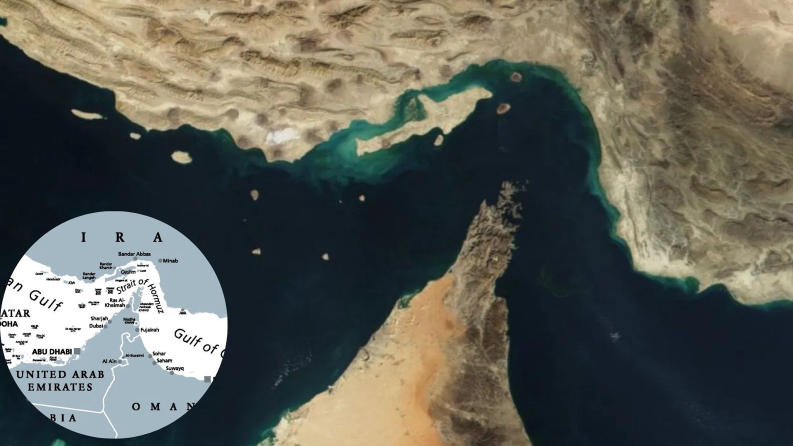

The Strait of Hormuz, one of the most important global oil routes, is once again in the headlines. This comes after Iran hinted at possibly shutting it down, following major US airstrikes on its nuclear facilities. Experts warn that any such move could trigger a global energy crisis and hurt major oil-importing nations, especially India.
What Triggered the Threat?
Tensions rose sharply after US President Donald Trump announced a military operation that bombed three key Iranian nuclear sites—Fordow, Natanz, and Esfahan—on Saturday. He called the operation “very successful.”
In response, Iran signaled that closing the Strait of Hormuz could be one of its options. Iran’s parliament supported the idea, although the final decision lies with the Supreme National Security Council.
Esmail Kosari, a senior Iranian lawmaker and commander in the Revolutionary Guard, stated, “The move to block the strait will be done whenever necessary.” Iranian state media has amplified this warning, calling the US strikes an act of “unprecedented aggression.”
Why the Strait of Hormuz Is So Crucial
The Strait of Hormuz connects the Persian Gulf to the Gulf of Oman and the Arabian Sea. At its narrowest point, it is just 21 miles wide. This narrow passage sits between Iran and Oman and serves as the main exit point for oil and gas exports from the Gulf.
According to 2023 data, more than 17 million barrels of oil—about 20% of the world’s daily supply—pass through the strait each day. Major oil producers like Saudi Arabia, Iraq, Kuwait, the UAE, Qatar, and Iran depend on it. While a few alternate pipelines exist, they can carry only around 2.6 million barrels per day, which is far less than the amount that travels through Hormuz.
Oil Prices May Skyrocket
Even a temporary closure could push global oil prices above $120 to $150 per barrel. Prices are already rising. Brent crude has crossed $90, and WTI is following closely.
Asia and Europe Face Energy Crises
Countries like India, China, and Japan rely heavily on oil and LNG from the Gulf. A closure would disrupt supplies and raise fuel costs. Europe, still struggling with the fallout from the Ukraine war, may also face gas shortages if Qatari LNG shipments stop.
The International Energy Agency recently said, “With geopolitical and economic uncertainties affecting oil producers and consumers alike, oil supply security remains high on the international energy policy agenda.”
Global Shipping Takes a Hit
The Strait is not just for oil. It’s also a key route for cargo and container ships. If closed, ships will have to take longer, more expensive routes. This would raise shipping costs and cause delays, worsening global supply chain issues.
Stock Markets and Economies Could Suffer
Rising oil prices and shipping delays could rattle global stock markets. Inflation might rise, forcing central banks to act. Developing countries that rely on energy imports could face financial pressure and growing debt.
Military Conflict Could Erupt
The US, UK, and France have strong naval forces in the region. If Iran shuts the Strait, these countries may respond with military action to reopen it. That would increase the risk of a wider conflict in the Gulf.
Why India Is at High Risk
India depends heavily on oil from the Gulf. Experts say a closure of the Strait would badly hurt the country’s energy security.
Nearly 30% of global oil and one-third of the world’s LNG pass through the Strait daily. Any interruption could:
-
Increase fuel prices and cause inflation in India.
-
Raise shipping and insurance costs for rerouted supplies.
-
Delay imports from countries like Qatar, Iraq, and the UAE.
-
Disrupt trade with Middle Eastern partners, especially in sectors like chemicals, fertilizers, and heavy industry.
Although India has strategic oil reserves that can help temporarily, a long-term disruption would hurt the economy and require urgent diplomatic action.
Dr. Laxman Kumar Behera, a professor at Jawaharlal Nehru University, told PTI, “The shutting down of the narrow passage would have significant global repercussions across energy markets and it will impact India’s energy security as well.”
He added that India’s crude oil imports from Iraq—and to some extent Saudi Arabia—would be heavily affected.
Could Iran Handle the Consequences?
Analysts say that even though Iran may threaten to close the Strait, doing so could harm its own economy. Iran also uses the Strait to export oil—even if secretly—so a closure would cut off its revenue, which is already under pressure from international sanctions.
A shutdown would also likely provoke a military reaction from the US and its allies. Even countries like China, which continue to buy oil from Iran, might oppose such a step, further isolating Tehran.
What Comes Next?
US Secretary of State Marco Rubio has urged China to tell Iran not to escalate the crisis. He warned that shutting the Strait would be “economic suicide” for Iran. He added that the US and its partners are ready to act if the closure happens.
As tensions rise and oil markets remain unstable, the world waits to see if the crisis will stay diplomatic—or explode into a full-blown energy emergency with global consequences.