
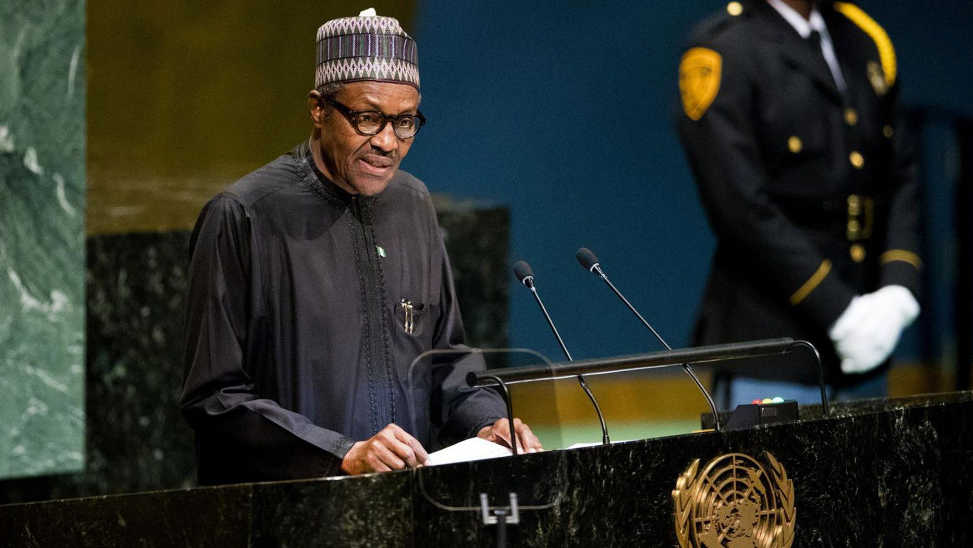

Nigeria’s former president Muhammadu Buhari died in London on Sunday after suffering from a long illness. A spokesperson for current President Bola Tinubu confirmed the news in a post on X, stating, “President Buhari died today in London at about 4:30 p.m. (1530 GMT), following a prolonged illness.” Buhari was 82 years old.
A Military Leader Who Became a Civilian President
Buhari led Nigeria twice—first as a military ruler in the 1980s, and later as a democratically elected president from 2015 to 2023. He became famous in 2015 when he became the first Nigerian leader to defeat an incumbent president, beating Goodluck Jonathan in what was considered Nigeria’s most transparent election.
Once a soldier, Buhari later referred to himself as a “converted democrat.” He traded his military uniform for kaftans and prayer caps, showing his transition from military power to civilian politics. He often told people, “I belong to everybody and I belong to nobody.”
Anti-Corruption Image Defined His Legacy
Buhari gained popularity through his anti-corruption agenda. Both as a military leader and civilian president, he promised to fight Nigeria’s deep-rooted corruption, which he claimed was stopping national progress.
However, after his 2015 win, he failed to meet people’s expectations. Violence spread from the northeast to other parts of Nigeria, overwhelming the country’s security forces. Armed groups, separatists, and criminal gangs took control in many regions.
Slow Governance and Economic Struggles
Despite public hopes, Buhari disappointed many. After taking office in 2015, he waited six months to form his cabinet, earning the nickname “Baba Go Slow.” His slow decisions hurt the oil-dependent economy, especially as crude prices fell sharply during his early presidency.
His re-election in 2019 surprised some observers, as his first term saw Nigeria’s first recession in decades, along with militant attacks on oilfields and frequent hospital visits.
Early Life and Military Rule
Born on December 17, 1942, in Daura, in Katsina State, Buhari joined the army at age 19 and eventually became a major-general. In 1983, he took power after a coup, promising to fix Nigeria’s problems with strict leadership.
His military government took tough stances, even attempting to kidnap a political critic in Britain in 1984. The plot failed when airport workers in London discovered the kidnapped man hidden in a crate.
Buhari’s rule ended quickly in 1985, when Ibrahim Babangida, another military officer, removed him from power.
Long Political Struggles Before Victory
For the next 30 years, Buhari tried repeatedly to become president through democratic elections. He stayed involved in small political parties until he finally won in 2015, defeating Goodluck Jonathan.
End of an Era
Buhari’s death marks the end of a long, complex political career. Known for his strict discipline and anti-corruption promises, he led Nigeria both as a soldier and a civilian leader.