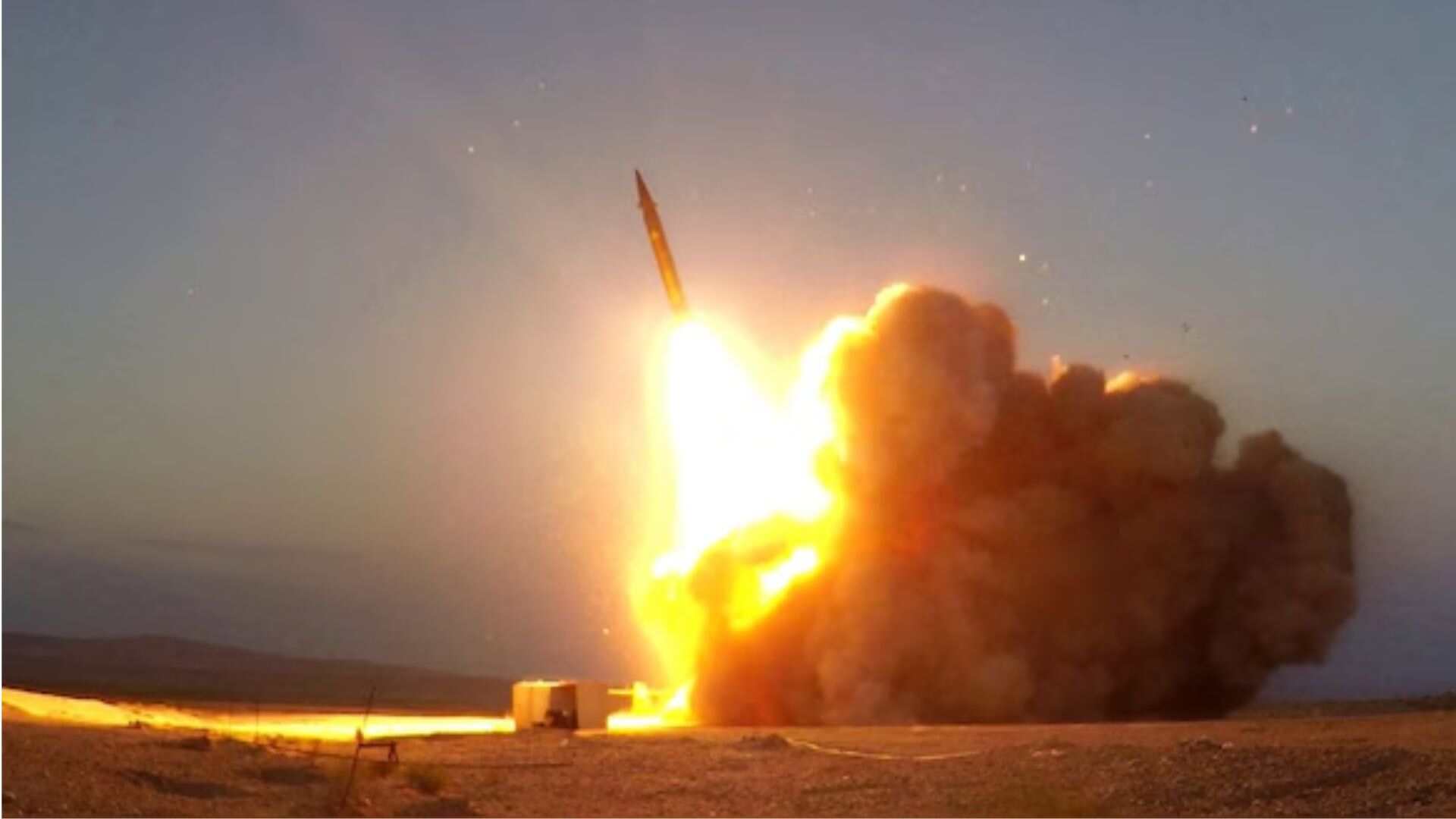
Iran successfully tested a 1,000-kilometer (600-mile) anti-warship cruise missile On Saturday. This missile is capable of targeting US Navy ships in the Persian Gulf and the Sea of Oman.
Details of the Test
General Ali Reza Tangsiri, the naval chief of the Revolutionary Guard, shared details of the missile. “This is a Ghadr-380 mile type L. It has over 1,000 kilometers range. It has anti-jamming capability,” he said. The test took place at an underground missile site along Iran’s southern coast. However, the report did not specify the missile’s warhead or the exact timing of the test.
Missile’s Capability and Purpose
Tangsiri emphasized the significance of the missile system. He stated that the facility is just one part of the Revolutionary Guard's missile systems. Additionally, he claimed that these missiles would create “a hell for the enemy’s warships.” The missile is described as a “sophisticated weapon,” and it can be launched quickly. In fact, one person can prepare and fire it in less than five minutes.
Ongoing Missile Program Developments
Since 2011, Iran has regularly unveiled new underground missile facilities and conducted missile tests. These facilities are primarily located along the southern coast near the Strait of Hormuz, a strategically important region. Iran has also boasted of its missile capabilities, claiming that it has missiles with a range of 2,000 kilometers (1,200 miles), which could strike much of the Middle East, including Israel.
Recent Missile Attacks and Context
In 2024, during Israel's conflicts with Hamas and Hezbollah, Iran launched hundreds of missiles at Israel in two separate barrages in April and October. However, Israel intercepted most of the missiles.
Development of Missile Program as a Deterrent
Iran’s missile program began after the 1980s war with Iraq, which saw both countries target cities with missiles. The U.N. arms embargo, which prevents Iran from acquiring advanced weapons, pushed the country to develop its own missile systems. To protect these weapons, Iran has built underground tunnels, which safeguard its liquid-fueled missiles. These missiles require periodic refueling and benefit from the protection of these facilities.
Global Response and Concerns
The United States and its Western allies view Iran’s missile program as a significant threat. Additionally, Iran’s nuclear ambitions further heighten concerns in the region.