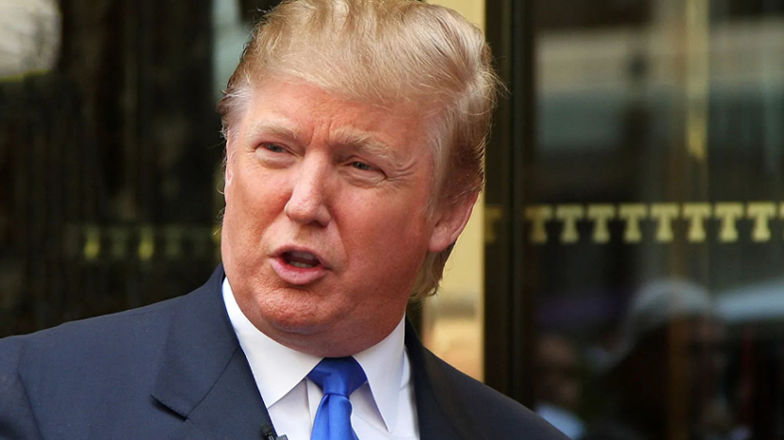
At the end of January, Donald Trump accused the Mexican government of collaborating with drug cartels to smuggle illegal immigrants and dangerous drugs, including fentanyl, into the United States. He announced that by early March, he would decide whether to impose a 25% tariff on Mexican goods, lifting it only if Mexico takes stronger action to secure the border.
These tariffs could severely damage Mexico’s economy, potentially triggering a recession. In response, President Claudia Sheinbaum strongly denied Trump’s claims. Since taking office in October, she stated, her government had intensified efforts against criminal organizations, leading to over 10,000 arrests. Additionally, she deployed 10,000 soldiers to the U.S.-Mexico border in an effort to ease tensions with Trump.
U.S.-Mexico Relations Remain Strained
Despite Sheinbaum’s efforts, relations between the two nations remain tense.
Trump recently classified eight drug cartels as terrorist organizations, six of which originate in Mexico. Among them, the Sinaloa Cartel stands out as the largest fentanyl producer. Other groups on the list include the Mara Salvatrucha (MS-13), which operates in El Salvador, Guatemala, and Honduras, and Venezuela’s Tren de Aragua.
Trump’s national security adviser, Mike Waltz, pushed for a stronger approach: “We must start treating them like ISIS.” He referenced a post-9/11 law that allows the U.S. president to deploy military forces against terrorist groups abroad, meaning Trump could technically authorize bombings or special forces operations in Mexico.
Historical Parallels: U.S. Military Operations in Latin America
If Trump were to deploy the military in Central America, it would bring back painful memories of past U.S. interventions. During the Cold War, the U.S. used force to fight leftist guerrillas in El Salvador, Nicaragua, and Guatemala. In 1989, U.S. forces also invaded Panama, removing President Manuel Noriega. Although Noriega had previously helped the DEA combat rebels, he was also involved with Pablo Escobar’s Medellín Cartel.
The U.S. Strategy Against Drug Lords
The U.S. has long followed a “kingpin strategy,” targeting top cartel leaders. This approach led to the death of Pablo Escobar in 1993 and the capture of Joaquín “El Chapo” Guzmán in 2016. However, arresting these figures has not dismantled the cartels; instead, their organizations have fractured, leading to violent power struggles.
Armando Vargas, an expert at the security think tank México Evalúa, believes the recent arrest of Ismael “El Mayo” Zambada in July 2024 proves that the U.S. does not trust Mexico’s authorities. “Organized crime cannot succeed without some level of state support,” he said. Vargas warned that Zambada’s testimony in U.S. courts could expose political corruption in Mexico.
At the end of February, Zambada pressured the Mexican government to negotiate his return. If they refused, he claimed his testimony could strain U.S.-Mexico relations. His access to sensitive information makes this a serious concern.
Allegations of Corruption in Mexico’s Government
In 2024, reports surfaced that the DEA was investigating former President Andrés Manuel López Obrador for allegedly receiving cartel money during the 2006 elections. While no solid evidence has been found, suspicions of his connections to drug trafficking remain widespread.
Adding to this, in 2024, a U.S. court sentenced former Mexican Security Minister Genaro García Luna to 38 years in prison for working with the Sinaloa Cartel. Similarly, in 2020, the U.S. arrested former Mexican Defense Minister Salvador Cienfuegos for allegedly protecting drug cartels, leading to a diplomatic crisis. However, Mexico pressured the U.S. into releasing him by threatening to cut ties with the DEA.
Vargas argues that Mexico faces a tough dilemma. He believes peace cannot be achieved through force alone but rather through negotiated agreements between cartels and the government. However, the U.S. strongly opposes this approach, as seen in the cases of García Luna and Cienfuegos.
The Complex U.S.-Honduras Relationship
The fight against drug trafficking in Honduras also highlights the difficulty of U.S. cooperation with Latin American governments. The country, situated between South America and the U.S., serves as a major transit hub for cocaine.
In 2008, the U.S. investigated then-President Manuel Zelaya and his brothers for alleged cartel ties. Though the Obama administration’s involvement in his military overthrow in 2009 remains unclear, many of the coup leaders were suspected of having cartel connections. Later, Zelaya’s successor, Porfirio Lobo Sosa, saw his son arrested by the DEA in 2015 and sentenced to 24 years in prison.
Juan Orlando Hernández, another Honduran president, initially worked closely with the U.S., extraditing cartel members. However, his brother Tony Hernández was arrested in 2018 and later sentenced to life for smuggling cocaine. The trial revealed that President Hernández himself led a drug trafficking network.
During the 2021 elections, the Biden administration backed Xiomara Castro, Zelaya’s wife, who promised to extradite Hernández. He was sent to the U.S. in early 2022 and sentenced to 45 years in prison. However, the U.S. quickly cut ties with Castro when new evidence linked Zelaya’s family to Venezuelan drug cartels.
In mid-2024, a 2013 video surfaced showing Zelaya’s brother accepting $650,000 from a Honduran cartel. President Castro initially threatened to terminate Honduras’ extradition treaty, but last week, she reversed her stance under pressure from Trump.
El Salvador’s Harsh Anti-Gang Measures
El Salvador has also faced cartel violence, particularly from the Mara Salvatrucha. President Nayib Bukele launched a crackdown on the gang in 2019, repeatedly extending emergency measures that suspended basic rights. His government has arrested around 83,000 people, sparking accusations of human rights violations from NGOs and the Biden administration.
Meanwhile, investigative reports revealed that Bukele’s government secretly negotiated with Mara Salvatrucha leaders, protecting some from U.S. prosecution. This led to U.S. sanctions against his administration.
However, with Trump’s return, Bukele’s situation has improved. A vocal Trump supporter, Bukele recently told U.S. Secretary of State Marco Rubio that El Salvador would take back undocumented migrants and criminals deported from the U.S. Trump, in turn, has praised Bukele’s crime-fighting efforts, making it unlikely that the U.S. will target El Salvador’s gangs.
Will Trump Really Use Military Force?
Despite Trump’s threats, deploying the military in Mexico would severely damage trade relations. The U.S. relies on Mexico to help curb drug trafficking and illegal migration. Some Latin American countries, including Panama, Costa Rica, and Guatemala, have already pledged to crack down on gangs and tighten border security to appease Trump.
Beyond military force, experts argue that the U.S. must also tackle the demand for drugs within its borders. President Claudia Sheinbaum has urged Trump to disrupt cartel finances and strengthen addiction treatment programs. She has also called for stricter controls on U.S.-made firearms smuggled into Mexico.
However, Trump has yet to take significant steps in these directions.