
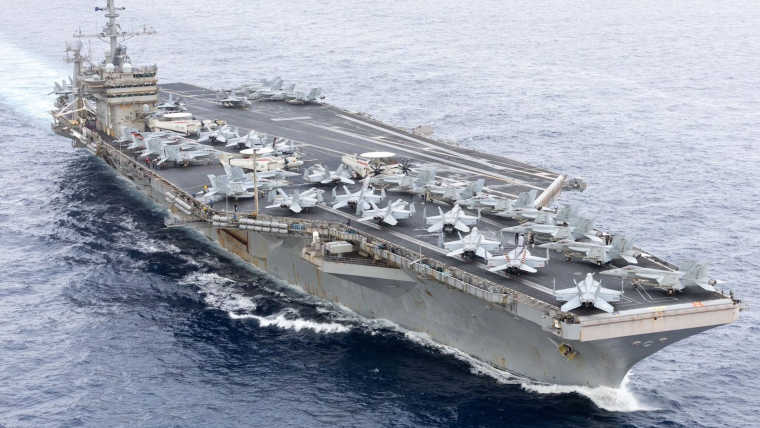

Yemen’s Houthi rebels claimed they attacked a US aircraft carrier group twice within 24 hours. According to them, these strikes were retaliation for deadly US airstrikes.
First, they launched 18 missiles and a drone at the USS Harry Truman and its warships in the Red Sea. Then, a few hours later, they claimed a second attack. However, the US has not confirmed these reports.
Daring Houthis now train their guns on Americans: “We attacked the US aircraft carrier USS Harry Truman with 18 BALLISTIC MISSILES and drones. We will not hesitate to target all US warships in Red Sea and Arabian Sea”, they warned #HouthiRebels pic.twitter.com/oQmrrzoesl
— Stephen Mutoro (@smutoro) March 16, 2025
US Vows More Strikes Until Attacks Stop
Meanwhile, a Houthi spokesperson stated that the attacks were in response to “continued American aggression.” In contrast, the US remains firm. President Donald Trump warned that he would use “overwhelming lethal force” if the Houthis continued targeting Red Sea ships.
As a result of US airstrikes on Saturday, 53 people, including women and children, lost their lives. Additionally, 98 others suffered injuries, according to the Houthi health ministry. Later, Houthi media accused the US of bombing a cotton factory in Hodeida. Furthermore, they claimed the US targeted the Galaxy Leader, an Israeli-owned ship that the Houthis had captured more than a year ago.
Houthis Threaten More Escalation
Shortly after, Houthi leader Abdulmalik al-Houthi called for protests on Monday. In response, the United Nations urged all parties to halt military actions.
Since the Gaza war began, the Houthis have frequently attacked Israel and Red Sea ships. They insist they are acting in solidarity with Palestinians. Notably, before this weekend, they had not claimed any attacks in the Red Sea or Gulf of Aden since January 19, when the Gaza ceasefire took effect.
However, they resumed strikes because Israel blocked more humanitarian aid to Gaza. Consequently, they warned that if the US continued its attacks, they would escalate further.
US Kills Houthi Leaders in Strikes
Notably, the latest US airstrikes were the first since Trump returned to office. US National Security Advisor Michael Waltz confirmed that they “targeted multiple Houthi leaders and took them out.”
Soon after, Trump issued a strong warning, saying, “hell will rain down upon you.” Additionally, he called on Iran to stop supporting the Houthis, referring to them as “Houthi terrorists.” Meanwhile, the US Central Command (CENTCOM) confirmed that military operations were still ongoing.
Fear and Destruction in Yemen
Meanwhile, residents in Yemen’s capital, Sanaa, described terrifying explosions. The blasts shattered windows and shook homes. Additionally, Houthi media broadcasted footage of injured women and children receiving medical treatment.
However, the Houthis blocked access to the explosion sites, making it difficult to assess the damage. A resident named Ahmed told AFP, “I’ve been living in Sanaa for 10 years, hearing shelling throughout the war. By God, I’ve never experienced anything like this before.” He added, “My family and I were terrified.”
Iran and Hamas Condemn US Actions
Following the strikes, Iran’s Foreign Minister Abbas Araghchi criticized the US airstrikes. He argued that Washington had “no authority” to control Iran’s foreign policies. Meanwhile, the Houthis declared that they were “fully prepared” to respond to further attacks.
According to ACLED, a conflict-monitoring organization, the Houthis have carried out 136 attacks on warships, commercial ships, and Israeli targets since October 2023. Consequently, these strikes have disrupted global trade. As a result, many companies now take longer, more expensive routes around Africa.
Furthermore, Hamas condemned the US airstrikes, calling them “a stark violation of international law.” Similarly, Iran’s Revolutionary Guard leader, Hossein Salami, warned that Iran would not start a war. However, he assured that Iran would give a “decisive and conclusive response” if threatened.
War in Yemen Continues
In recent months, the US has launched several strikes on Houthi positions. Additionally, Israel bombed Yemen in December after the Houthis fired missiles toward Israeli territory.
Although Yemen’s internal war has been largely inactive since a 2022 ceasefire, peace talks have stalled. Furthermore, ongoing Houthi attacks on shipping routes have made diplomacy even more difficult.
Ultimately, years of war have devastated Yemen. Hundreds of thousands have died from conflict, starvation, and disease. As a result, the country remains in one of the worst humanitarian crises in the world.