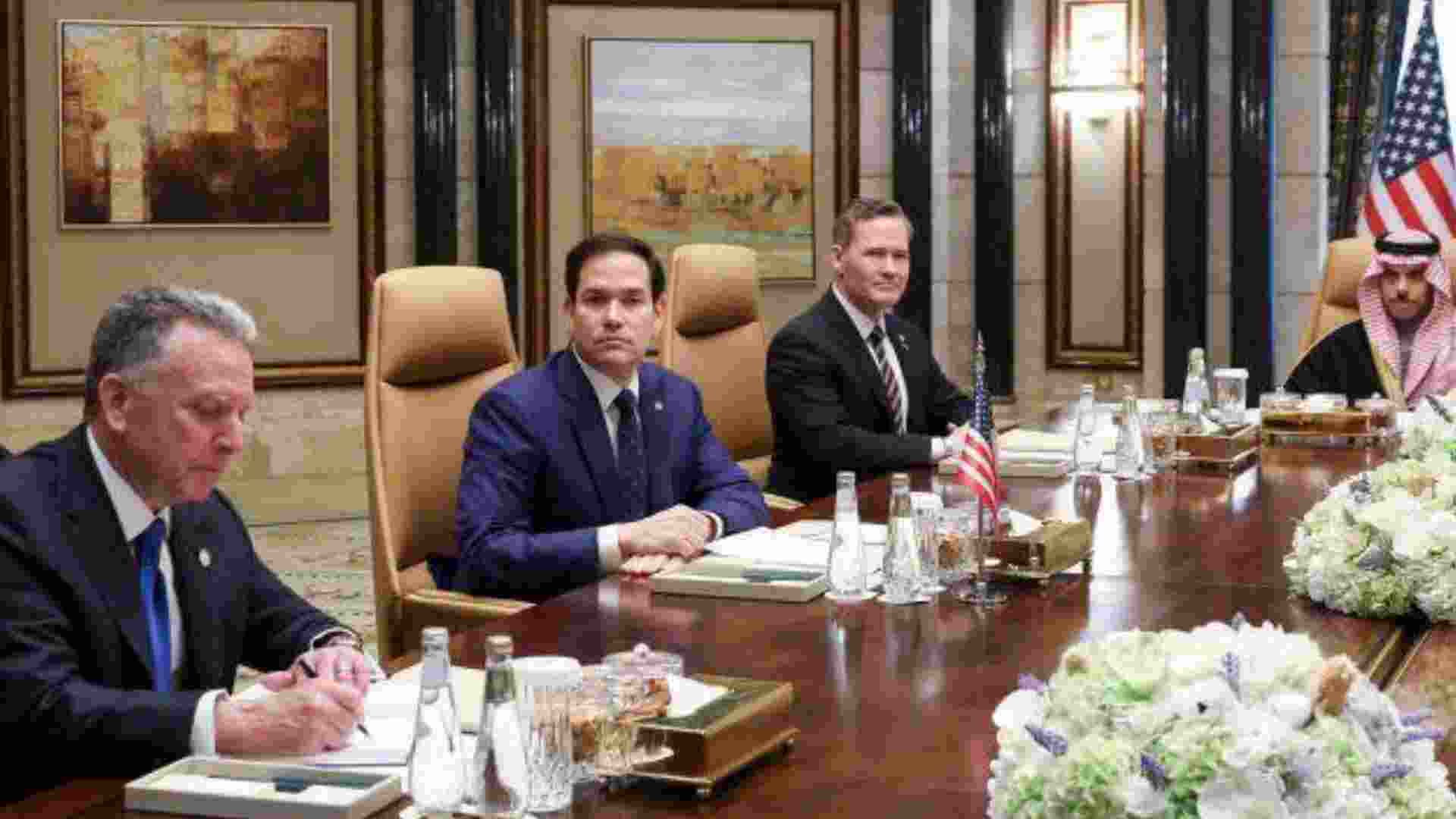
US and Russian officials are meeting in Saudi Arabia on Monday to discuss a partial
ceasefire in the Ukraine war. The talks come just one day after US and Ukrainian delegates held their own discussions.
Trump Pushes for a Quick Peace Deal
US President Donald Trump is pushing for a rapid end to the three-year war. He hopes the talks in Riyadh will lead to a breakthrough.
Meanwhile, both sides have presented different ceasefire proposals. However, cross-border attacks have continued without interruption. Initially, the meetings were supposed to take place at the same time, allowing US officials to mediate between delegations. Instead, the discussions are now happening one after another.
US and Ukraine Complete Talks
On Sunday, Ukraine’s Defense Minister Rustem Umerov led talks with US officials. The meeting ended late at night.
“The discussion was productive and focused – we addressed key points including energy,” Umerov said on social media. He emphasized that Ukraine remains committed to a “just and lasting peace.”
At the same time, Trump’s envoy, Steve Witkoff, expressed optimism.
“I think you’re going to see in Saudi Arabia on Monday some real progress, particularly as it affects a Black Sea ceasefire on ships between both countries. And from that you’ll naturally gravitate to a full-on shooting ceasefire,” he told Fox News.
Russia Lowers Expectations
Despite US optimism, the Kremlin downplayed the chances of a quick resolution.
“We are only at the beginning of this path,” Kremlin spokesman Dmitry Peskov said on Russian state television.
According to him, many issues remain unresolved.
Notably, Russian President Vladimir Putin has already rejected a US-Ukraine proposal for a 30-day ceasefire. Instead, he suggested halting attacks only on energy infrastructure.
“There are difficult negotiations ahead,” Peskov said in an interview on social media.
Russia Focuses on Black Sea Grain Deal
Meanwhile, Russia is prioritizing discussions on reviving the 2022 Black Sea grain deal. This agreement previously ensured safe passage for Ukrainian farm exports.
“On Monday, we mainly intend to discuss President Putin’s agreement to resume the so-called Black Sea initiative, and our negotiators will be ready to discuss the nuances around this problem,” Peskov stated.
Moscow pulled out of the deal in 2023, arguing that Western nations had failed to ease sanctions on Russian agricultural and fertilizer exports.
At the same time, a senior Ukrainian official told AFP that Kyiv will push for a broader ceasefire. This would include halting attacks on energy facilities, infrastructure, and naval operations.
Drone Strikes Continue Before Talks
Just before negotiations, both Russia and Ukraine carried out drone attacks.
On Saturday night, a Russian drone strike on Kyiv killed three civilians, including a five-year-old girl and her father, Ukrainian officials reported.
In response, AFP reporters in the city witnessed emergency workers treating the wounded early Sunday morning outside damaged residential buildings. Although Kyiv is well defended, deadly strikes still occur.
Zelensky Calls for More Pressure on Russia
Following the attack, Ukrainian President Volodymyr Zelensky urged Ukraine’s allies to take stronger action.
“New decisions and new pressure on Moscow are needed to bring an end to these strikes and this war,” he posted on social media.
Russia Strengthens Ties with Trump Administration
As the talks begin, Russia is entering negotiations with renewed confidence. Recent diplomatic improvements between Moscow and Washington under Trump have boosted the Kremlin’s outlook.
Peskov emphasized the benefits of better cooperation between the two nations.
“The potential for mutually beneficial cooperation in a wide variety of spheres between our countries cannot be overstated,” he said.
Nevertheless, he acknowledged differences remain.
“We may disagree on some things, but that does not mean we should deprive ourselves of mutual benefit,” he added.