
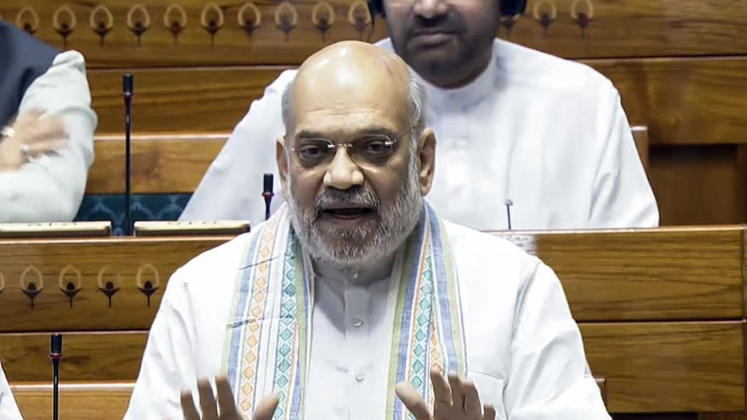

The Lok Sabha passed the Waqf Amendment Bill early Thursday after a 12-hour debate. The government and opposition clashed over the bill well past midnight. However, the ruling party used its majority to ensure its approval. At 2 AM, the bill passed with 288 votes in favor and 232 against.
Key Changes in the Bill
The bill seeks to amend the 1995 Waqf Act. It introduces several major changes:
-
The Central Waqf Council and state Waqf Boards must include two non-Muslim members.
-
Only people who have practiced Islam for at least five years can donate property to Waqf.
-
If government land is identified as Waqf property, it will no longer belong to the state.
-
The local Collector will determine ownership of such land.
The bill will now go to the Rajya Sabha for further discussion.
Opposition Strongly Opposes Bill
Opposition leaders called the bill unconstitutional. They argued that the Joint Parliamentary Committee ignored their suggestions.
The Congress accused the government of trying to "defame and disenfranchise minorities." They called the bill an attack on the Constitution.
AIMIM leader Asaduddin Owaisi tore a copy of the bill in protest. He said, “I am tearing up the law like Mahatma Gandhi did”, referring to Gandhi’s defiance of British rule.
Government Defends the Bill
The government insisted that the bill focuses on property management, not religion.
Union Minister Amit Shah accused Waqf authorities of mismanaging properties. He claimed the Congress enabled land takeovers through appeasement politics.
Shah listed several properties taken over by Waqf, including:
-
Government lands and properties belonging to other religions.
-
A 400-year-old temple property in Tamil Nadu.
-
Land in Delhi’s Lutyens Zone.
-
A five-star hotel site leased to Waqf for just ₹12,000 per month.
"You cannot donate someone else's property. You donate something which is yours," he said.
Shah also blamed the 2013 Waqf Act amendments for the current issues. He claimed the Congress gave 123 properties to Waqf in Delhi’s Lutyens Zone just before elections.
Union Minister Kiren Rijiju warned that if the amendment was not passed, even the Parliament building could be claimed as Waqf property in the future.
Opposition Hits Back
Congress MP Gaurav Gogoi criticized the bill, calling it an attack on minorities and the Constitution. He argued that the Minority Commission never discussed the need for a Waqf amendment in 2023. "Did the Minority Affairs Ministry draft this bill, or was it some other department?" he asked.
Shiromani Akali Dal MP Harsimrat Kaur Badal also attacked the government. She accused the BJP of using Muslims for political gain.
"The BJP has no Muslim MP in Parliament. How suddenly do they remember Muslims?" she asked.
She also accused the government of destroying a historic Gurudwara while developing Ayodhya. "If you cared about minorities, you would have included a Muslim member in the Ayodhya committee," she added.
Major Provisions of the Bill
The new bill makes several key changes:
-
Muslim trusts under other laws will no longer be considered Waqf properties.
-
Only practicing Muslims (for at least five years) can donate property to Waqf.
-
Women must receive their inheritance before any Waqf declaration. Special provisions protect widows, divorced women, and orphans.
-
Government officials (above the rank of Collector) will decide ownership disputes, replacing Waqf tribunals.
-
Non-Muslims will be included in Waqf boards for broader representation.
Legal Challenge and Nationwide Protests Planned
The All India Muslim Personal Law Board has announced plans to challenge the bill in court.
Spokesperson Mohammad Mohsin said, “We will organize nationwide protests just like the farmers’ movement. If needed, we will block roads and use all peaceful means to oppose this bill.”
With strong reactions from both sides, the bill now faces a crucial test in the Rajya Sabha.