

US President Donald Trump’s advisers and El Salvador's President Nayib Bukele said they will not send back Kilmar Abrego Garcia. He was wrongly deported from Maryland last month. Despite a Supreme Court order asking the U.S. to “facilitate” his return, both governments refused.
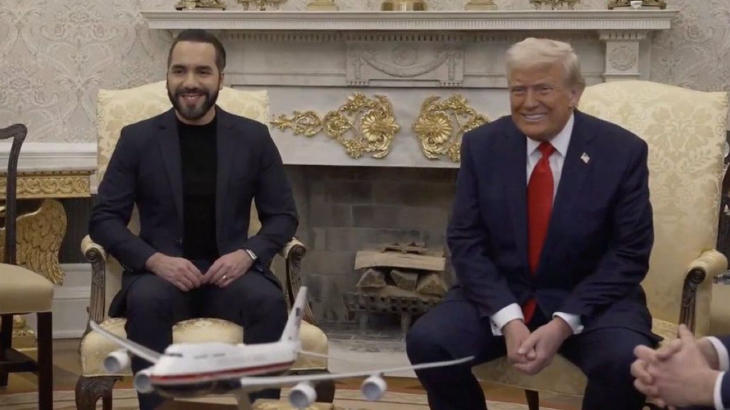
Bukele, sitting next to Trump in the Oval Office, called the request “preposterous.” He added, “The question is preposterous. How can I smuggle a terrorist into the United States? I don’t have the power to return him to the United States.”
Officials Say El Salvador Has Control
Meanwhile, Attorney General Pam Bondi said the U.S. can only help with transportation if El Salvador agrees to return him. “Should El Salvador want to return Abrego Garcia, the U.S. would ‘facilitate it, meaning provide a plane,’” she said. However, she also stated, “That’s up to El Salvador if they want to return him. That’s not up to us.”
In addition, Joseph Mazzara from the Department of Homeland Security explained that the U.S. has no authority to remove him. He noted that Garcia is “in the domestic custody of a foreign sovereign nation.”
Moreover, Mazzara argued that Garcia no longer qualifies for protection from deportation. The U.S. recently labeled MS-13 a terrorist group. However, Garcia’s lawyers said the government has shown no proof he is in any gang.
Legal Battle Continues
As a result, the deportation case has become more complicated. Garcia had a court order blocking his removal due to gang threats. Still, the government deported him.
Now, his legal team wants the judge to hold the U.S. government in contempt. U.S. District Judge Paula Xinis is reviewing the request.
El Salvador's Role in U.S. Deportation Efforts
Since March, El Salvador has accepted over 200 Venezuelan migrants from the U.S. Officials claimed many had gang ties. They were sent to a maximum-security prison near San Salvador.
Because of this, Bukele has gained strong support at home. His anti-gang campaign has jailed over 84,000 people. During a meeting, Trump praised Bukele and said, “I want to just say hello to the people of El Salvador and say they have one hell of a president.”
Furthermore, the U.S. agreed to pay El Salvador $6 million to detain the Venezuelans for one year.
Democrats Express Concern
However, Democratic lawmakers are raising alarms. They believe some deportees, including Garcia, may be wrongly detained.
For instance, Senator Chris Van Hollen of Maryland asked to meet Bukele to discuss Garcia’s return. Similarly, Senator Jeanne Shaheen of New Hampshire urged the release of those with “no credible criminal record.”
She said, “Disregarding the rule of law, ignoring unanimous rulings by the Supreme Court and subjecting individuals to detention and deportation without due process makes us less safe as a country.”
Supreme Court Weighs In
Recently, the Supreme Court allowed Trump to use the Alien Enemies Act to deport certain immigrants. Still, the court insisted that each person get a hearing.
Despite this, the administration deported Garcia. Last weekend, 10 more alleged gang members arrived in El Salvador. Secretary of State Marco Rubio confirmed their transfer.
Although Trump said he respects the Supreme Court and would comply if told to return Garcia, his advisers took a different stance.
Stephen Miller said, “He’s a citizen of El Salvador.” He added, “So it’s very arrogant, even for American media, to suggest that we would even tell El Salvador how to handle their own citizens.”
In addition, Bondi said that two immigration judges believed Garcia was linked to MS-13. This claim came from a confidential informant in 2019. Yet, Garcia’s lawyers said he never lived in New York, where the gang is based.
Bukele's Image at Home
At home, Bukele remains highly popular. His government continues a state of emergency that limits civil rights. He built a giant prison in Tecoluca to house accused gang members.
Furthermore, Bukele offered to take Venezuelan migrants in exchange for returning Salvadoran gang leaders. In February, Ambassador Milena Mayorga called it “an issue of honor.”
Trump and Bukele: Different Men, Similar Style
Even though they come from different generations, Trump and Bukele share similar leadership styles. Both challenge the media and judicial systems. Both know how to use public image to their advantage.
Bukele rose to power during Trump’s presidency. At that time, illegal migration from El Salvador dropped. Therefore, their relationship remained strong.
Later, the Biden administration criticized Bukele’s anti-democratic behavior. Trump also expressed irritation, saying El Salvador reduced crime by sending criminals to the U.S.
Before reporters entered the Oval Office, Bukele posted a video. In it, Trump said he wants to send “homegrowns” — American citizens with criminal records — to El Salvador. He even joked, “you’ve got to build five more places,” referring to new prisons.