
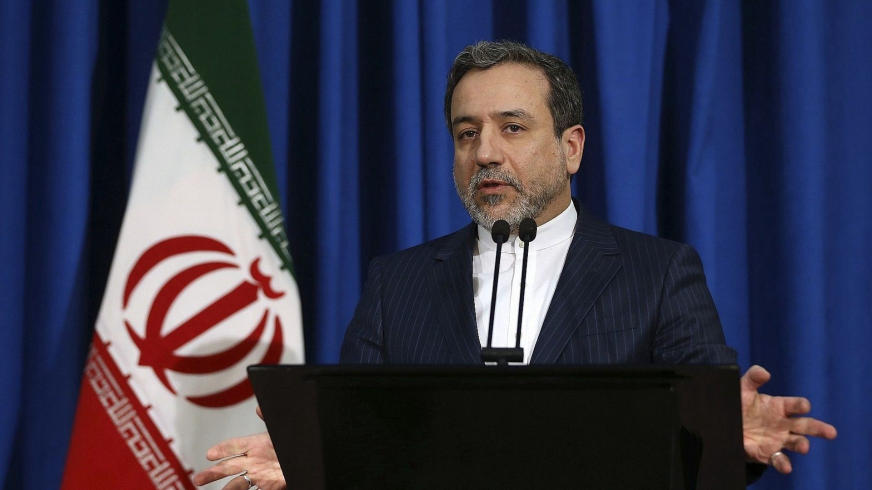

Ahead of upcoming talks in Rome, Iran’s Foreign Minister Abbas Araghchi will travel to Russia this week. He will discuss nuclear negotiations with the U.S. This follows a high-level meeting in Oman on Saturday. In that meeting, Araghchi spoke with U.S. Middle East envoy Steve Witkoff.
Since U.S. President Donald Trump returned to office in January, he has put Iran back in the spotlight. He did so by withdrawing from the nuclear deal.
In March, Trump wrote a letter to Iran’s top leader, Ayatollah Ali Khamenei. He urged Iran to engage in nuclear talks and warned of military action if Iran refused.
While the U.S. and Western countries have long suspected Iran of pursuing nuclear weapons, Iran continues to deny it. Instead, Tehran insists its nuclear program is for peaceful purposes.
Russia and China Involved in Nuclear Talks
In addition, Russia, a close ally of Iran, and China have been in talks with Tehran about its nuclear program.
Baqaei, a foreign ministry spokesman, confirmed that Araghchi would travel to Moscow. He explained that the trip would give both sides a chance to discuss the latest developments from the Muscat talks.
Zakharova, a spokeswoman for the Russian foreign ministry, added that Araghchi would meet Russian Foreign Minister Sergei Lavrov and other key officials.
Notably, both Iran and the U.S. described the discussions in Oman as “constructive.” Russia welcomed the talks, as it continues to push for a diplomatic solution. However, Moscow has also warned that military confrontation could lead to a “global catastrophe.”
Indirect Talks and Focus on Nuclear Issues
Looking ahead, another round of talks between Iran and the U.S. is scheduled for Oman on Saturday. Baqaei confirmed that the talks would remain indirect, with Oman mediating. He added that direct talks had proven “not effective” and “not useful.”
Baqaei reiterated that the only focus of these talks would be on the nuclear issue and lifting sanctions. Iran has made it clear that it will not discuss any other matters with the U.S.
Furthermore, Baqaei stated that Iran’s regional influence and missile capabilities would remain its “red lines” during the talks.
Sanctions and Nuclear Compliance
After the U.S. withdrew from the 2015 nuclear deal, it reimposed strict sanctions on Iran. In response, Iran initially continued following the agreement for a year. However, over time, Iran began scaling back its compliance.
Iran has consistently denied any intention to develop nuclear weapons.
On Monday, Trump addressed the situation, stating, “I’ll solve that problem.” He called it “almost an easy one.” It remains unclear whether he was referring specifically to nuclear talks or broader issues with Iran.
IAEA Chief to Visit Tehran
In a related development, Baqaei also confirmed that Iran would host Rafael Grossi, the head of the U.N. nuclear watchdog, in the coming days. While the details of Grossi’s visit are still being finalized, Baqaei mentioned it would provide an opportunity for key discussions.
Grossi confirmed that he would visit Tehran later this week. He emphasized the importance of “continued engagement and cooperation” with the International Atomic Energy Agency (IAEA), especially as “diplomatic solutions are urgently needed.”
Grossi is expected to meet with Araghchi and Mohammad Eslami, head of Iran’s nuclear energy agency. His last visit to Iran took place in November when he met with top officials, including President Masoud Pezeshkian.
In the IAEA’s most recent quarterly report in February, it was revealed that Iran now possesses 274.8 kilograms (605 pounds) of uranium enriched to 60 percent. This amount far exceeds the 3.67 percent limit set by the 2015 deal and is much closer to the 90 percent needed for weapons-grade material.